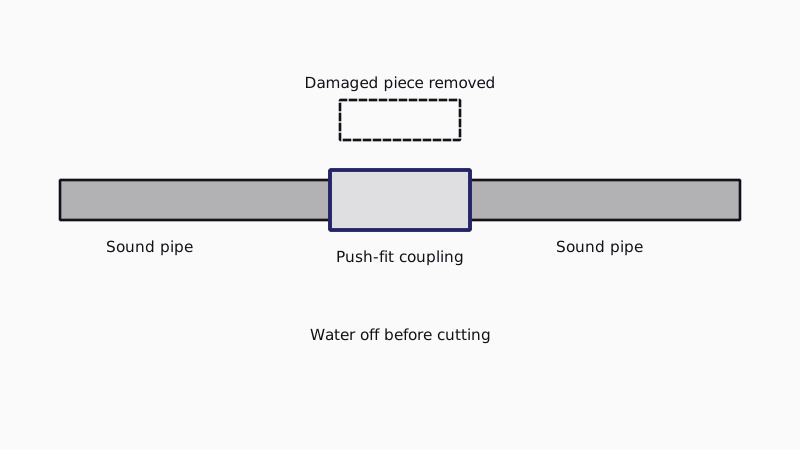
Close the nearest isolation valve, or the main if you cannot find one, and drain the line. Dry the pipe. Then match the fix to the pipe: a repair clamp, or a cut-out with a coupling, for a split supply line, or a freshly glued joint on PVC drain pipe. Temporary products only buy time, so plan a proper repair on any pressurized line. Other jobs we can send a plumber for appear on the Temecula Pipe and Repair home page.
How do I handle a plastic pipe leak right away?
Stop the water, drain the line through a low tap, dry the damaged spot, then wrap or clamp it to hold back the leak until a permanent repair is made. A rubber-lined repair clamp, self-fusing silicone tape or two-part epoxy putty can each hold a small split briefly.
The right choice depends on what is leaking.
- A pinhole or hairline split in a supply pipe. Dry the area, press epoxy putty over it and wrap it. Treat this as a stopgap for days, not years.
- A cracked section. Remove the damaged piece and join the ends using a push-fit or compression coupling made for the same pipe type and size. It counts as a real repair if the pipe on either side is sound.
- A dripping glued joint on PVC or CPVC. Glue will not save a weeping joint. Cut it out and remake it with primer and cement, or fit a coupling, then let the cement cure for the time printed on its container before the water comes back on.
- A dripping drain pipe. Drain lines carry no pressure, so a leaking slip joint or loose trap nut often just needs tightening or reseating.
Every leak has a cause. A split running along the pipe often points to freezing or high pressure, so check the pressure after the repair. The pressure regulator guide explains how.
What if the leaking plastic pipe is outdoors?
Outdoor plastic pipe, for example irrigation or the line feeding a hose bib, gets the same treatment: close the valve, remove the damaged length and join the gap with a coupling rated for the pipe. What changes is sunlight, soil and movement. Pipe that sits in the sun gets brittle, and pipe in soil may have been hit by a shovel or a root.
Dig back enough to see sound pipe on both sides of the break. Use a coupling that is rated for buried or outdoor use if the pipe stays in the ground, and keep dirt out of the joint while it cures. Bury the repair with clean soil, not rocks.
Do not assume the leak is where the wet patch shows. Water travels along the pipe and along the trench. Suppose a wet patch appears and the meter dial still moves after you shut every tap in the house: then a leak exists somewhere on the property.
In Temecula, summer sun on exposed plastic is hard on fittings. In higher, cooler spots like Aguanga, freezing nights can split pipe that was never lagged or buried, which is a different cause with a different fix.
Who pays to fix a leaking pipe outside the home?
As a rule the property owner is responsible for the pipe running from the meter to the house, whereas the water district owns everything up to and including the meter. Eastern Municipal Water District and Rancho California Water District serve different parts of the Temecula area, so check your bill or call your district before you assume.
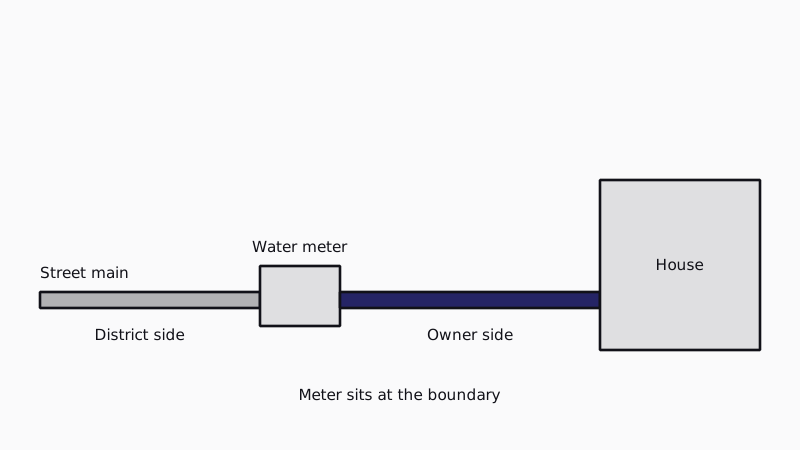
The district usually fixes a leak between the street main and the meter. A leak on the house side of the meter is yours to repair and pay for. Water that disappears before it reaches the meter does not show on your bill the same way, which is a reason to read the meter yourself.
Homes on private wells, common in Wine Country, De Luz and Aguanga, have no district at all, so the whole line is the owner's. Where a rural lot has a long pipe run from the well, a leak can keep the pump cycling for ages before anyone notices.
Replacing a broken buried main line could require a permit. Inside city limits the office is Temecula Building and Safety, and outside them it is the county covering the parcel. The business that quotes the job should state which applies.
What stops a dripping tap or faucet?
Close the stops beneath the sink, take off the handle and look for wear. A dripping spout is most often caused by a tired washer, cartridge or seat, and a leak under the handle usually points to an O-ring. Replace the part, reassemble, and test with the stops open.
A kitchen faucet often hides the problem under the sink. If the cabinet floor is wet, check the supply lines and nuts first, because a loose braided line is the easy cause. If you are tightening a stop valve or a compression nut, stop when it is snug. Overtightening cracks plastic nuts.
A small drip is not harmless. The EPA says leaks waste more than 9,300 gallons of water per year in the typical home, and a drip ranks among the cheapest leaks to repair. The page on how fast a faucet drip raises a water bill puts numbers on it, and the step-by-step is on the leaky faucet repair page.
At what point should home water pipes be replaced?
No fixed age applies. Replace pipes once they leak repeatedly, once water quality or pressure drops, or if the material has a record of failing. Copper often lasts many decades, while some plastics used in certain eras fail early. If you have had three leaks in a year, think about replacing rather than patching.
Material matters more than age. Early Rancho California tract homes may have copper that is thinning or, in some homes of that age, polybutylene, a gray plastic that is prone to failing at fittings. Hard water in this area also speeds scaling and pinholes. The plumber can tell the pipe type from any visible run in a garage or under a sink.
If patching has become routine, the repiping page weighs a spot repair against a full job. The question of when to replace an old house's plumbing is also tied to the slab and attic access, which changes the cost.
How does plumbing work under a mobile home?
Supply and drain lines in mobile and manufactured homes run through the floor cavity under the home, shielded by a belly wrap or skirting. Leaks there stay hidden, so a wet crawl space or damp floor is often the first warning. Pipes there are commonly plastic, and freeze risk is a real concern in colder rural spots.
Most replacement or extension work on that plumbing needs a permit, and the county sets the rules in unincorporated areas. Do not crawl under while power is on and water is running. Unsure whether the plumbing is even the source? Ask for a plumber visit before cutting anything.
What should I do before a plumber arrives, and how do I pick one?
Write down where the water is, what you have tried and when the leak started, clear a path to the pipe, and photograph the leak. California's contractor license rule applies to any permitted job and to any job with labor and materials of $1,000 or more, so check the license number with the state's contractor licensing board before you agree.
Request a written quote with a scope of work, and keep any deposit within the legal cap. With a plastic-pipe leak, most plumbers will ask for the pipe type, the size and whether the water is off. Ask for a repair quote on the quote page.
Common questions
What is the way to fit a repair clamp on a leaking pipe?
Dry the pipe, center a rubber-lined repair clamp over the split and tighten it evenly until the leak stops. Pick a clamp that matches the pipe's outside diameter. On a pressurized line it is only temporary, so book a cut-out repair afterward. Clamps hold best on straight, round pipe rather than at a fitting.
Which signs suggest a plumber is a poor choice?
Watch for a quote given only by word of mouth, a demand for a big cash deposit, no license number, or pressure to decide immediately. A contractor should hand over a written scope and say who obtains any permit. License numbers can be looked up on the Contractors State License Board website.
How should I pick a plumber?
State the job plainly, get a written quote, and compare scope as well as price. A good plumber explains the cause as well as the patch, and names the work needing a permit. To get started, fill in the quote page. We pass requests to local plumbing businesses, and the ones that accept them pay us a fee.
What does plumbing for a new bathroom involve?
A new bathroom needs supply lines, a drain and vent, and usually a permit. For most homes it is a big DIY task, because the drain must have the correct slope and venting. Begin by locating the stack and water lines, and have a plumber measure the run before you settle on a layout.
Will plumber's tape or sealant stop a plastic pipe leak?
Thread tape seals threaded joints and does nothing for a split pipe. Epoxy putty or silicone wrap can hold a small leak short term. Pipe repair is a coupling and a cut, and that is what to expect for a lasting fix.
Updated