The only way to stop scale at the source is to take calcium and magnesium out of the water before it is heated, which is what a softener does. Everything else, from descaling fixtures to lowering heater temperature, slows scale or cleans it up. The options and how a plumber fits them are on the water softeners and treatment page.
What causes hard water scale buildup?
Scale is mostly calcium carbonate. Calcium and magnesium dissolve in water as it passes through rock and soil. When that water is heated, or when it dries on a surface, the minerals leave solution and cling to whatever is there: heating elements, tank walls, faucet aerators, shower heads and the inside of pipes.
Heat makes it worse, which is why a water heater and the hot side of your plumbing scale up first. A tankless heater's small passages can narrow within months in very hard water. Scale insulates, which forces the burner or element to work harder, and chunks that break free can clog fixtures and appliance valves. In Temecula, mineral content comes from local groundwater and from imported water blended into the supply, so scale is a regular issue rather than a rare one.
How hard is Temecula's water?
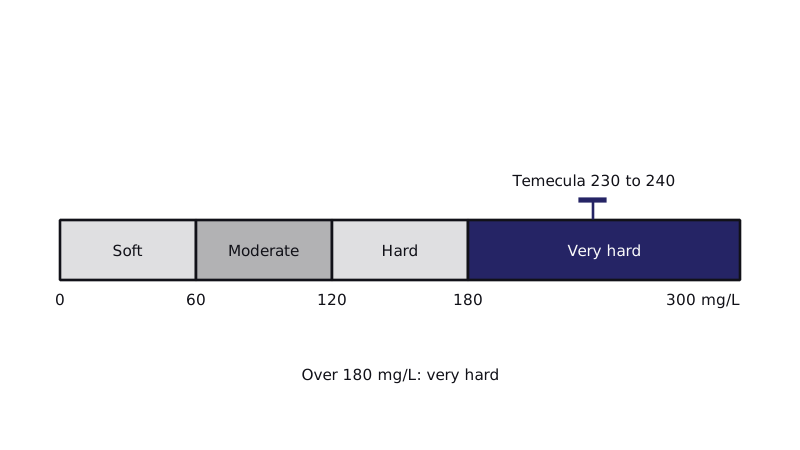
Rancho California Water District's own reports have put average hardness around 230 to 240 mg/L in the 2020 to 2023 reports, which is roughly 13 to 14 grains per gallon. Check the current Consumer Confidence Report at ranchowater.com, because figures change year to year. Parts of the area are on Eastern Municipal Water District, and its figures can differ.
The district serving your street is named on the bill. Hardness also varies inside a system, since different wells and the imported source blend differently, so a single number is an average rather than a promise for your tap. Homes on private wells in Wine Country, Aguanga or De Luz need their own test, because groundwater hardness varies from well to well. The water district can usually explain how to read its report, and a home test kit shows what comes out of your tap.
What do ppm, mg/L and grains per gallon mean on the hardness scale?
They are three ways of writing the same quantity. Parts per million (ppm) and milligrams per liter (mg/L) are effectively the same number for water. Grains per gallon (gpg) is the older unit used on softener controls. About 17.1 mg/L makes up one grain per gallon, which puts 240 mg/L near 14 gpg.
The US Geological Survey groups water like this:
| Class | mg/L (ppm) as calcium carbonate |
|---|---|
| Soft | 0 to 60 |
| Moderately hard | 61 to 120 |
| Hard | 121 to 180 |
| Very hard | more than 180 |
Softener controls often ask for hardness in gpg, so divide the mg/L figure by 17.1. People also search for a hardness rating scale, a measurement scale or a number scale. They all mean this same table. There is no single legal limit, since hardness is not a health standard but an aesthetic and plumbing one.
Does the pH scale have anything to do with hardness?
Not directly. pH tells you whether water is acidic or alkaline, while hardness measures dissolved calcium and magnesium. The two interact, since water on the alkaline side tends to drop scale more easily, but you can have hard water at almost any pH. A pH reading will not tell you how much scale to expect.
For that reason, a test strip for hardness is the useful one. Water that is low in minerals and acidic can instead be corrosive to copper pipe, which is a different problem. Pinhole leaks in copper have a separate cause, discussed in the guide to fixing a pinhole leak in copper pipe.
What actually prevents scale?
Four approaches exist, and they are not equal. A salt-based softener removes the hardness minerals. A template-assisted crystallization conditioner alters the way minerals form, so they stick less firmly, without removing them. Lowering the heater setting slows scale, and regular flushing removes sediment. Magnetic and electronic gadgets have weak independent evidence.
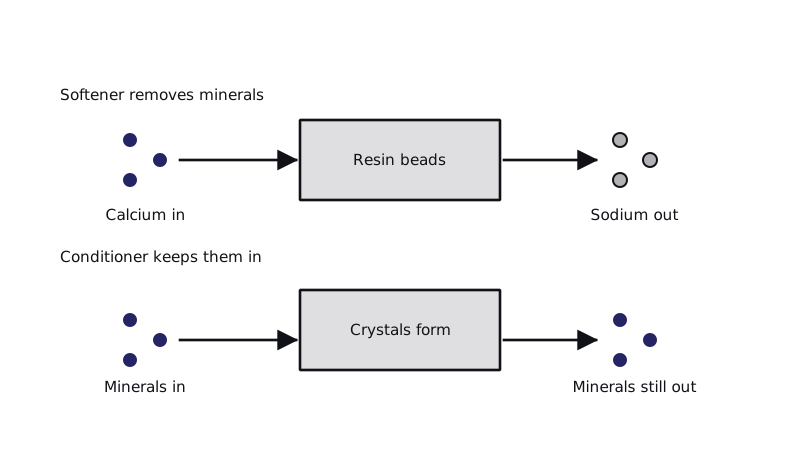
- Softener. Trades the calcium and magnesium in the water for sodium or potassium, shielding the pipes, heaters and fixtures throughout the house. It needs salt, an outlet and a drain connection, and whether a permit applies depends on the work, so ask a plumber.
- Anti-scale conditioner. No salt, no drain, and the water is not softened. It reduces how much scale sticks, but you keep hardness minerals in the water. Ask for independent test data.
- Lower heater temperature. Scale forms faster as water gets hotter. A setting of about 120 degrees Fahrenheit is a common household choice, and it cuts scald risk.
- Flush and service. Once a year, drain a few gallons from the tank and inspect the anode rod; see water heater replacement timing.
- Descale fixtures. A soak in vinegar loosens scale on aerators and shower heads. Keep vinegar off natural stone and some finishes.
What removes scale that is already there?
Faucet parts and shower heads can sit in a bath of white vinegar for roughly an hour before scrubbing. For a tank water heater, a drain and flush clears loose sediment, but baked-on scale will not come off, and a plumber can descale a tankless unit using a pump and descaling solution. Pipes full of scale are replaced, not cleaned.
Be careful with heavy acids sold as scale rescue products, since they can damage fixtures, seals and some finishes, and the fumes are a hazard. Read the label, ventilate and test a small spot first. If water flow has dropped through the whole house, the cause may be scale or corrosion in the supply pipes, and a plumber should look, especially in older homes with galvanized lines.
When should a plumber get involved?
Call one when scale has hit a water heater, when flow drops across several fixtures, when you want a whole-house softener, or when you need a drain or permit connection. The same visit can include a pressure check and a look at the water heater. Describe the problem on the quote page.
We forward each request to a local plumbing business that pays us a fee, and that business sets up the visit. Phones are answered on weekdays, 9am to 5pm. The Temecula Pipe and Repair home page shows the other work we arrange.
Common questions
How soon does scale prevention start working?
Installing a softener is often finished inside a day, although the exact time depends on the plumbing layout and access. Scale prevention then starts as soon as the system is set up and the control is programmed for your hardness. Habits such as flushing the heater or lowering its temperature take effect more gradually.
Which questions go to a plumber before I book a softener or conditioner?
Ask what the system removes or changes, what hardness setting is planned, where the drain goes, whether a permit is required, and what salt and service will cost to run. Request independent test results for any conditioner that claims to stop scale without softening the water.
Does someone have to be there while it is installed?
Yes, have an adult at home. The water goes off during part of the visit, the plumber needs access to a power outlet, a drain and the main line, and before leaving will want to show you the control settings and how to refill the salt.
Is hard water bad for you?
Hardness is mainly a plumbing and housekeeping issue rather than a health standard: the problems are scale on fixtures, spots on glass and shorter appliance life. People on low-sodium diets should ask about softener sodium. If you have a health concern, speak to a doctor.
Could a softener push up my water bill?
Regeneration uses a small amount of water, and a poorly set unit can use more. A correctly sized, correctly set unit usually has a minor effect. Should your bill jump after an install, have the plumber inspect the settings and the drain line for leaks.
Updated