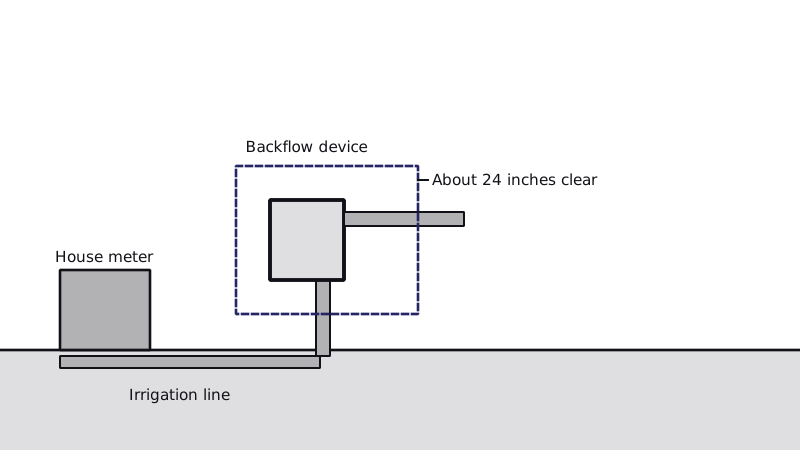
A backflow prevention test shows that the device on your water line still keeps used or dirty water from running back into the public supply. Rules and schedules come from your water district. This page belongs to the permits, codes and inspections section; when a notice has arrived or a device is due, send a request through the quote page.
Does a house in Temecula need backflow testing?
Not by default. Rancho California Water District says devices are required at commercial, industrial, agricultural and multi-family properties, at properties with an auxiliary water supply and on parcels with an irrigation meter, and that single-family homes are generally not required to have one. A house on a dedicated irrigation meter or a second water source is the exception.
The rule comes from the district, not the zip code. One street in a zip code may belong to Rancho Water while the next gets its water from Eastern Municipal Water District, whose retail communities include Temecula and Winchester, so start with your water bill. If the notice names a district, follow that district's instructions. Rancho Water can be reached on 951-296-6900.
Common reasons a homeowner ends up with a test requirement:
- a separate irrigation meter on a larger lot
- an auxiliary water source such as a well alongside the district supply
- a device that was fitted on a sprinkler line during a landscaping job
- a notice from the district after a new connection or a remodel
What does backflow prevention assembly testing involve?
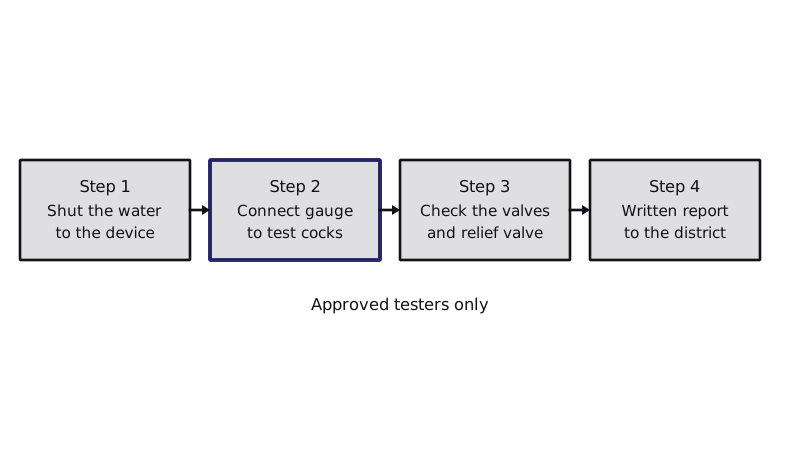
The tester closes the water to the assembly, attaches a gauge to its test cocks and confirms the check valves hold and the relief valve opens at the correct pressure. A pass means a short visit and a report. When a device fails, it is fixed or swapped out and tested again; the district requires that second test any time a device has been repaired, replaced or moved.
The device usually looks like a brass or bronze body fitted with small test ports and two shutoff valves, mounted above ground near the meter or the irrigation connection. Leave generous clear space around it for the tester, so move plants, bins and decorative covers away. Water goes off to the sprinklers or the building for the duration of the test, and a reduced-pressure type may spit water briefly while it is checked.
Who is allowed to test, and what about a certification online?
Rancho Water states that testing must be done by testers it has approved, and it publishes a list on its website. An online course on its own does not make anyone eligible: the district decides who is on its list, and each district keeps its own. Get the tester's name, check it against the district list and request the report in writing.
If you hear about online certification, treat it as training for testers, not a route for homeowners to test their own device and file the result. Rancho Water says the annual test is the customer's responsibility, and a missed test could result in termination of service. Other districts have their own approved lists and filing process, so ask which applies to your address. See also Backflow testing services for the general picture, and commercial backflow testing if the property is a business.
How does this connect with a home plumbing inspection?
A backflow test checks one device. A plumbing inspection looks at the whole system: pressure, shutoffs, the water heater, visible pipe condition and leaks. Buyers of older homes, or owners of manufactured and mobile homes, often order one, and a camera inspection of the sewer line is an add-on that finds roots, belly sections and breaks inside the drain.
A tester can note a missing or damaged device during a general inspection, but the two jobs are separate. If you plan a purchase or a repipe, ask whether backflow devices are present and who last tested them. The plumber inspection cost page explains what an inspection is likely to include and how it is priced.
How should I respond to a notice?
Read it for the deadline and the district name, find the device and note its size and location, then request a visit from an approved tester. Keep the area around it clear and know where to close the water. Keep the written report. The tester files with the district under its own process, so ask whether you or the tester submits it.
If the device is damaged, frozen or missing, say so when you book. Cold nights can crack an exposed assembly in the higher, colder reaches of the valley, Aguanga for example, and a device that spits water constantly is probably failing. How a visit is set up is described on our home page.
At what stage is a plumber needed in addition to the tester?
Call one when a test fails, when the device leaks, when the device sits in a vault full of water, when it needs to be moved or replaced, or when no one can say whether the property needs one. A plumber can also help when you are building a new irrigation line, since the district specifies the type and drawing for new devices.
Rancho Water's page lists standard drawings for new and replacement devices and an ordinance that calls for reduced-pressure assemblies on applicable properties, so installation is not a casual job. Ask the plumber who pulls any permit and who arranges the first test. For a rural parcel in Wine Country on a well, ask the county or the water provider which rules apply.
Common questions
How long will the test take?
An accessible single device often takes under an hour when it passes. Repairs, parts or a vault that needs pumping add time. Water to the irrigation system or building is off while the tester works, so pick a time when you do not need it. Get an estimate from the tester when booking.
Which questions go to a tester first?
Check that the tester is on your water district's approved list, learn who sends the report to the district, and ask what a failed test costs in parts and labor and whether a retest is included. Get the price confirmed in writing ahead of the visit.
Do I need to be at home during the test?
Not always. The tester needs access to the device, and a side gate or box that is unlocked may be enough, but someone should be reachable by phone to approve the price if repairs are needed. If the device is inside a fenced yard, say whether there is a dog.
May I test my own backflow device?
Not for a district-required test. Rancho Water says only its approved testers may do the annual test, and the report goes through the district's process. You can keep the device clear, watch for leaks and call when something looks wrong, but the official test stays with an approved tester.
Updated