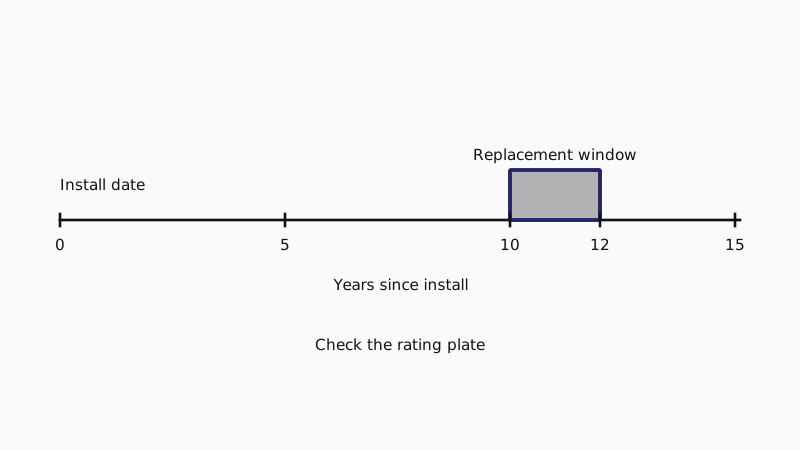
Budget for a new tank water heater every 8 to 12 years, and watch the old one closely once it passes year 8. Tankless units commonly last longer when they are descaled regularly. These are typical ranges rather than promises, and Temecula's mineral-heavy water tends to move a heater toward the shorter end. Repair options are covered on the water heaters page.
Is it wise to flush a 10 year old water heater?
Draining a tank that has never once been flushed is a gamble, as many plumbers will say. Old sediment can sit packed hard against the bottom, and stirring it can clog the drain valve or expose a weak tank. When the heater is 10 years old and the drain valve works, a gentle flush is reasonable, but be prepared to replace the unit if it starts to leak.
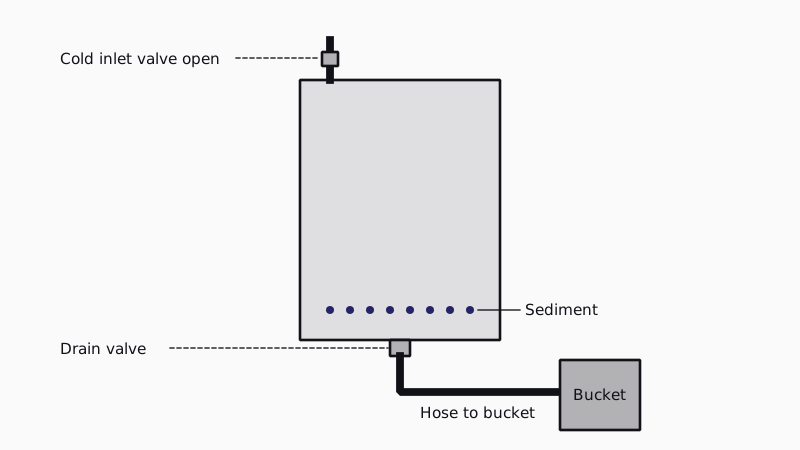
A sensible test is to connect a hose at the drain valve, open it slowly, and see whether water and grit come out. A valve that will not open, or will not stop leaking afterward, has told you something about the tank. On a young heater, flushing is best done every year or so, long before the tank reaches 10. In very hard water the sediment is mostly scale. Set the power or gas to pilot first, let the water cool, and never drain a tank that is still hot.
How can I work out my water heater's age?
Look for the serial number on the rating plate. Many makers hide the manufacturing month and year in the first letters or digits, so a serial opening with a letter and two digits can translate to a month and year. If decoding fails, photograph the plate and let a plumber interpret it.
Most brands post decoding charts on their own sites, so search the brand name plus serial number. A heater built in 2014 is about 12 now. If the plate is missing or rusted over, estimate from the date of the house or the last permit. Homes in Redhawk and Harveston, built from the late 1990s to about 2010, are often on a second or third heater, with the originals long past their time.
Does the water in Temecula shorten a heater's life?
It can. Rancho California Water District's own reports put average hardness at about 230 to 240 mg/L, and the US Geological Survey calls anything above 180 mg/L very hard. Minerals deposit inside the tank and on heating surfaces, which forces the burner or element to labor longer while the steel runs hotter.
That does not mean every heater here dies young. A flushed, well-maintained heater can reach the top of its range. Read the current Consumer Confidence Report from your own water supplier, because the district serving your street, Rancho Water or Eastern Municipal Water District, publishes its own figures. A softener changes the picture: see the water softener options for what that involves and the hard water scale prevention page for ways to slow scale.
How do I start planning a replacement?
Use the quote page to give the heater's age, type and location. We forward the request to a local plumbing business, and the businesses that take requests pay us a fee. That business then gets in touch and provides a written quote. Phones are answered Monday to Friday, 9am to 5pm. Everything else we arrange appears on the Temecula Pipe and Repair home page.
What signs show a heater needs replacing?
The main signs are an age over 10 to 12 years, rusty hot water, water pooling at the base, rumbling or popping from sediment, hot water that is used up fast and a rising energy bill. Any single sign merits a closer look. A tank shell that weeps settles the question.
- Leaks from the shell. Not repairable.
- Rust-colored hot water. The tank lining or the anode rod is gone. First check whether the cold water is rusty too.
- Noise. Popping and rumbling come from scale on the tank bottom.
- Repeat repairs. Two parts failing in one year often means the unit is worn out.
- Falling output. A cracked dip tube or heavy sediment cuts how long the hot water lasts.
When hot water has vanished altogether, the no hot water checklist separates a failed part from a dead heater, while the water heater leak repair steps trace where a drip comes from.
When should the anode rod be changed?
A common rule is to inspect the anode rod every 3 to 5 years and replace it once it is mostly eaten away. With very hard water, or a water softener in service, the rod can wear faster. The steel tank relies on the rod for protection, and when the rod is used up, corrosion begins.
To inspect it, the rod must be unscrewed, which on many models needs a long breaker bar and a socket of 1 1/16 inch. Many plumbers include this in a service visit. A new rod can extend the life of a sound tank by years, but cannot help one that has already rusted through. The anode rod guide covers the job in detail. If you have a softener, ask the plumber whether a powered rod or a different type suits your water.
What does a replacement involve?
The plumber begins by closing the water and the gas or power, then drains the old tank. Next comes setting the new heater, connecting the water and the gas or electric supply, adding a relief valve and its discharge line, strapping the unit against earthquakes, and testing it all. California generally requires a permit, which the plumber normally obtains from the City of Temecula Building and Safety office on 951-694-6439, or from the county for properties outside the city.
Zero-NOx water heaters are not mandated locally. The regional air board voted in June 2025 not to amend its rules, so nothing on that front forces an early purchase. The tank versus tankless page compares the formats, and replacement cost factors explains what moves the price.
Common questions
What is the lifespan of a tank water heater?
Commonly 8 to 12 years, reaching the top of that range with a good anode rod, regular flushing and moderate use. Very hard water and neglected upkeep pull it down. Tankless heaters often last longer, but they need descaling, especially where water is hard, so the label figure is a best case and not a promise.
Should I swap a heater ahead of failure?
Beyond roughly 10 to 12 years, planning ahead makes sense. A tank that fails overnight may flood a garage or closet, whereas a scheduled swap allows comparing quotes and choosing the day. If the heater sits in a finished area or on a wall above living space, replacing early costs less than repairing water damage.
How frequently should a water heater be flushed?
Many plumbers recommend roughly yearly, with extra flushes in hard water areas. Draining a few gallons from the valve clears loose sediment, and a full flush clears more. On a heater that has gone many years without a flush, go gently and expect that the valve may leak afterward.
How often must a water heater anode rod be replaced?
Every 3 to 5 years is the usual guide, and sooner in very hard water or with a softener. Only an inspection tells you, because a rod can be nearly gone in half that time. A bare steel rod should be replaced, but if the tank already leaks, skip it.
Can an old water heater be a fire or safety hazard?
An old unit can fail in ways that matter: a leaking tank near wiring, a faulty gas control, a blocked vent. The relief valve and discharge pipe must be working. If gas is detected, leave the home and call SoCalGas at 1-800-427-2200 from outside. Any heater beyond its expected life deserves a plumber's inspection.
Updated