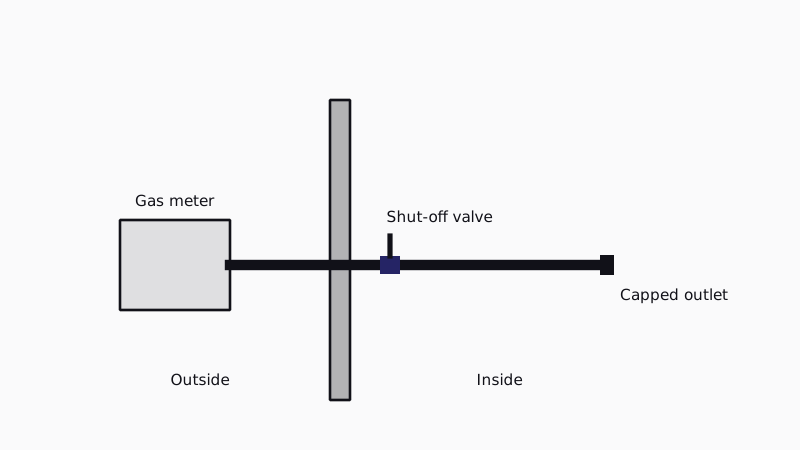
Plumbers do gas lines. A plumber can extend a natural gas line to a new range, dryer, fireplace or barbecue, repair or replace a damaged section, cap an unused outlet and move a line during a remodel. Because gas piping is safety work, a contractor license, a permit and an inspection are normally part of the job. We arrange the visit and a local plumber does the work; the home page lists every job type.
Can a plumber do a gas line, and do most of them?
Most plumbing contractors take gas work, but not every one wants every job. Gas piping sits close to water heater and appliance work, so plumbers who install water heaters usually run gas too. Rural lots and propane tanks are a narrower specialty, so say at the start what fuel you have.
Ask three questions before you accept a visit. Does the business hold a California contractor license for plumbing work? Will it pull the permit? And has it done the particular kind of job, such as a fireplace log lighter or a line to a backyard kitchen? Honest plumbers answer those in a sentence.
A contractor license is generally demanded by state law for any job needing a permit and once labor and materials reach $1,000; gas piping therefore almost always falls under that requirement. The Contractors State License Board lookup at cslb.ca.gov shows whether a number is current.
You can sort what is yours to do from what is not. Turning an appliance valve to off is fine. Cutting into, extending or threading pipe is not a homeowner job in a city with permit rules, and the penalty for a mistake is not a leak you can mop up.
What kinds of gas line jobs do plumbers handle?
The usual jobs are a new line for a stove or range, a fireplace or fire pit, a dryer, a tankless or tank water heater, a pool heater and a barbecue stub; repairing a leaking or corroded line; capping a line when an appliance is removed; and moving a line during a remodel. Each is priced by the run, the materials and the access.
A line to a range is often short, from a nearby wall or crawlspace. A line to a pool heater or an outdoor kitchen can mean trenching across a yard, which changes the cost. Fireplaces are tricky because the line has to meet the manufacturer's rules for the specific log set or insert.
Capping a line, for example when you swap a gas range for an induction one, is a fast job but not a casual one. The plumber closes the line with a proper cap and checks it for leaks, so there is no open end sitting in the wall.
Moving a gas line comes up in kitchen and bath remodels. The old route may not fit the new layout, so the plumber reroutes the pipe, tests the new run and has it inspected before the walls are closed.
What pipe is used for a natural gas line?
Indoors, black iron (steel) pipe and corrugated stainless steel tubing are the usual picks; buried outdoor runs typically use gas-rated polyethylene or coated steel. The code and the gas utility decide which is allowed, so the plumber makes the choice. The page on flexible gas line goes into the tubing side.
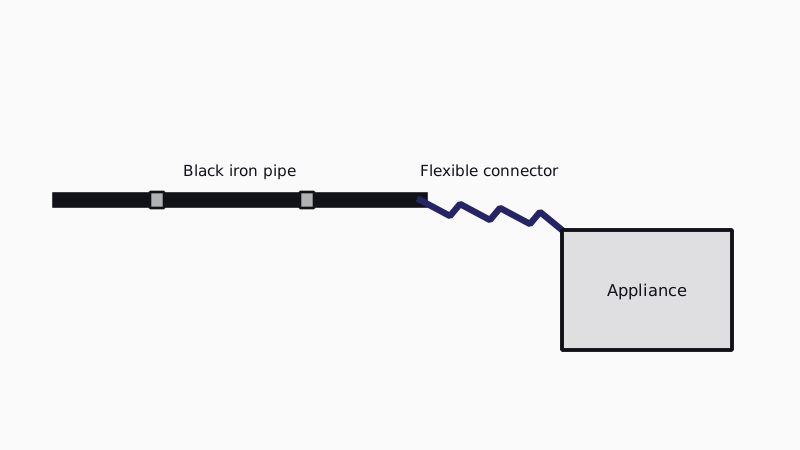
Copper and galvanized pipe are not the safe default. Whatever carries the gas, the fittings and joints are what leak, so a plumber fits materials listed for gas and tests the finished line. Do not reuse an old appliance connector or a flexible hose from a different appliance. They age and crack.
Size matters as much as material. A single range wants less capacity than a range, dryer and tankless water heater on one line, and an undersized line makes appliances sputter or fail to light. A plumber works out the load for the whole house before choosing diameter.
Who issues the permit in Temecula and nearby areas?
For City of Temecula permits, go to Building and Safety at 41000 Main Street (phone 951-694-6439, weekdays 8am to 5pm). Properties beyond the city limits fall to Riverside County, and Fallbrook, Rainbow and De Luz addresses in San Diego County are handled by Planning and Development Services. Confirm which office covers your parcel.
Whether an address sits inside Temecula is not always obvious, especially around Wine Country and French Valley. Check the parcel before you pick an office, and ask the plumber which office the permit goes through. A gas line done without a permit can cause trouble later, for instance when you sell or when an insurer looks at a claim.
On tribal land at Pechanga, the property owner or the tribe's own office can say which office permits the work. We have not confirmed an answer for that, so none is given here.
What does gas line work cost in Temecula?
The price depends on length, pipe type, how many appliances share the line, access through walls or the ground, the permit and whether the plumber must open and patch drywall. No figure is published here, so use the gas line cost page to see what drives a quote and ask for it in writing.
A short run through an open garage or crawlspace costs far less than feeding a new outdoor kitchen. A single capping job is the other end of the scale. Have each quote spell out what it covers: pipe, fittings, permit, inspection, pressure testing and wall repairs.
What if I smell gas?
Do not ring a plumber first. Get everyone out of the house, then from outdoors dial SoCalGas at 1-800-427-2200, and call 911 if anyone feels unwell or a hiss is audible. Stay away from light switches, open flames and phones inside. Remain outside until the gas company clears the house.
Once the gas company has made the house safe, a plumber can repair the cause, which may include closing the gas at the meter. Where an earthquake could have damaged a line, an automatic shut-off valve is worth reading about: see the pages on earthquake shut-off valves for gas and on how one is installed.
The page on gas plumbers explains the license rules for whoever does the work. If you would rather start a request, the quickest way is the quote form.
Common questions
Do plumbers change gas pipes?
Yes. Replacing a corroded, damaged or undersized section, rerouting a line for a remodel and swapping old appliance connectors are all things a plumber does. Because this is permit work, a pressure test and an inspection should take place before the walls close; ask that both appear on the written quote.
Do plumbers also handle gas piping?
Yes, most do, along with water supply and drains. Gas work is a separate skill in practice, so ask whether the business does gas daily and whether it has done your kind of job, such as a range, a fireplace or an outdoor line. Check the contractor license number before work starts.
What are the three systems in plumbing?
Commonly cited are gas piping, water supply and drain-waste-vent. Supply brings clean water into the house, drain-waste-vent carries waste out and lets in air so it flows, and gas piping delivers fuel to appliances. Materials and rules differ for each system, so a plumber's quote should say which one the work touches.
What does repairing a gas pipe cost?
It depends on the pipe's route, the fault and how much has to be opened to reach it. A minor repair at an appliance is a quick visit, while a corroded run inside a wall or beneath a slab costs more. No figure is given here; request a written quote itemizing the materials, the permit and the test.
Can I install a gas line to my stove on my own?
In California, gas piping generally needs both a contractor license and a permit, so the safe answer is no. Buying the appliance and clearing the space are fine, but the pipe work is for a plumber. Temecula Building and Safety at 951-694-6439 can explain which permit rules apply to your property.
Guides in this section
- Gas lines
How earthquake gas shut-off valves work, the meter-side and house-side options, what to do after a quake, and how we arrange a plumber to…
- Gas lines
How an earthquake gas shut off valve is installed on a Temecula home, why a plumber does it, what the permit step is, what affects the…
- 1/2 inch flexible natural
Half-inch flexible gas line for natural gas: what it is, where it is allowed, which pipe types carry gas, and who must install it.
- Costs
Gas line prices for Temecula homes: per-foot figures, repair and shutoff costs, permit and test fees, plus what moves a quote up or down.
Updated