What sets Old Town plumbing apart from the rest of Temecula?
Because the buildings are a different kind. Old Town is the city's historic core along Front Street, and it grew around a stagecoach stop of the 1850s. Many properties are commercial, some are very old, and newer infill sits right beside them. Pipe material, wall construction and drain layout can change within one block. Set that against the tract homes described in the wider Temecula areas.
That mix is the main reason an Old Town job rarely resembles a standard house call. A plumber arriving at a restaurant on Front Street is dealing with a kitchen, a public restroom, perhaps a water heater in a back corridor and a floor drain, all in a building that may have been altered several times. Describe those details in your request and the quote will be much closer to the truth.
How do I line up a quote for an Old Town job?
Use the quote form to give the address, what kind of space it is and a short account of the fault. We pass it to a nearby plumbing business, one of those paying us a referral fee, and that business schedules the visit and gives you the price in writing. Mention whether it is a restaurant, retail unit or residence, since that decides who suits the job.
Useful things to include:
- What is leaking, blocked or not working, and since when.
- Whether you own the building or rent, and whether the landlord has been told.
- Photos of the fixture, the label on the heater, or the wall where damp appears.
- Closing hours, since noisy work is simplest when the public is out.
Request the price in writing, with labor, parts, permit and disposal as separate lines. For work across the valley, plumber services outlines what we arrange, and the home page carries the rest.
What plumbing problems come up in older storefronts?
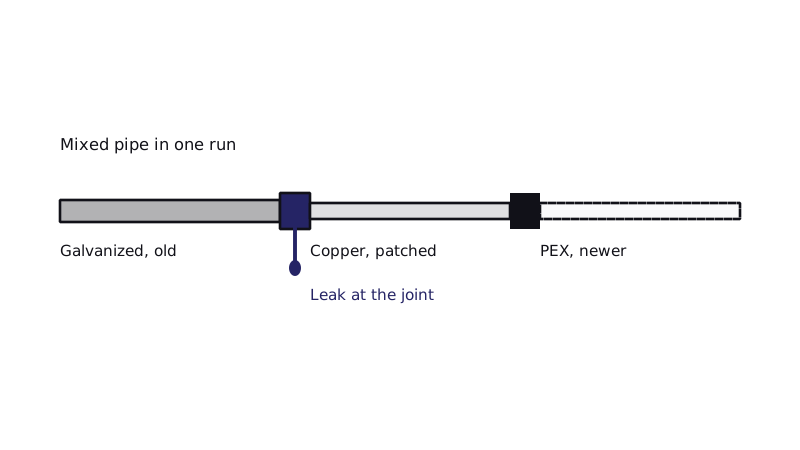
Expect corroded or patched supply lines, drains that were extended piece by piece, and fixtures that were added long after the original walls went up. In a building that has been remodeled many times, you often find several pipe materials joined together. Leaks at those transitions, and slow drains where old lines meet newer ones, are the usual calls.
Some practical points:
- Access is the hard part. Pipes can run through shared walls, crawl spaces or ceilings that were never built to be opened. Cutting a hole takes time, and the price of the plumber's visit often reflects that rather than the repair itself.
- Shutoffs are not where you expect. In older commercial spaces the main valve may be outside, in a meter box or shared by the neighbors. Find it before an emergency, not during one.
- Water hammer and noise can point to loose pipe supports or failing valves. Our water hammer article walks through likely culprits.
A sudden leak means closing the nearest valve at once, then heading to the emergency plumber page instead of waiting for an ordinary slot.
What do the city's Old Town rules change?
The city governs Old Town under a specific plan with its own design rules. For plumbing the effect is narrow. The work still needs a permit where the law says so, yet exterior changes such as new vents, rooftop equipment or a fresh line on a front elevation can add design questions to the plumbing ones.
Inside city limits, permits come from City of Temecula Building and Safety, 41000 Main Street. The city gives weekday counter hours of 8 until 5, holidays excepted, so confirm before going. Ahead of signing, find out if a permit applies and who files it. The licensing thresholds, plus a business lookup, are posted on the state contractors board site at cslb.ca.gov.
The specific plan and any historic-use conditions on your building are things only the city can tell you about your own address. Ask the city, not a plumber, whether design review applies.
Which water supplier serves Old Town?
Two districts split the city, Rancho California Water District for most of it and Eastern Municipal Water District for some parts. Which district you belong to is printed on your latest bill, and it affects meter, shutoff and backflow questions. Rancho Water's own reports put average hardness around 230 to 240 milligrams per liter in the 2020 to 2023 reports, which is very hard water, so scale in water heaters and espresso machines is a regular topic.
Check Rancho Water's current consumer confidence report before you rely on any number. A water heater that serves a busy kitchen works harder than a home unit, and scale shortens its life. The pages on hard water and scale and commercial plumbers go into more detail.
What do restaurants and tasting rooms need to think about?
Two things come up again and again: grease and backflow. Kitchens generally need something that stops grease reaching the sewer, usually a trap or interceptor, and emptying it on time is part of staying out of trouble. Irrigation, a fire line or certain kitchen equipment can also call for a backflow device that gets tested on a cycle.
Neither is a weekend project. A backflow device guards the public supply, so only a qualified tester should sign it off. Read backflow prevention testing for how it works, and commercial backflow testing if you run a business. Ask the water supplier what your property requires, because the rules depend on the connection.
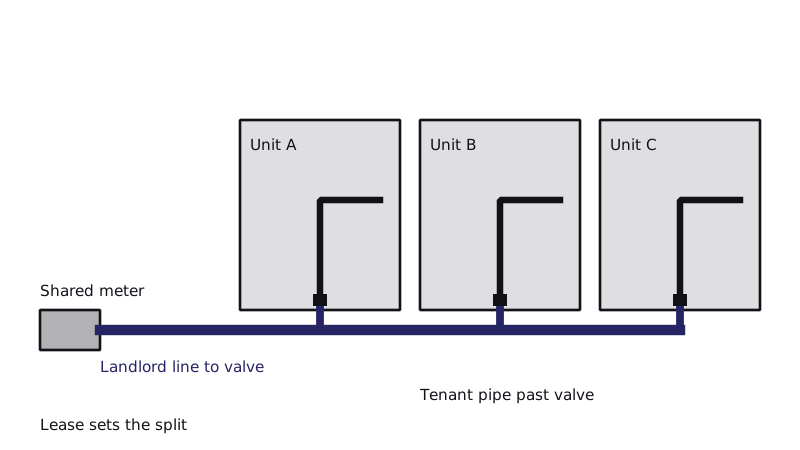
If you rent your space, check your lease first. Many leases give the landlord the lines up to the fixture and the tenant everything past it, which often settles who pays before a plumber is even called.
Common questions
Does Old Town plumbing differ from house calls elsewhere in Temecula?
The trade is identical, though the buildings are not. Older commercial space brings access limits, mixed pipe material and grease concerns that a newer house never raises. Plumbers used to storefronts ask early who owns each line and whether a grease trap exists.
Who pays when a pipe in a shared wall leaks?
That comes down to whose pipe it is, and what the lease says. Tenants often own what feeds only their unit, and landlords the lines serving several. Tell the landlord in writing, then have the plumber record on the quote which line failed, because that note helps decide who pays.
Does a restaurant need a permit for a new sink or heater?
Swapping a water heater generally calls for a permit in California, and new sinks or drain changes frequently need one as well. City of Temecula Building and Safety decides what applies at your address. Find out who applies, and keep the signed-off paperwork.
Updated