Plumbing work comes down to three kinds of job: stopping what leaks or clogs, swapping out what has worn through (water heaters, toilets, old pipe), and adding something new, such as a gas line or a softener. Describe the problem to Temecula Pipe and Repair a single time. A local plumber then drives to your house or shop anywhere in the valley, once we have booked the appointment, and you hold a written price before any tool leaves the truck. Below you will find sections on choosing, fees and tight budgets.
Who should I hire for plumbing in Temecula?
Decide using facts you can check. Get the contractor's license number and verify it on the state contractors board website, ask for a written price that lists what it covers, and learn who will pull the permit if one is needed. We don't rank businesses or crown a "best" one, because nobody has measured that fairly.
Three further questions separate the careful from the careless. Does whoever quotes also do the work? How does the price change if opening the wall reveals a second problem? How is extra time charged? A plumber who answers all three without hedging is usually worth booking.
California generally expects a contractor license for any job that reaches $1,000 in labor and materials, and for work needing a permit. Smaller jobs can still go badly, so check the license in every case.
To get going, open the quote page and give the street, the symptom and the hours you will be home.
What types of plumbing jobs exist?
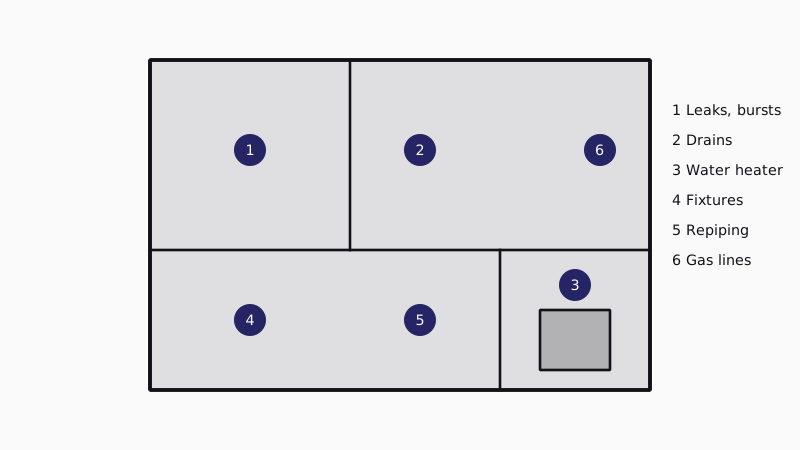
Almost every job lands in one of six groups: leaks, drains, water heaters, fixtures, replacing pipe, and gas lines. Each has its own tools, permit habits and usual causes, so naming the group up front saves a round of guessing. Here is how they tend to appear in valley homes.
Leaks and bursts. Locating the source, closing the water and then patching or replacing the pipe. The leaks page explains the process.
Drains. Sinks, tubs, toilets and the line out to the street. See the clog page.
Water heaters. Repairs and replacements, tank or tankless. Mineral-heavy local water coats heater interiors with scale, a common reason they give out. Read the water heater page.
Fixtures. A kitchen faucet, a toilet's fill valve, a disposal. These are the everyday small jobs.
Repiping. Fresh supply lines for older houses; see repiping.
Gas. Moving a line, connecting a range, adding a shut-off. Because it is regulated, it has its own gas page.
Why do plumbers add a trip charge?
A trip charge, sometimes named a service or call-out fee, covers the plumber's arrival and the diagnosis of the fault. Some businesses subtract it from the repair price if you go ahead, and others simply keep it. There is no standard amount, so ask what it costs, what it covers and whether it is credited.
We give no dollar figure for trip charges here because we have no source we could verify for Temecula. The cost guide lays out what moves a bill, and your written quote sets the actual amount.
Most businesses charge more in evenings, on weekends and on holidays. If the problem can safely wait for a weekday between 9am and 5pm, mention that in your quote request.
What can I do if I cannot afford a plumber right now?
Secure the problem first, then price the smallest repair that does the job. Shut the water off at the main or at the fixture itself, and keep using the rest of the house. Have the plumber split the urgent fix from the optional extras. Enquire about payment plans, and collect a second quote before agreeing.
A few more points:
- A leak left running for weeks usually costs more in water and damage than the repair itself.
- Dialing 211 reaches a local help line. We can't promise what Riverside County offers, but the call is free.
- Renters: what makes a rental habitable is defined in California Civil Code section 1941.1, and landlords generally owe repairs to the water supply and heating. Put your request in writing.
- Leave gas work and gas water heater work to a contractor. That is where the law draws the line, not a place to save money.
You can safely handle a toilet flapper, a clogged faucet aerator or a sink trap yourself; the guides show how.
How do I know a plumbing problem is an emergency?
Running water you cannot stop, sewage backing up indoors and the smell of gas all qualify. If it is flooding, close the main water valve. With gas, go outdoors and phone SoCalGas on 1-800-427-2200, and add 911 if anyone is at risk. For other urgent problems, submit a request and we will try to line up a visit.
Not emergencies: a drip, a slow drain, a toilet that runs, or no hot water in an otherwise dry house. Waiting for a regular appointment often costs less.
Some local businesses work out of hours at a higher rate. We promise no response time, since none has been agreed with us. The emergency page explains how an urgent request is handled.
Does plumbing cover ADUs, mobile homes and shops?
Yes, with different rules for each. An accessory dwelling unit needs new water and drain lines, sometimes gas, and usually a permit from either the City of Temecula or Riverside County depending on the parcel. A mobile home has its own pipe materials and crawl space. Shops add backflow devices and larger fixtures.
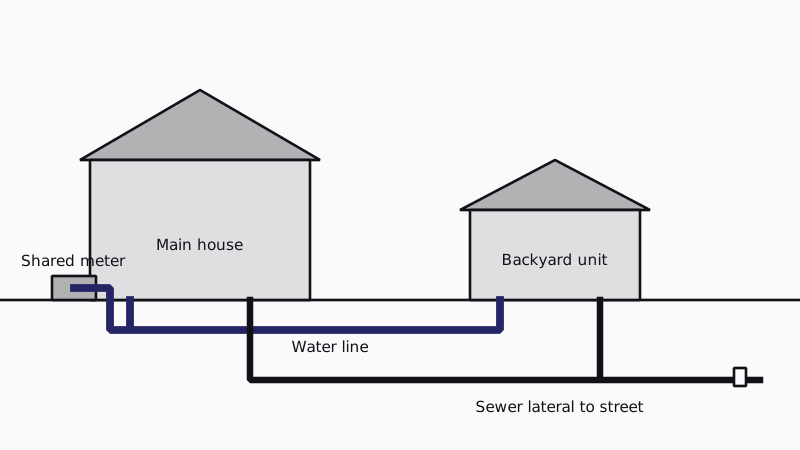
Ahead of an ADU, ask the permit office which agency covers your address. The City of Temecula Permit Center is at 41000 Main Street and takes calls on 951-694-6476, Monday to Friday, from 8 a.m. until 5 p.m. Confirm the parcel is inside city limits first, since county addresses go elsewhere.
For a mobile home, ask whether the plumber has worked on that style before, because the layout under the floor often differs from a site-built house.
Is a plumber the same as a heating and air conditioning company?
Not exactly. They are different trades with different license classes, though one business can advertise plumbing, heating and air conditioning together and still send a different person for each. Furnaces, air handlers and ducts are not plumbing. A water heater is, and so is the gas pipe that feeds a furnace.
When someone blames your heating or air conditioning for a water problem, a second look from the right trade is reasonable. As we book a visit, we describe the job so the right specialist gets sent.
Common questions
Is there a "135 rule" in plumbing?
We found no plumbing code or trade standard under that name, and we won't invent one. It could be shorthand for 135-degree turns made from two 45-degree fittings, or it may come from a bid or a video. Seen on a quote, it is worth asking the plumber to cite the code section behind it.
Which plumbing problem comes up most?
Clogged drains, dripping faucets and toilets that run on come up most, with failing water heaters close behind. That reflects general experience, not local call data. Unsure which category yours falls in? Note what the symptom is and when it began, and the visit will start from that.
Is 911 the right call for a plumbing issue?
Only when people are at risk, such as a gas smell, water reaching live electrical equipment or flooding in an occupied building. Get out, then call. A burst pipe by itself is no reason for 911; close the main valve and book a plumber. Gas smells go to SoCalGas, 1-800-427-2200.
What do plumbers reach for in place of Drano?
Chiefly mechanical equipment: a hand auger on sink and tub lines, a drum or cable machine on larger runs, and at times a high-pressure water jet. Caustic cleaners are avoided by many plumbers, as they can damage pipes and skin. Running a camera afterward reveals whether the pipe itself is damaged.
Do plumbers use copper pipes anymore?
Yes. Copper still goes into plenty of supply lines, and PEX plastic tubing is common in newer houses and repipes. The right pick depends on the house, the water, the budget and what the permit office accepts. The PEX versus copper guide compares the two.
Do plumbers change gas pipes?
Yes, though gas piping is a regulated trade. In California the work generally calls for a contractor license and a permit, and an inspector checks the finished job. Do not move, extend or cap a gas line yourself. The gas line page explains how a visit runs.
Which homeowners insurance company denies the most claims?
A fair answer is not possible, as we have verified no denial data for any insurer. The California Department of Insurance website carries complaint information. After a plumbing loss, ask your insurer in writing what is covered, since sudden leaks and slow seepage often get different treatment.
Updated