Preventing bursts comes down to five habits: keep water pressure within a safe range, find your shutoff and make sure it works, repair small leaks before they grow, protect exposed lines from cold, and retire pipe that is close to wearing out. Pipes rarely fail without warning. For related help, see leaks and burst pipes in Temecula.
What steps stop a pipe from bursting?
Keep pressure in check, test your shutoff valves, fix drips and stains early, insulate exposed lines, and swap out aging pipe before it fails. A pipe bursts when stress exceeds what it can take: too much pressure, a freeze, corrosion that thinned the wall, or a joint that has been weeping for months. Remove those stresses and most bursts never happen.
A simple routine helps. Twice a year, walk the house and look under every sink, behind each toilet, around the water heater and washing machine, and in the garage and attic. Look for green crust on copper, rust on steel, drips, stains, bubbling paint and a musty smell. Touch the supply lines and valves. Make notes on what you find and fix it in order of risk, starting with anything wet.
Once a month, check your water meter with every fixture switched off. If the dial turns or the low-flow indicator shows movement, water is leaking out somewhere. Per the EPA, the average household can lose more than 9,300 gallons of water a year to leaks, and a slow leak often warns of a coming failure. The causes behind such failures are listed in why pipes burst.
Can high water pressure cause a pipe to burst?
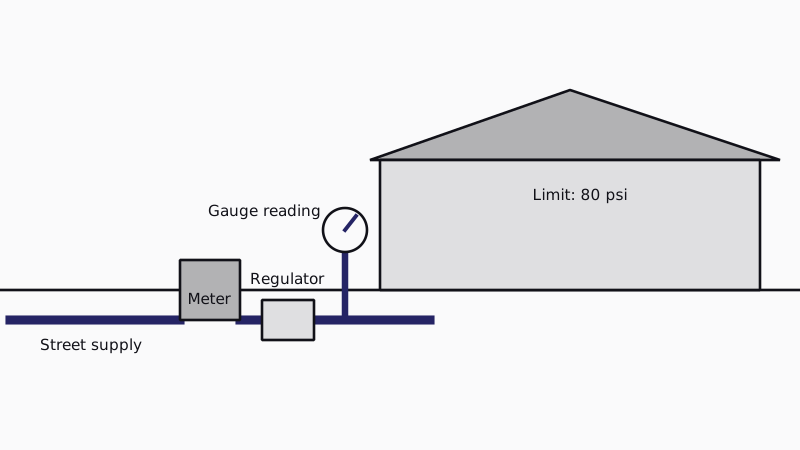
It can. Pressure beyond what the plumbing is rated for stresses every pipe, joint, hose and fixture, and wears them early. For a building, the California plumbing code allows no more than 80 psi, and a regulator at the point of entry normally holds pressure at or under it. If the regulator fails, full street pressure can pass through.
Signs of high pressure include banging pipes, a whine from the toilet fill valve, a dripping water heater relief valve, swollen hoses and faucets that spray hard. A plumber measures pressure with a gauge attached to an outdoor hose bib. Above the limit, a new or adjusted regulator solves it. Never adjust the regulator without a gauge; read adjusting a pressure regulator first.
In hilly parts of Temecula and the valley, pressure varies with elevation, and houses low on a slope often see more of it. Houses fed by a well have a pressure tank and switch instead, and a stuck switch can overpressurize a system. We have no figures for those setups, and they are best checked by a well specialist.
Which old pipes should I replace before they fail?
Replace pipe that has leaked repeatedly, pipe that is visibly corroded, galvanized steel that is narrowing inside, and any polybutylene found during inspection. Rancho California tract homes from the late 1960s onward may have early copper, and some homes of that age raise repipe questions. We cannot say your house has a given material from its age alone.
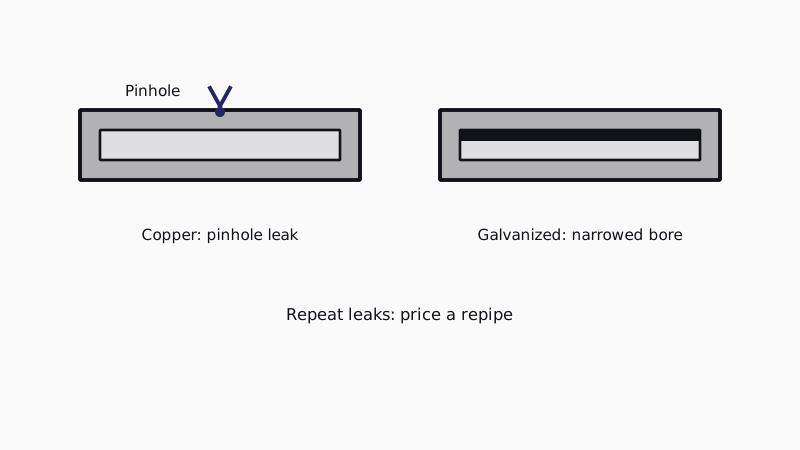
Pinhole leaks in copper, a run of repairs at the same line, discolored water, and falling pressure are signs a section is wearing out. A plumber can inspect, quote repairs against a repipe, and explain the permit. See repiping a house in Temecula and why people repipe for what the work involves.
Slab houses add a twist. In many 1990s and 2000s master-planned tracts, such as parts of Redhawk and Harveston, water lines can run through the slab or attic, and a leak under the floor can show up as a warm spot, a hissing sound, a meter that spins, or a bill that jumps. Whether to patch one line or repipe is covered by choosing a slab leak repair or a repipe, and pricing is in slab leak repair cost.
Whole-house repipes and most pipe work often require a permit. A contractor license is generally required in California for any job that needs a permit, and once labor and materials reach $1,000. For permit questions, the City of Temecula Building and Safety counter is on 951-694-6476, while addresses outside city limits use Riverside County, and Fallbrook and Rainbow use San Diego County.
Where is my main shutoff, and does it work?
Find the main shutoff ahead of an emergency, and test it. Check the spot at which the supply line reaches the house: an exterior wall, the garage, or a meter box at the curb. Turn it off and back on once a year so it stays free. If it will not turn, or leaks at the stem, have a plumber replace it.
A working shutoff is the most useful burst pipe protection, because it limits damage. Label it, tell everyone in the house, and keep a wrench or key nearby if it needs one. Know the shutoff for the water heater, the toilets and the sinks as well. Replace old stops that are crusted or stuck. When you travel, close the main shutoff, or ask a plumber about a leak-sensing automatic shutoff, which we have not verified or priced.
If a pipe does burst, shut the main right away. What follows is covered in recognizing a burst pipe and handling a burst pipe emergency.
How can I keep pipes from freezing in the Temecula Valley?
Insulate exposed pipes and outdoor spigots, disconnect hoses, cover the backflow assembly and spigots on cold nights, and let a trickle run through exposed lines during a hard freeze. Temecula is mild, but colder winter nights do occur, and rural spots such as Aguanga run colder than town, so exposed lines on well and rural properties deserve more care.
Concentrate on lines passing through unheated spaces: garages, crawl spaces, attics facing north, and runs along exterior walls. Foam sleeves are cheap and easy to fit. Pipes in a wall on the cold side of the house may need a little more insulation. On a frost night, leave cabinet doors open under sinks on exterior walls. Do not use a flame or a heat gun to thaw a frozen pipe, and if you cannot find the frozen section, call a plumber.
Irrigation and backflow assemblies on the outside of the house are the typical victims. Cover them and know how to turn off the irrigation supply. Our page on backflow prevention testing explains what they are.
Common questions
How often should I check for leaks?
Do a house walk-through and a meter reading at least twice a year, and after any big change such as new fixtures, a heater replacement or a freeze. Look under sinks, behind toilets and around the heater and washer each time. Reading the meter monthly with everything off takes two minutes and catches slow leaks early.
Which questions help with burst pipe prevention?
Have the plumber check pressure with a gauge, test the main shutoff and the stops, look at pipe age and material, and tell you which items are urgent. Request a written list with a price for each, so you can fix the risky ones first. Ask who pulls the permit, if any of the work needs one.
Must I be present for a leak inspection?
Yes, or send a trusted adult. Access is needed to the garage, the water heater, the sink cabinets and at times the attic, and the plumber may shut the water off for a short while. When you cannot attend, notify the plumber in advance, line up someone to let them in, and request photos of any findings.
Is a smart leak shutoff valve worth it?
We have not verified specific products or prices, so we will not recommend one. In general, these devices watch flow and can close the main if something runs unusually long, which may limit damage when you are away. A plumber can say whether your layout suits one, who installs it, and whether a permit is needed. Confirm it is compatible with your meter and shutoff.
For the wider picture, start with plumber across Temecula.
Updated