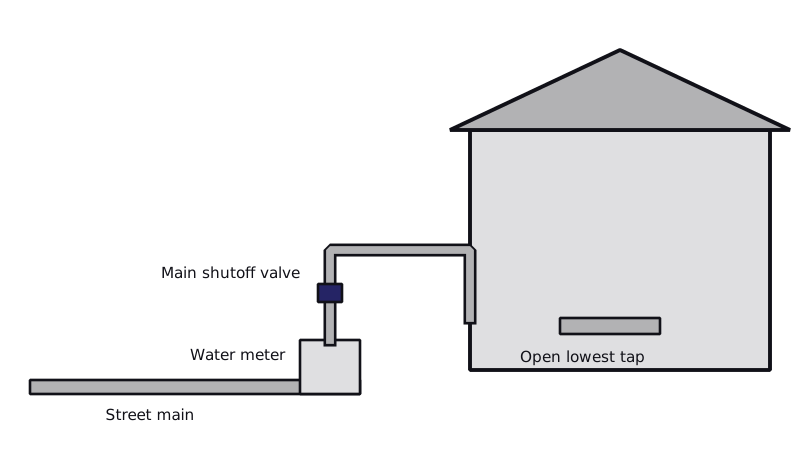
Stopping the supply comes first. Find the main shutoff and close it; in many Temecula houses it hangs on an outside wall near the garage heater, or sits in a lidded box at the curb. With the flow stopped you can empty the lines, move belongings aside and set up a repair. For the broader set of jobs, see the leaks page.
What comes first when the pipe has just burst?
Close the main, cut the power to any wet room if the breaker is dry to reach, then open the lowest tap to release pressure. Move rugs and electronics clear. Photograph the damage before mopping, because an insurer will want the pictures. Then send a repair request, so a plumber can inspect the break itself.
Water reaching outlets, appliances or a service panel changes everything. Stay out of any room where that is happening. If the breaker cannot be reached safely, phone the electric utility or dial 911 rather than wading in. Water with live current can kill.
If the rupture lies on the street side of your meter, closing the house valve will not help, and the water district must hear about it. Most Temecula addresses are served by Rancho California Water District, while some get water from Eastern Municipal Water District; check the water bill to see which one is yours.
Useful details to have ready: the location of the break, if the main is shut, the pipe material when visible, and any ceiling that is bowing.
What separates a burst from an ordinary leak?
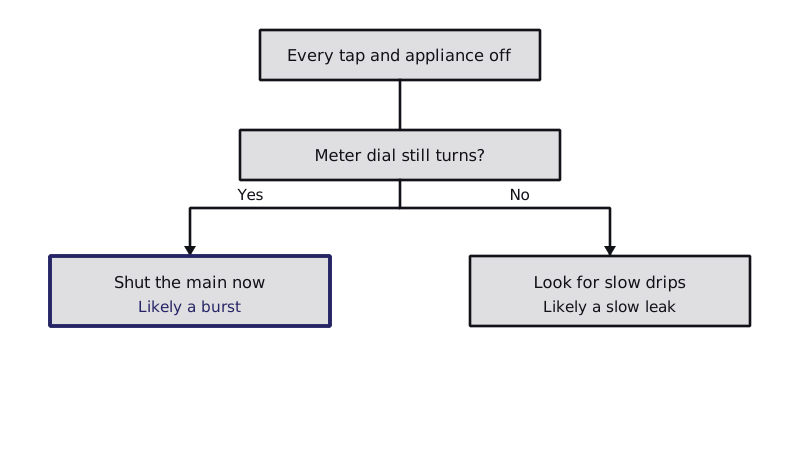
A burst is loud and large: spray, water streaming through light fixtures, drywall that turns dark and soft, or a meter still running with every fixture off. A leak drips or seeps. A separate guide on how to tell if a pipe has burst, gives a simple meter test.
Listen as well. Hissing inside a wall, water noise when nothing is on, or hammering after a tap closes can all mean a failing line. A sudden bump on the bill, or weak pressure at every tap together, tells the same story.
By EPA estimates, leaks drain over 9,300 gallons a year from a typical home, which makes even a slow one worth tracking down. A burst is the same waste at speed; depending on the pipe size and pressure, it can pour hundreds of gallons into a house within an hour.
Do pipes really burst in Temecula, and at what temperature?
They do. Ice is the textbook cause, and water in a line can start to freeze once the surrounding air stays near 32 degrees Fahrenheit long enough. The valley is mild, but cold nights still reach attics, garages, hose bibs and rural parcels such as Aguanga.
The split usually shows up at the thaw, which is how a ceiling can fail hours after the night has passed. Cold is only one trigger. Copper worn through from inside, rusted galvanized steel, a loose joint, a pressure surge or a root pushing on an outdoor line can open a pipe too. The page on why a pipe bursts lists them all, and prevention steps are on another.
Is the repair different for a wall, a slab, a bath or a sprinkler line?
The first response stays the same; the repair does not. Inside a wall it means a hole in drywall. Under concrete it may mean breaking through the slab or rerouting the line through the attic. At a tub it can mean opening the wall behind it. A sprinkler line is typically dug up and spliced.
A slab failure raises a bigger question than the splice, and slab leaks and repiping discusses it. PVC, PEX, copper and galvanized steel fail in different ways, so material and location steer the fix.
Say how old the house is when you ask for help. Tracts built in the 1980s and 1990s may hold older copper, which the plumber will want to plan around.
Does home insurance pay for a burst pipe?
Frequently the policy covers the sudden, accidental part, such as wet drywall, flooring and cabinets, but not a pipe that corroded slowly or a leak that ran for months. Policy wording varies. Read yours and call the insurer before approving repairs, as some policies require you to limit further damage.
Evidence counts. Film the scene before cleanup, and do not throw out damaged items until an adjuster has inspected them. Save every receipt, including any drying service. Closing the main promptly helps your claim as well as your floors.
We cannot tell you what your policy covers, and neither can the plumber; your agent or insurer can answer in writing.
How do you request a plumber, and what about nights and weekends?
Use the quote page: say where the water is, what the pipe is, and whether the main is closed. A local plumbing business gets the request and follows up. A nighttime visit is not promised, because the office runs weekdays from 9am to 5pm.
In an overnight flood, your best tool is the main valve, and when the break is off your property the water district's emergency line is the number to dial. Should there be a gas odor, get outside before anything else, then call SoCalGas on 1-800-427-2200 or dial 911.
Anything sent after hours is waiting when business opens. Begin drying quickly: health agencies generally advise that wet materials should be dry within a day or two, as mold can take hold in damp drywall and carpet.
That local company does the repair, not us; it pays us a fee for receiving your request. Any price comes from that company after it has seen the damage.
Common questions
Should the water heater be switched off after a break?
If lines were drained, yes. Put a gas heater on pilot or switch it off, and turn an electric one off at its breaker, since a tank heating with no water can be damaged. Unsure which valve or switch does what? Leave it alone and let the plumber restart it once water is back.
How long is it safe to go without water?
A day or two is workable with stored water, though check on children, older relatives and pets. A plumber can sometimes isolate the broken run and restore everything else. Ask whether a temporary fix is possible while a permanent repair waits for parts or a permit.
Who is allowed to repair it?
Under general California rules, a job that reaches $1,000 in labor and materials, or one that needs a permit, must be done by a contractor holding a license. A small patch may stay below that line; a main, a slab or several fixtures usually will not. Request the license number and check it on the state contractors board site.
Is a permit needed to fix a burst?
A short section swap often is not. Replacing runs, moving lines or reworking a main usually is. Within Temecula that is the city's Building and Safety office; unincorporated areas go through the county. The plumber should say which applies to your address.
See the plumber guide for Temecula for the other services and what they cost.
Updated