Water turning up where it should not be is the plainest sign of a burst pipe. Watch for a damp patch spreading across a wall, a ceiling or the floor, a hiss or rushing sound inside the drywall, or pressure that falls at every tap at once. A meter dial that keeps turning with all fixtures off also shows water escaping. Shut the main valve first of all, and then read on. This page belongs to the wider leaks and burst pipes section, and deals with confirming the break, finding it and deciding who repairs it.
What are the signs that a pipe has burst?
Watch for five signals: a stained or soaked wall, ceiling or floor that you did not cause; warped flooring or bubbling paint; running water you can hear when everything is off; weak or uneven pressure; and a bill well above normal. A single sign can have a dull explanation. Two together, or one plus a moving meter, point to a break.
Smaller clues that often appear first:
- A closet, cabinet or garage that smells musty and never airs out.
- Floor that feels warm over a slab, hinting that a hot line is leaking below.
- Cloudy or brown water for a minute after you open a tap.
- A damp baseboard on one wall only.
Leaks inside walls can drip for weeks with nothing visible. The EPA puts the average household leak above 9,300 gallons a year, so a bill that rises while your habits hold steady deserves attention. The high water bill page covers that case.
Can the water meter tell me whether a pipe has burst?
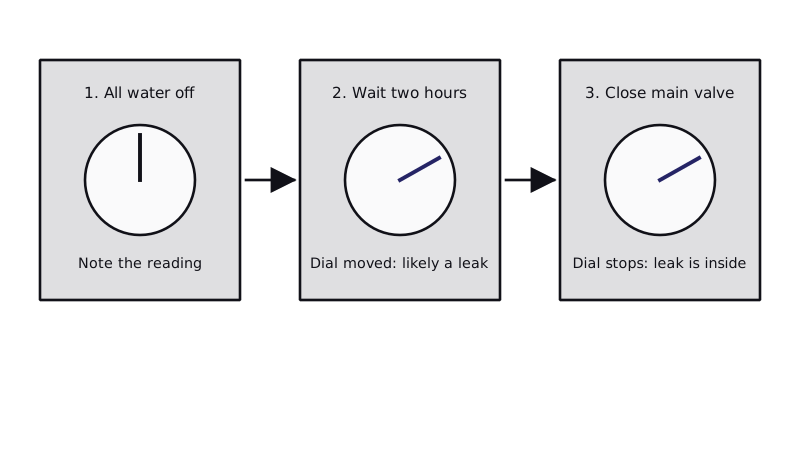
Turn off all taps, appliances and irrigation timers, then go to the meter. EPA's method is to record the reading, use no water for two hours, then check once more; a changed number suggests a leak. Many meters also have a small leak indicator, a dial or triangle that spins when any flow passes.
Finding the meter is usually easy: look in a box at the curb along the front of the lot, under a lid a screwdriver can lift. Ask your water district which agency reads it. Rancho California Water District's main line is 951-296-6900, and when another district sends your bill, its number is printed on that bill.
To check if the loss is inside the house, close the main valve where the line enters the building, and look at the meter again. A dial that stops means the leak is indoors. A dial that carries on moving puts the break in the buried pipe linking meter and house, frequently under the lawn or a driveway.
How do plumbers locate a leak I cannot see?
A plumber works toward the leak in stages. A meter or pressure test proves one exists, then listening equipment, thermal imaging or tracer gas pins down its position, and finally a camera or a small opening lets the plumber see it. The goal is to cut away as little drywall or concrete as possible.
Here is what each tool is good for:
| Method | What it finds |
|---|---|
| Pressure gauge screwed to a hose bib | Shows whether the supply lines hold pressure |
| Acoustic listening | The hiss of a pressurized pipe, through floors and slabs |
| Thermal camera | A temperature difference from hot-line leaks or wet insulation |
| Tracer gas | Tiny leaks in lines that aren't audible |
| Drain camera | Cracks or holes inside drain pipes |
Slab homes are the harder case, since supply lines can run beneath the concrete. The slab leak guide explains that process.
How do I find where water is leaking from in my house?
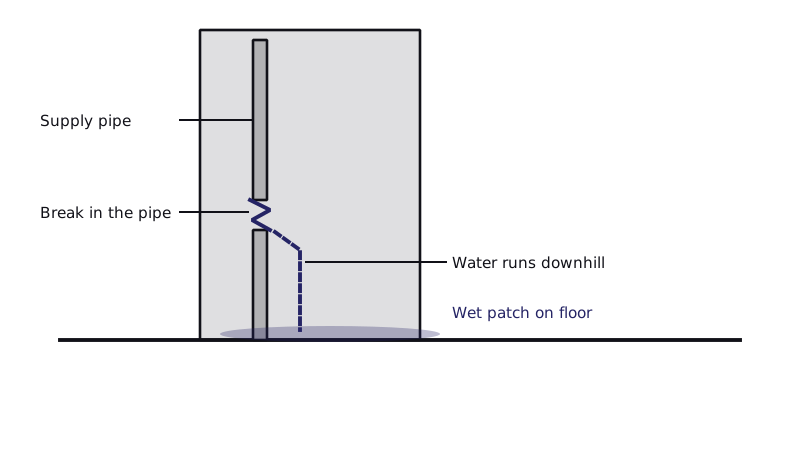
Begin at the wettest spot and trace the water uphill, because gravity pulls it down and away from the real break. Check fixtures first: the supply lines beneath sinks, the toilet connection, the water heater, the washing machine hoses and the ice-maker line. After that, examine ceilings below bathrooms, and the outside wall closest to the meter.
A flashlight and a dry paper towel are useful. Hold the towel against each supply line and valve under a sink. A damp towel marks the leak. If the sink area stays dry, check the shower wall behind the tile and the base of the toilet.
Should water drip through a ceiling light, do not touch that switch. Cut the breaker for that area provided the panel is safe to approach, and stay clear of the fixture. See water leaking in a ceiling light.
What should I shut off first if a pipe bursts?
Close the main water valve, then open the lowest faucet in the house so the lines drain. If water is touching outlets, appliances or the panel, cut power only when the breaker can be reached without standing in water; if not, leave and call the utility or 911. Never touch electrical equipment while standing in water.
Find the valve ahead of time. Common spots are an outside wall near the front hose bib, the garage or the meter. A wheel handle turns clockwise, whereas a lever-style ball valve closes with a quarter turn across the pipe.
Once the water is off, photograph the damage for insurance, clear belongings away and phone a plumber. If the leak is bad enough to cost you a night's sleep, the burst pipe emergency page describes how an urgent visit is arranged.
Can I fix a leaking PVC joint without cutting it?
Usually not permanently. A glued PVC joint that weeps has usually failed at the cement bond, so the lasting repair is to cut the joint out and glue in a new coupling. For a short-term hold on a low-pressure or drain line, epoxy putty or a wrap-on repair clamp can slow a leak until a plumber arrives.
Pressurized supply lines are less forgiving. Do not rely on tape or putty on a line that stays under pressure for more than a day. The PVC leak guide shows the repair in more detail.
Also remember the work behind a wall may require a permit. If you aren't sure, ask the City of Temecula Permit Center on 951-694-6476. To have Temecula Pipe and Repair pass your request to a plumber, send it through the quote page.
Common questions
How long does a burst pipe repair usually take?
A single reachable pipe often needs just a few hours after the plumber arrives. A leak behind tile, beneath a slab or within a ceiling can take a day or longer, since walls must be opened and then closed again. No duration can be promised by us; the plumber's visit and the written quote give the real estimate for your house.
Which questions belong on my list before hiring for a burst pipe?
Check whether the price includes locating the leak plus opening and closing the wall, who handles drywall and paint afterward, whether a permit is required, and whether the plumber can provide paperwork for an insurance claim. Also get the contractor license number and search for it on the state contractors board website before work begins.
Must I stay home while the repair is done?
Usually an adult has to let the plumber in, show where the main valve is and approve the work and its price. Watching the work itself is not needed. If you cannot be home, mention it when requesting the visit, so access can be set up beforehand with someone you trust.
Does homeowners insurance pay for a burst pipe?
A lot of policies cover sudden bursts and the damage that follows, treat long slow leaks differently, and seldom cover the pipe itself. Terms vary, so call your insurer ahead of repairs where possible, and hold on to photos, receipts and the plumber's written report. Ask for your policy's position in writing.
Can pipes burst in Temecula?
Yes. Age, high water pressure, corrosion and mineral scale are common triggers in any valley home, and hard water here is something to keep in mind for older lines. The causes guide and the prevention page cover what raises the risk.
Updated