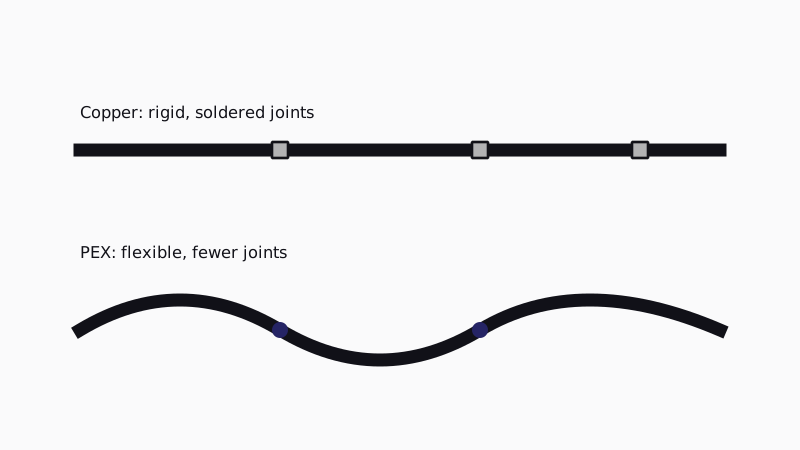
Neither tubing wins outright. Copper brings a long history and shrugs off sun and heat. PEX snakes through finished walls, forgives a hard freeze better and tends to be the cheaper install. When you weigh them for a whole-house repipe, let the condition of your current lines and your local water steer the choice, and have both materials priced side by side.
Which tubing has the longer service life?
Copper has the longer proof, because it has served in houses for generations, while PEX is the newer arrival with a shorter record. Makers and trade groups quote several decades for each, yet no one can stamp a date on your plumbing. Water chemistry, pressure and joint workmanship usually outweigh the label on the tube.
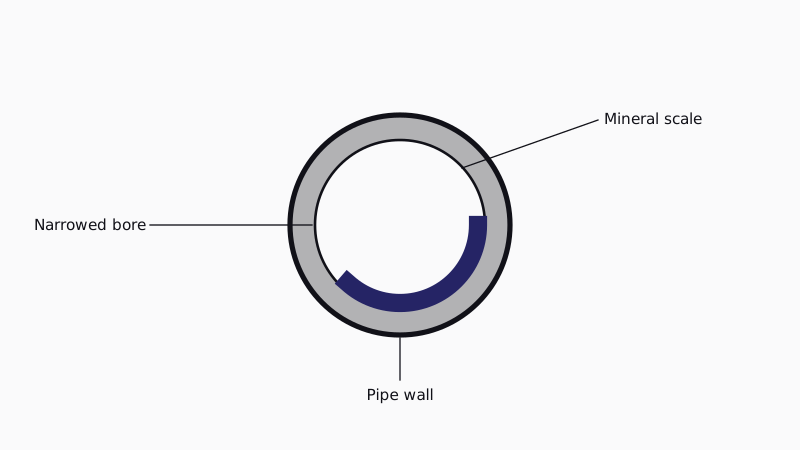
Local water carries a lot of dissolved mineral. Rancho Water's own reports put average hardness near 230 to 240 mg/L in the 2020 to 2023 editions, which is very hard by any scale. Minerals scale up heaters and aerators, and in some houses copper wears pinholes from the inside, often linked to fast flow, high pressure or the chemistry of the supply. PEX is spared that kind of pitting. Its trouble spots are sunlight, which degrades it, and the fittings, where most failures begin.
Houses plumbed in copper decades ago are now old enough that pinholes can be a reason owners start researching this. The current Consumer Confidence Report on ranchowater.com shows your supplier's latest numbers.
Does 1/2 inch PEX flow as well as 1/2 inch copper?
Nearly, but not quite. Half inch PEX tends to run a little narrower inside than half inch copper, so at equal pressure it passes a bit less water. Installers make up for it with a fat main trunk or a manifold that sends a dedicated line to every fixture. At the faucet, most households never feel the gap.
Nominal size is only a label. The true opening depends on wall thickness, and fittings steal some of it. Expansion-style PEX connections keep more of the bore than the older insert type, so find out which system is planned before you compare quotes.
In old houses, weak flow more often traces back to scaled galvanized pipe, a tired pressure regulator or a half-shut valve. If a feeble shower is what pushed you toward a repipe, work through why water pressure drops before spending anything.
Which one copes better when temperatures fall below freezing?
PEX has the edge. The tubing can stretch as ice forms, which makes a split less likely, whereas rigid copper can burst. Neither is immune, and fittings can still let go. Most of the valley seldom stays frozen for long, but Aguanga, Wine Country parcels and any exposed outdoor run can see real cold.
Where winter nights fall under freezing, the habits are identical for both tubes: wrap what is exposed, cover hose bibs, and learn the main valve before you need it. A burst often shows itself at the thaw, so that valve is your first move. For the steps once water is flowing where it should not, read the burst pipe emergency guide.
What does PEX versus copper cost?
PEX usually comes out cheaper in both tubing and labor. It ships in long coils with few joints, which shortens labor. Copper needs a soldered or pressed joint at each turn. Material prices move too much for a fixed dollar figure to stay honest here; request itemized numbers on each option.
The same factors move either bid: fixture count, one story or two, attic runs versus slab, the drywall that must be opened and closed, and permit fees. On many jobs the patching rivals the pipe.
When you fill in the quote form, mention which material you lean toward. Asking for both options in writing lets you compare totals rather than hunches.
Is there PEX for gas lines, and what about mobile homes?
There is not. Water PEX is no substitute for gas pipe, and the mix-up is dangerous. Gas piping uses its own materials, pressure tests and permits, and in California the law reserves that work for a contractor holding a state license. Should you smell gas, walk outside before anything else, then call SoCalGas at 1-800-427-2200, or 911 if anyone is in danger.
Mobile and manufactured homes frequently carry flexible plastic supply lines, since they route easily through floors and ride out movement. Whether yours does depends on its age and maker, so look underneath before assuming. For the gas side, see how gas line jobs are handled.
Which suits an older Temecula house better?
Copper already weeping at pinholes is the classic argument for PEX, mainly because lines can be fished through existing walls with less demolition. Runs that cross a hot garage or catch direct sun may do better in copper. Plenty of jobs mix the two: copper where it shows, PEX where it hides.
Resale feelings vary. Some buyers like copper on principle; others only care that walls stayed intact. Both are fair. What matters is clean workmanship, proper hangers, a pressure test before drywall goes back and a permit where required. Inside city limits that office is Temecula Building and Safety; unincorporated parcels fall to the county.
Polybutylene or galvanized lines are a stronger reason to replace than any material debate, so mention what is behind your walls. The repiping overview lists warning signs, and our front page shows what else we can send a plumber for.
What happens during a repipe, step by step?
Expect a walk-through and written quote first. Then the main valve closes, tired lines come out or get capped off, fresh runs are pulled through attic, wall or crawlspace, fixtures are hooked back up and the whole system is held under test pressure. Patching follows, and a city or county inspector signs off when a permit exists.
A full house takes days. Water will be off for stretches, so fill buckets, learn which fixtures return first and clear the walls where holes will appear.
We do not do the pipe work. We pass your request to a local plumbing business, which gives the quote, books the date and carries out the job; the businesses taking requests from us pay a fee.
Common questions
Can PEX be used for drinking water?
Water-grade PEX is sold for potable use and recognized by plumbing codes, including California's. Check the rating print along the tube. New PEX can give water a faint taste for a few weeks, which flushing normally clears. Ask the contractor which tubing brand and joint system goes into your walls.
Does repiping a house require a permit?
Generally yes. Swapping out supply lines is plumbing work that usually triggers one, and California law reserves permitted work for a contractor who holds a state contractor license. Inside Temecula the permit comes from the Building and Safety counter at City Hall; outside city limits, from the county. Confirm your parcel first, then settle who pulls the paperwork.
Will new pipe fix low pressure?
Only if scaled or corroded lines are the cause. A failing regulator, a partly closed valve or weak street pressure will survive a repipe untouched. A screw-on gauge at an outdoor spigot reads pressure in minutes, so measure first and decide after, which keeps you from paying for work that changes nothing.
How long should a repipe last in days?
Smaller homes often wrap up within a few days. Two stories, slab foundations and cramped attics stretch that, and drywall repair plus inspection come after. Ask for a dated schedule on paper, including the days the water stays off, because that varies with access and with how soon the inspector can come.
Updated