Repiping is not a weekend project. A plumber shuts off the supply, opens small sections of wall or ceiling, runs new lines to every fixture, pressure tests them, has the city inspect them, and then patches the openings. The job needs a permit, and only a contractor who holds a California license may do it. If you are weighing the whole project, start with the repiping overview; this page is the sequence of events once you have decided.
In what order do plumbers repipe a house?
The usual sequence is: protect the house, shut off and drain the old lines, cut access holes, run the new main and branch lines, connect fixtures, pressure test, book the inspection, then close the walls. Each stage depends on the one before, which is why one missed step, such as skipping the test, can cost a second visit.
In more detail:
- Walkthrough and plan. The plumber tallies the fixtures and chooses the route: attic, crawl space, walls or a mix.
- Floor and furniture protection. Drop cloths, and a clear path from the garage to every bathroom.
- Water off. The main closes, and the old lines drain.
- Access holes. Small rectangles cut near fixtures and wherever lines turn.
- New lines. Pipe is pulled or soldered along the planned route.
- Fixture hookups. New shutoff valves under sinks and at toilets, and a reconnected water heater.
- Pressure test. The lines are filled with water or air and watched on a gauge for any drop.
- Inspection. A city inspector looks at the work while it is still open.
- Patching. Drywall goes back and is textured; paint is usually a separate job.
How is a house on a slab repiped?
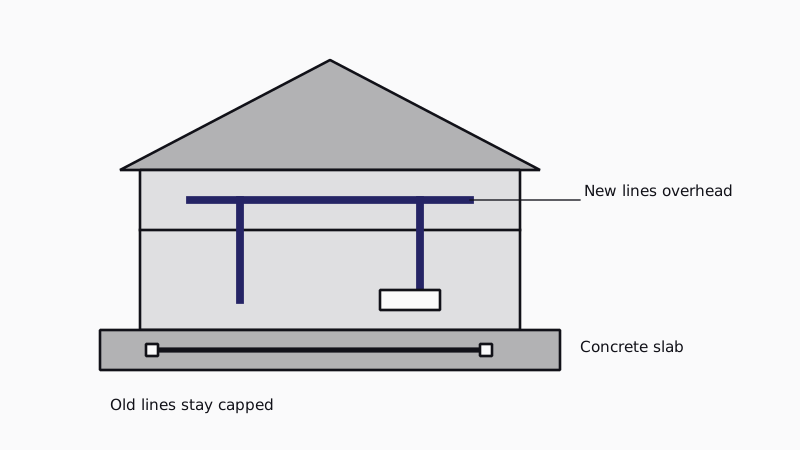
Typically the old pipes under the concrete are left in place and the new supply is routed overhead, across the attic and down the walls, so the floor stays intact. Hot and cold lines then reach the fixtures from above. The old pipes stay in the ground, capped.
This is the common choice because jackhammering a slab is costly, loud and messy. Each fixture gets a new feed from above, so a slab house often needs more wall openings than a house with a crawl space. Some homes with a slab leak have only one bad line, in which case the slab leak repair or repipe comparison helps you decide.
Attic or ceiling water lines were used in some tract homes of the 1990s and 2000s around Temecula, which makes an overhead reroute simpler where the original supply already ran above. Whether that applies to your house depends on how it was built, so have the plumber confirm it from what they find.
What happens after the new pipe is in?
The new lines are tested under pressure and an inspection is requested. When the inspector passes it, the walls are closed, drywall is patched and textured, and water is turned back on. Run every faucet for a few minutes to clear debris, and clean the aerators, which often collect bits of flux or pipe shavings.
Small paint touch-ups count as extra unless the quote says otherwise. For a day or two afterward, check under every sink and look at the ceiling below any upstairs bathroom for damp spots.
Your records matter. Keep the permit card, the final inspection sign-off and the plumber's contract. If you ever sell, the buyer's inspector may ask for them. See also the questions about repipe timing if you are not sure yet whether to proceed.
For a written quote from a nearby plumbing business, use the quote page, or begin on the Temecula Pipe and Repair home page.
What does the work look like with PEX or copper?
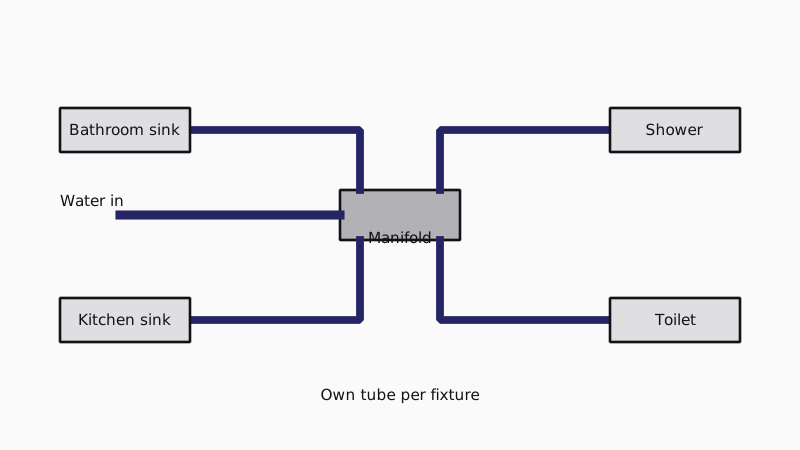
PEX is flexible tubing that runs through walls and attics from a central manifold to every fixture, joined with crimp or expansion fittings, so fewer openings are needed. Copper is rigid pipe cut, soldered and run in straight sections, which means more joints and more access holes but a long track record. Both pass pressure tests.
Neither material is better in every house. PEX bends around corners but must be kept out of sunlight, while copper has proved itself over decades in the ground and in walls. Our page comparing PEX and copper lays out the pros and cons, and the cost guide explains what drives the price of each.
Rancho Water's own water quality reports list hardness around 230 to 240 mg/L, roughly 13 to 14 grains per gallon, in the 2020 to 2023 reports. That is very hard water. It leaves scale in water heaters and fixtures, and it is one of the factors plumbers weigh when advising on copper against plastic.
Do I need to do anything before the repipe starts?
Yes, a short list: clear access to every sink, toilet and the water heater, move furniture and wall hangings away from the work, and plan where the household will go during the shutoff. Ask the plumber for the daily hours without water, and whether one bathroom can remain usable.
Also check these items:
- Pets and kids. Open walls and cut pipe are not good company.
- Dust. Cover or move anything you can't wash.
- Permit. Confirm the plumber is applying for it. The City of Temecula Permit Center (41000 Main Street, phone 951-694-6476) covers addresses inside the city, while Riverside County Building and Safety serves county addresses.
- Written scope. The quote should state the pipe material, the number of fixtures, who patches and paints, and what happens if the walls hold surprises.
Many Temecula houses from the Rancho California tracts were built decades ago, and homes of that age sometimes have early copper or other pipe types that call for repiping questions. Find out what the plumber observed before recommending replacement.
Common questions
How many days does a whole-house repipe take?
An average house often takes a few days, though the range shifts with house size, bathroom count, access and the inspection schedule. Slab houses and two-story homes with hidden runs usually take longer. The written quote should include a schedule and the daily hours without water.
Is repiping my own house allowed?
California requires a contractor license for any job that needs a permit, as a whole-house repipe does, and for jobs of about $1,000 or more in labor and materials. The law has owner-builder paths, but a repipe is demanding and an error can flood a house. Ask the City of Temecula Permit Center what applies before you buy pipe.
What should I ask before a repipe?
Obtain the contractor license number and verify it with the state contractors board. Then ask which pipe material is recommended and the reason, who files the permit, who patches and paints, how the price changes should a wall hide a surprise, and the daily hours the water stays off.
Can a repipe cure weak water pressure?
Often, if corroded or clogged supply pipes were behind it. It does nothing when the cause is a worn pressure regulator, a half-shut valve, or weak pressure from the street, so a good plumber checks pressure with a gauge before recommending a repipe. See low water pressure causes.
Updated