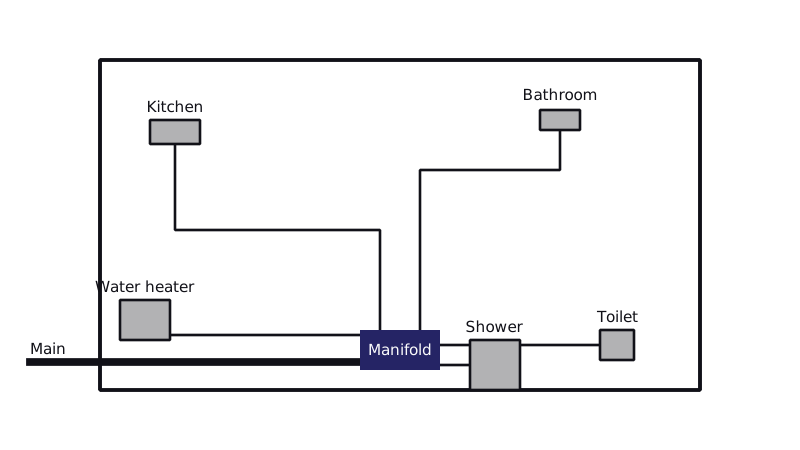
Repiping means pulling out the old hot-water and cold-water supply pipes inside a house and putting in a fresh set, usually PEX or copper. It is a whole-house job, not a patch. Submit the quote page form, and your request goes from us to a plumbing business that inspects the pipes, prices the work and describes how the walls will be affected.
Most Temecula homes were built between the late 1960s and the 2010s, so the question rarely comes up on a new house. It comes up when a second or third pinhole leak appears, when the tap runs brown, when pressure fades room by room, or when a buyer's inspector flags polybutylene. Below you will see how to tell whether you need it, along with what the work includes and where to learn the price.
What does repiping a house actually mean?
During a repipe, the plumber removes the supply lines that carry hot and cold water to each fixture and installs new ones. New lines reach every sink, toilet, shower and appliance, and the whole system gets a pressure test before the walls are closed. Drain and vent pipes are a separate system and usually stay.
People often confuse it with fixing a leak. A single repair swaps one section; a repipe replaces the network. In a one-story slab home, the new lines normally run via the attic and down inside the walls instead of back under the concrete. Two-story homes can need more drywall access, and a good plumber explains where every cut will land before work begins.
What signs say a home is due for new pipes?
Three or more leaks in a short period, discolored or metallic-tasting water, and falling pressure that a new regulator does not fix are the strongest signs. A confirmed polybutylene or galvanized system is also a reason to plan ahead. One isolated leak on otherwise healthy pipe does not justify a repipe.
Rancho California Water District's own reports describe average hardness around 230 to 240 mg/L in the 2020 to 2023 reports, which is very hard water. Mineral buildup narrows pipe bores over decades, so older galvanized steel restricts flow first. Copper from the 1970s to 1990s can wear thin at joints and elbows. The article on what causes low water pressure shows how to rule out a failed valve before blaming pipe, and pipe replacement ages by material goes into how old each type gets.
Does a house repipe pay off?
It makes sense when the pipes are failing in several places, when leaks have already caused drywall or flooring repair, or if bathroom renovations are coming and the walls will be open anyway. For one leak it is hard to justify. Weigh the cost of repeated repairs and water damage against one planned job.
Think about what else the repipe touches. Selling is easier with a clean inspection report. Water damage from the next pinhole can run far above the cost of the pipe that caused it. Insurers commonly treat slow leaks differently from sudden breaks, so ask yours how it views aging plumbing. The guide on why people repipe lays out the reasoning in more detail.
How much should a whole-home repipe run?
Whole-house prices vary a lot with house size, pipe material, bathroom count and the amount of drywall repair included. Published cost guides run from the low thousands for a small home on PEX to well into five figures for a large home on copper. After seeing the house, the plumber quotes your actual price.
We have not tied a single number to this page because the guides do not agree closely, and access in a two-story Redhawk-style layout differs from a single-story tract home. For the factors and a breakdown, see what a house repipe costs in Temecula and the notes on PEX repipe pricing.
What lasts longer, copper or PEX?
Copper has built up the longer track record, often described as lasting fifty years or more in good conditions, while PEX is newer and its manufacturers claim comparable service life. Water chemistry, installation quality and fittings affect both. No clear winner exists for every house, which is why plumbers still use both.
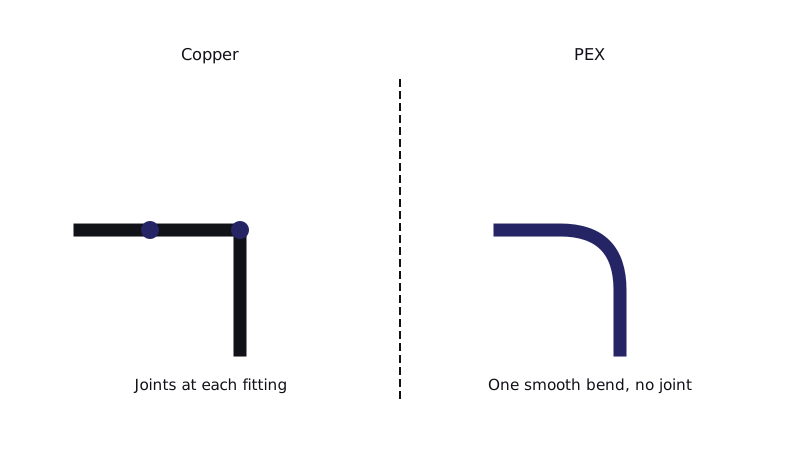
Copper resists UV and heat but can corrode in aggressive water and costs more for materials. PEX bends around corners, needs fewer joints and is easier to thread through finished walls, which usually cuts labor. The pros and cons are set out in PEX versus copper for Temecula homes, and you can read the general comparison in copper pipe vs PEX. If you are curious about grades, PEX A versus PEX B explains the difference.
How long does repiping a whole house last?
Plumbing work on an average single-family home runs a few days, while a bigger or trickier house can stretch toward a week. Drywall patching and painting follow, and are often handled by a different trade, so the full return to normal takes longer than the pipe work itself.
Expect the water to be shut off during part of each working day. Ask the plumber which days, so showers and laundry can be planned around it. Check whether the quote includes patching, texture and paint, and who obtains the permit. Inside Temecula it comes from the City's Building and Safety division, while homes outside the city line go through San Diego County or Riverside County.
Can you repipe your own house, and what does the law say?
Anyone can learn the trade in theory, but a whole-house repipe makes a poor first project. In California, work worth $1,000 or more in labor and materials needs a contractor license, as does anything that requires a permit, and repiping does. Pressure testing, soldering and shutoff work also bring a real risk of flooding.
Some owners working on their own home can use an owner-builder exemption, which has its own limits and conditions, so ask the Contractors State License Board and your building department first. According to the Bureau of Labor Statistics, a license is required of plumbers in most states and some localities. For most owners the sensible role is choosing materials and scheduling, not holding the torch.
How can a home be repiped for less money?
The most economical honest approach is PEX, installed by a plumber who routes the lines to open fewer walls and handles patching in that same visit. Replacing only the worst section, or only one bathroom's lines while a remodel has the walls open, costs less provided the remainder of the pipe is sound.
Distrust any price that omits permits, drywall repair or fixture shutoff valves, because a bid missing those can end up costing more. The smallest quote does not always give the smallest bill. Where partial work stops making sense is covered on the galvanized pipe replacement page.
What are the main kinds of plumbing systems in a home?
The usual list is the potable water supply, the drain and waste system, the venting system and the gas piping. Some lists swap in storm drainage or hydronic heating. A repipe concerns only the supply side, though gas lines and water lines often pass through the same attic or crawl space.
Gas piping is a regulated trade of its own. Where gas lines pass close to the work area, the plumber works around them; gas work calls for a contractor and normally a permit. When you smell gas, leave the building, then phone SoCalGas at 1-800-427-2200 from outside, or 911 if anyone is in danger.
Common questions
Do plumbers use copper pipes anymore?
Yes. Copper is still installed in plenty of homes, especially for water heater connections, exposed runs and owners who prefer it. PEX has taken most whole-house repipes because it is quicker to install and costs less for materials. Which one suits you comes down to your house, your water and your budget, and a plumber can explain both.
Do I need a permit for sewer line replacement?
Across most of California, a sewer line replacement requires a permit and gets inspected. Temecula residents can start by calling the City's Building and Safety division at 951-694-6439. Rural land outside the city limits is handled by San Diego County or Riverside County. Confirm which applies to your parcel, since the boundary is not always obvious.
Can a homeowner replace their own sewer line?
The same $1,000 limit for needing a contractor license applies, and digging trenches, tying into the public sewer and passing inspections all add risk. An owner-builder exemption fits some owners. Errors can send sewage back into the house. Talk to the building department before digging, and request a plumber's quote to compare.
What is the typical lifespan of copper plumbing?
Fifty years or longer is typical in good conditions, though local water chemistry, soldering quality and flow speed can cut that short. Pinhole leaks often appear earlier in very hard or aggressive water. By looking at the exposed pipe, a plumber can judge how much life remains.
Is polybutylene pipe a reason to repipe?
Builders installed polybutylene widely from the late 1970s until the mid-1990s, and it has a reputation for failing at the fittings. Insurers and buyers often react to it. A plumber can identify it if you cannot tell what you have. Check our galvanized and old pipe guide for the steel side of the same question, and see the home page for other services.
How much to repipe a house of 3,000 square feet?
Bigger homes cost more, chiefly from extra runs, extra bathrooms and more wall access. Published guides disagree widely, so we quote no figure. Request a written quote from the plumber, itemizing the material, the fixture count, the permit and the patching, so you can compare offers line by line.
Guides in this section
- Repiping timing
Houses do not get repiped on a schedule. Pipe material, age and failure signs decide, and this guide maps them to the home ages found…
- Repipe steps
How a whole-house repipe works in a Temecula home, from the shutoff and wall access to PEX or copper, pressure test, inspection and…
- PEX or copper pipe
Copper versus PEX for a repipe or remodel: lifespan, drinking water, PEX-A or PEX-B, fittings, underground use and the trade-offs a…
- Galvanized pipe replacement
When old galvanized water pipe needs replacing, how long a repipe takes, whether you need a permit in Temecula and what to know about…
- PEX-A or PEX-B
PEX-A bends easier and takes expansion fittings, PEX-B is stiffer and cheaper to join.
- PEX repipe cost
What a PEX repipe costs against copper: per-foot pipe prices, whole-house ranges, what changes the total and how polybutylene homes are…
- Pex water line vs
PEX or copper for a new water line or repipe in Temecula?
- Choosing a pipe material
PEX or copper for a Temecula house? Lifespan, flow, cost drivers, cold snaps and hard water compared, plus how to get a written quote for…
- Repipe costs
What a whole-house repipe costs: published ranges by home size and pipe type, what pushes a Temecula job up, and how to read a quote…
- Reasons to repipe
Why homeowners in Temecula repipe: repeat pinhole leaks, discolored water, low flow, old materials and slab leaks.
Updated