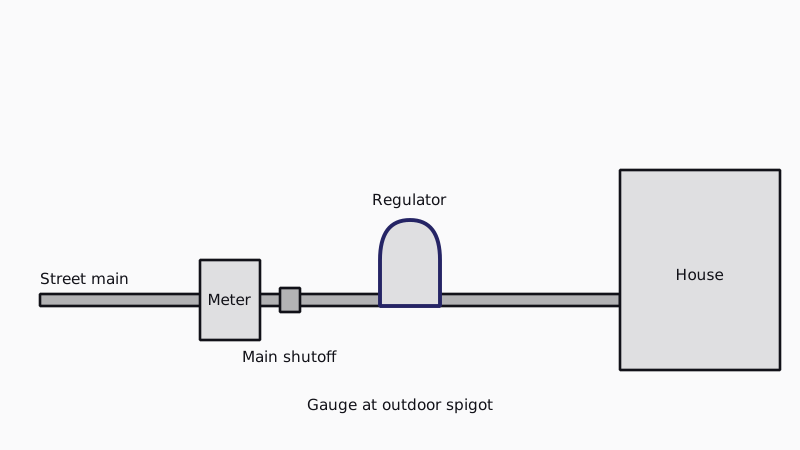
A sudden pressure loss typically has one of three sources: a utility problem, a valve that someone shut or bumped, or a broken pipe. Start by asking a neighbor, then check the main valve, then read the water meter. The low water pressure page gives the wider picture, and if the checks find nothing, the quote form is the way to reach a plumber.
A slow fade across several months is a separate matter, covered in why water pressure drops. The question here is what changed in the last hours or days.
Does the whole neighborhood have the problem, or just your house?
Check with a neighbor and test an outdoor spigot. If the entire street is weak, the utility is responsible, perhaps because of a main repair, a flushing program or a pump or reservoir problem. If just your house is weak, the fault lies on your property.
Your water bill names your district. Rancho California Water District gives 951-296-6900 as its main number, and its website has outage and service pages. Eastern Municipal Water District serves parts of the area, including some Winchester and Temecula addresses, and lists Temecula and Winchester among its retail communities. When a main break or maintenance is behind it, pressure comes back once the crew finishes, and the first water through may run cloudy briefly.
Is a pipe broken or leaking?
It may be. When a pipe bursts or leaks, water escapes on its way to the taps and pressure sags. Watch for a wet floor, a soaked wall, a soggy patch of lawn or the noise of running water. Then read the meter; a dial that turns while every tap is shut signals a leak.
The EPA's method is simple: record the meter reading, leave the water unused for two hours, then check it once more. If the number has changed, there is a leak somewhere. When the meter spins fast or you can see water, close the main valve and call a plumber. The burst water pipes guide explains the first steps, and the burst pipe emergency page handles urgent cases. The EPA also reports that leaks waste over 9,300 gallons yearly in a typical household, so even small ones merit action.
What if just the hot water is weak, or the house uses a well?
When just the hot side is weak, suspect the water heater, a closed valve on it, or a clogged line leaving it. Wells are their own world: a failed pump, a tripped breaker, a waterlogged pressure tank or a clogged filter will drop pressure at once. Many rural parcels around Aguanga, De Luz and Wine Country use wells.
For hot water only, see low pressure from a hot water heater. For wells, check the pressure switch and the breaker, but electrical work on the pump and tank belongs to a pump specialist or plumber who handles wells. In colder inland areas such as Aguanga, a frozen section of supply line can also cut flow in winter, so look for exposed pipes and warm them gently without flame.
When is it time to close the water and get help?
Close the main and ring a plumber if water appears where it should not, if the meter keeps moving although everything is off, if your pressure has vanished while the neighbors' is fine, or if a regulator or main valve acts up. Keep the quote form nearby and describe your checks.
The plumber will want to know when the drop started, which fixtures are affected, what changed beforehand, the meter result and any pressure gauge reading you have. Our other services are on the home page. For a broader look at common causes, try what causes low pressure in a home.
Has anything changed inside the house lately?
Any plumbing job, new filter, softener installation, heater replacement or sprinkler repair can leave valves set wrongly. A shutoff left half closed, or a bypass valve on a treatment system turned the wrong way, is a frequent cause. Think back to when anyone last touched the water.
Look at the main shutoff first. A ball valve is open when its lever runs parallel to the pipe, and a wheel valve is open when turned all the way counterclockwise. Then check shutoffs at the water heater and under fixtures. After a filter cartridge change or softener service, look at its bypass and the filter housing, since a clogged cartridge starves the whole house. Replace or bypass it and test again.
Is the pressure regulator going bad?
A regulator can fail with little warning, either choking pressure or letting it run too high. Look for the valve shaped like a bell close to where the line comes into the house. Thread a gauge onto an outdoor spigot for the reading; a number far under normal with the main fully open implicates the regulator or the supply.
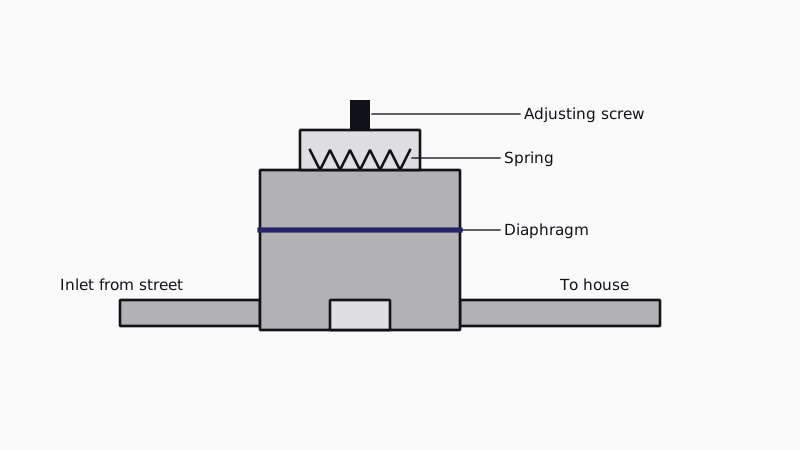
Replacing a failed regulator is a one-visit fix for a plumber, usually a new valve and a pressure check. The state plumbing code allows house pressure of at most 80 psi, yet a failed regulator can also fail high, which punishes appliances. See how to adjust a regulator valve and regulator replacement. A leaking regulator may leave a damp spot or a hissing sound, and neither should be ignored.
Common questions
Why would water pressure drop to a trickle all at once?
Common reasons are a utility outage or repair, a valve that is shut or half shut, a leaking or burst pipe, a blocked filter, or a regulator that has failed. Ask the neighbors and inspect the main valve first, then the meter. On private wells, a pump or tank fault can explain it.
Does a sudden pressure drop mean a burst pipe?
It can. A big break often brings a sharp pressure drop along with sounds of running water or wet spots. If the meter keeps running with everything off, shut the main valve and call a plumber. A pressure drop with no sign of a leak is more likely a valve or supply issue.
Could the water heater be behind a sudden drop?
Only on the hot side. A closed shutoff, failed part or sediment blockage cuts hot flow while cold stays normal. Confirm the valves on the heater are fully open. If cold is weak too, the cause lies upstream of the heater, not in it.
Is low pressure at my house the water district's job to fix?
Responsibility for the mains and the meter sits with the district, and the owner covers pipes beyond the meter. When neighbors share the problem, call the district. When only your house is hit, check your own side first, and have a plumber test pressure at the meter if you remain unsure.
Updated