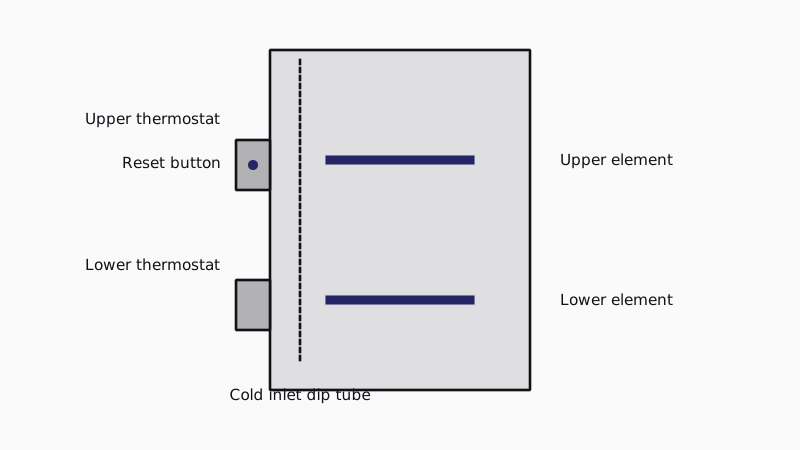
Inside an electric tank sit two heating elements, one high and one low, and each wears out. When the upper element dies you get either cold or merely lukewarm water; when the lower one dies the hot supply drains quickly. Replacing an element is a small repair compared with a new tank, but it involves 240-volt power and a drained tank. This page belongs with the water heater section and tells you what is safe to attempt.
How can I tell the element is the problem?
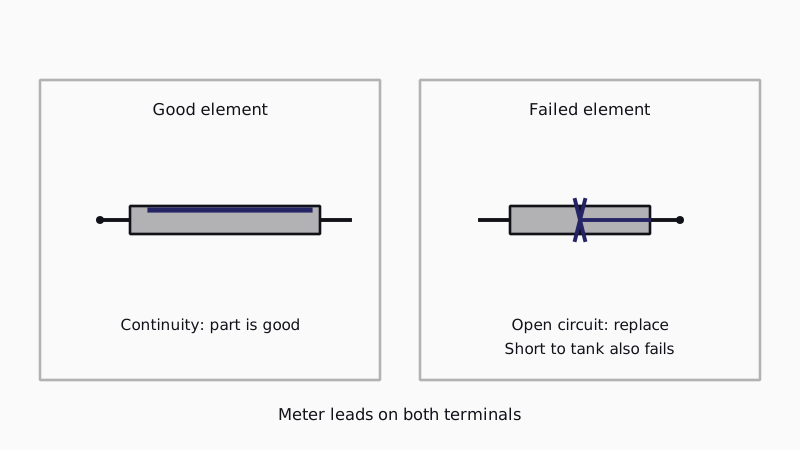
Suspect the element when an electric tank gives lukewarm water or runs out much faster than before, and the breaker and reset button are fine. A technician confirms it by testing each element for continuity with a meter, with power off. A thermostat fault can mimic a bad element, so testing matters before you buy parts.
Check in this order:
- Breaker. Is it on, and does it stay on?
- Reset button. A tripped high-limit button sits behind the upper access panel. Reset only with the power off, and if it trips again, stop.
- Symptoms. Completely cold water suggests the upper element or thermostat. A hot supply that is used up quickly suggests the lower element.
- Test. An element that reads no continuity, or a short to ground, has failed.
A breaker that trips every time you restore power often means an element has shorted to the tank. Bring in a plumber or an electrician for that. Use the no hot water causes page if you have not yet separated heater faults from fixture faults.
Why do elements fail so often in Temecula?
Scale ranks among the main causes. Hard water deposits minerals on a submerged element, the coating insulates the metal, and the element overheats and burns out. Rancho Water's own reports put average hardness around 230 to 240 mg/L, roughly 13 to 14 grains per gallon, in the 2020 to 2023 reports, which counts as very hard water.
Signs that scale is the culprit: crusty white or tan buildup on the old element, popping noises from the tank, and a lower element that fails soon after the upper one. Flushing the tank once a year and inspecting the anode rod slow the damage. A water softener reduces the mineral load for the whole house; the scale prevention guide explains the options.
When the tank is nearly worn out, a heater caked in scale may not justify a new element. With the old element out, a plumber can inspect the sediment and give you an honest verdict.
Can I replace an electric element myself?
A confident homeowner can, provided the power is proven off and the tank is drained, because no gas or permit is involved for a like-for-like element. The risks are electric shock, scalding and dry-firing. If you are unsure of any step, if wiring looks burned, or if the tank leaks at the flange, call a plumber.
As a rule, California does not require a contractor license for a small job costing less than $1,000 in labor and materials, but hired work still gets a written quote. Don't treat "I can do it" as "I should": lock out the breaker with tape or a lock, test the wires with a tester before touching them, and keep water away from the panel.
A heater past ten years raises the question of whether a new tank is the better buy. The replacement cost guide and the tank replacement guide cover the bigger job. For how the work is billed, see the page on labor cost to replace a gas water heater.
What does swapping an element take?
The order of work is: turn off the breaker and confirm the power is dead, shut the cold supply, drain the tank until the water sits lower than the element, remove the access panel and insulation, disconnect the wires, unscrew the old element with an element wrench, fit its replacement with a gasket, rewire, fill the tank completely, and only then restore power. Never energize an element that is not underwater.
Match the replacement to the label: voltage, wattage and the mounting style (screw-in or bolt-in flange). Many residential elements are 240 volts and about 4,500 watts, but check the rating plate on your unit instead of trusting memory.
Common mistakes:
- Power on while draining. A dry element can burn out in seconds.
- Reusing the old gasket. A new one is part of the kit.
- Skipping a full refill. Air pockets leave an element exposed; keep a hot tap open until the water runs without sputtering, and only then switch the breaker on.
- Overtightening. The element should be snug against its gasket, not forced.
Who should do the job, you or a plumber?
Choose a plumber when the heater is old, leaking, beyond ten years, or when the element is stuck in the tank. A seized element can strip the threads or crack the tank wall, turning a small job into a replacement. A plumber also checks the relief valve, thermostats, and the fit of the new part.
On the quote page, give Temecula Pipe and Repair the heater's brand, age, label wattage and symptoms, and the request is passed on to a local plumbing business. A tankless electric unit is a different repair; see instant water heater repair.
Common questions
What time should an element swap need?
A prepared plumber typically needs one to two hours, which includes draining and refilling, since the tank has to be drained below the element and filled again before power goes back on. A stuck element or a thermostat swap adds time, and the plumber can give an estimate after looking at the unit.
Which questions come before hiring an element repair?
Check if the visit fee covers testing both elements and the thermostat, what the part costs, whether the anode rod and relief valve will be inspected, and whether the tank's age makes repair worthwhile. Also request the contractor license number, so that you can verify it with the state.
Is someone needed at home for the repair?
Normally yes, an adult, to open up access to the heater, agree the price and confirm that hot water returns. The work happens in a utility space. If nobody can attend, mention it when requesting the visit so access is arranged beforehand.
Why does the breaker trip when I turn the heater on?
A tripping breaker usually means an element has shorted to ground, a wire has failed or the circuit is overloaded. Don't keep resetting it. Switch it off and have a plumber or electrician test the heater, because repeated trips can damage wiring and point to a real fault.
Updated