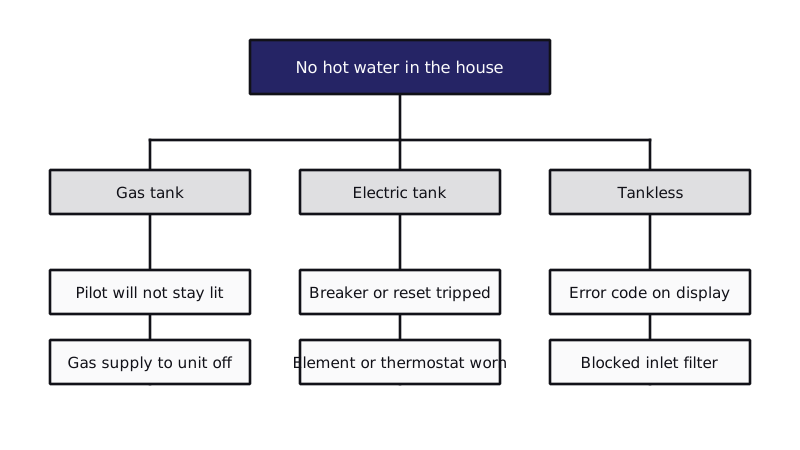
When hot water is missing throughout the house, the water heater is to blame, not the pipes. A gas tank usually suffers from a pilot light that went out or a failed thermocouple. An electric tank typically has a tripped breaker, a popped reset button or a burned-out element. With a tankless unit, check for an error code or a blocked inlet filter. A single cold tap probably means that fixture has the fault, not the heater.
Is the whole house affected or only one faucet?
Run hot water at two or three fixtures, upstairs and down. If all of them stay cold, the heater is the cause. If only one shower runs cold or lukewarm, a worn mixing cartridge or valve is likely. If hot water runs out quickly rather than not at all, the tank is probably full of sediment or a lower element has failed.
That sorting step saves money. A shower cartridge is a different repair from a heater, and a single-fixture fault can look like a failed heater to someone in a hurry. The page on a shower running cold deals with the single-fixture version.
Also note any warning signs from before: rumbling noises, rust-colored hot water, a damp patch under the heater, or a smell of gas. Those details change the advice below.
Why is my water heater making noise?
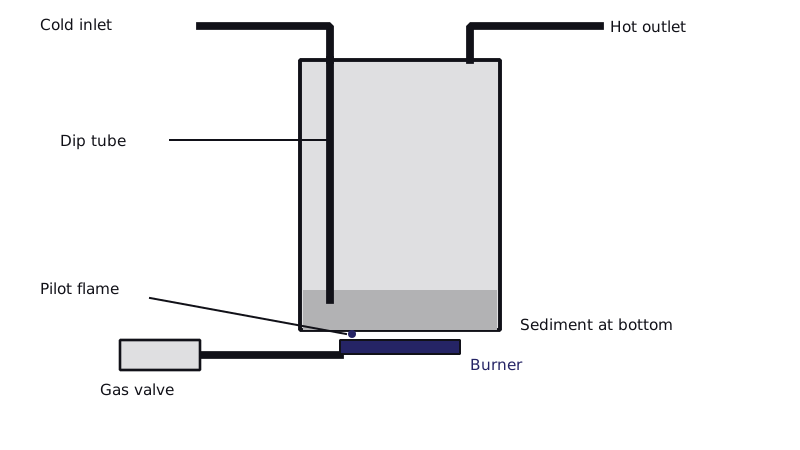
Popping, crackling or rumbling usually means sediment has settled on the tank floor. Water trapped beneath a layer of mineral scale boils and bursts through it. The sound means the heater is working harder, heating less water and aging faster. A tank flush can help, and an old, heavily scaled tank may be past that.
A high-pitched whine or screech may point to a valve that is half shut, or some other flow restriction. A hammering knock when a tap closes is water hammer, a different problem. Ticking from the pipes near the heater is often just expansion as they heat.
Ask a plumber about hard water. A softener or scale treatment can lengthen heater life, though how much depends on the system. See preventing hard-water scale.
What do plumbers have against tankless water heaters?
Many have nothing against them, but they warn about a few real issues: higher purchase and installation cost, scale buildup that needs periodic flushing in hard-water areas, a larger gas line or venting in many homes, and a cold-water gap when you reopen a tap. Done right, they last a long time. Done to the wrong house, they disappoint.
Questions to ask before choosing: Does the gas line need upsizing? Will it be vented to code? Can it handle two showers at once? Who flushes it, and how often? Our tank versus tankless guide goes through each point, and the no-hot-water emergency page explains how an urgent visit works.
What causes no hot water on an electric tank heater?
Electric heaters stop working when the breaker trips, the high-limit reset button pops, a thermostat fails, or one or both heating elements burn out. Check the breaker first, then the reset button behind the upper access panel with the breaker off. If the breaker trips again at once, stop and call a plumber or electrician.
The elements are common wear parts, and the local water matters. Rancho Water's own reports put average hardness around 230 to 240 mg/L, roughly 13 to 14 grains per gallon, in the 2020 to 2023 reports, which is very hard water. Scale on a submerged element insulates it and speeds failure. Details on replacing one are in the electric element guide.
Never open the access panel with the breaker on, and never fill or drain an electric tank without the power off.
Does a lack of hot water count as an emergency?
Normally no, unless gas is smelled, the heater is leaking, or a vulnerable person is in the house. A heater that simply makes no heat can wait for a regular appointment, often cheaper than an out-of-hours call. If it leaks, close the cold supply valve over the heater, switch the heater off, and book a visit.
With a leak, turn the gas valve or breaker off before you leave. Never attempt to fix a relief valve that is discharging, as that can signal overheating or overpressure.
When ready, go to the quote page or start at Temecula Pipe and Repair and describe the heater type, its age and what you have tried.
What causes no hot water on a gas tank heater?
Most gas failures come down to three things: the pilot light is out, the thermocouple that senses the flame has worn out, or the gas valve feeding the unit is closed. A draft or a dip in gas pressure can blow a pilot out. If the pilot dies again after one careful relight, suspect the thermocouple.
Should you ever smell gas, stop right there. Get out of the building, call SoCalGas at 1-800-427-2200 from outdoors, and dial 911 if anyone is in danger. Light nothing and touch no switches.
Manufacturers describe relighting a pilot on the label on the tank, and that is as far as safe do-it-yourself on gas goes. Anything beyond it, such as replacing a gas valve or moving a gas line, falls to a contractor and may need a permit. For the details see no hot water with a pilot light on and pilot light repair.
Common questions
How soon will the hot water come back?
A relit pilot or reset takes minutes, and an element or thermostat swap is often under two hours. A new tank takes longer, and a permit may be part of the job. The plumber's diagnosis decides, and nobody can promise a time before looking at the unit.
What should I ask a plumber about a failed water heater?
Find out what the visit fee covers, whether the price is diagnosis only or includes repair, what the heater's age means for repair versus replacement, if a permit applies, and the contractor license number, which can be checked online with the state.
Must someone be home during the heater service?
Generally an adult is needed to unlock the garage or closet, confirm the problem and agree the price. When the heater sits in an attic or other locked space, arrange access beforehand and say so in your request, so the visit is not wasted on a locked door.
How old is too old for a water heater?
Tank heaters often last about 8 to 12 years, shorter in hard-water areas without maintenance. Age alone is not a verdict, but a heater past 10 years that leaks, rumbles or has failed twice is usually better replaced. The age appears in the date code printed on the label, or the plumber can decode it.
Updated