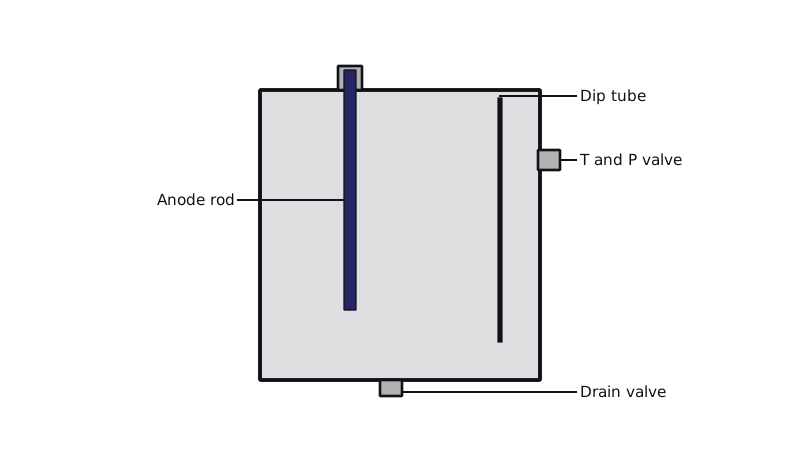
A metal stick called the anode rod hangs in the tank of a storage water heater. It is designed to corrode, which spares the steel shell. Once it has worn down to its core wire, rust begins attacking the tank itself. Replacing it in good time is among the cheapest ways to extend a heater's life. For the wider context, go to the page on water heater repair.
How do you know an anode rod needs replacing?
Only a direct look settles it. Take the rod out and examine it: bare steel wire along much of its length, or a pitted, thinned body, means it is used up. Clues short of that include hot water that smells of rotten eggs, a rust tint in the hot water, and a popping or rumbling tank. Other faults can cause these as well, so treat them as hints only.
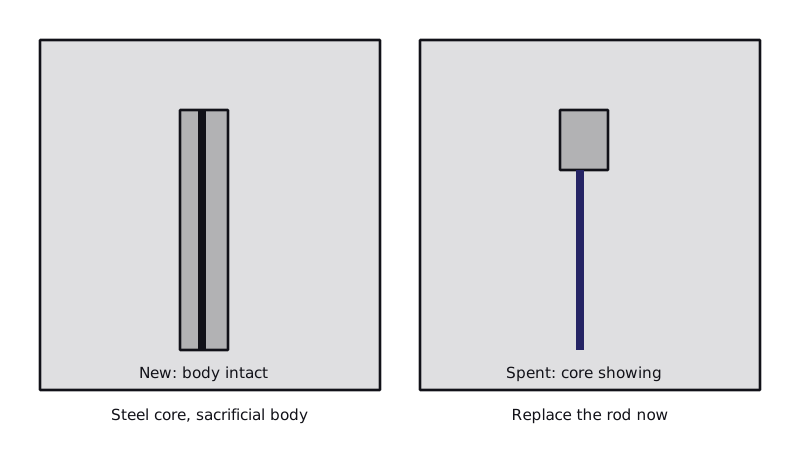
Many manufacturers advise checking the rod periodically, and hard water shortens its life. The usual guidance is to look after a few years of service, then again at intervals, and sooner in hard water. Brands differ on schedule and rod type, so go by what your heater's manual says.
A new rod will not rescue a heater whose tank body is already leaking; replacing the heater is the route then. Typical lifespans are covered on the page about heater replacement timing.
Why does Temecula water wear anode rods faster?
Hard water has more dissolved minerals, and heating it drives scale out of the water and onto surfaces inside the tank, which can speed up work for the rod. Rancho Water's own reports put average hardness around 230 to 240 mg/L in the 2020 to 2023 editions, which is very hard. Check the current report at ranchowater.com for your supplier's numbers.
Eastern Municipal Water District supplies certain addresses nearby instead, and wells in Wine Country, Aguanga and De Luz differ from one to the next. On a well, a water test reveals hardness, pH and iron, and each one changes how long a rod and a tank survive.
Scale also builds up on heating elements and the tank floor, so flushing yearly helps in any case. Softened water has less scale but may be harsher on a rod; with a softener installed, check what the heater maker recommends. The page on hard water scale prevention covers what helps.
What kind of anode rod should you pick?
Magnesium rods protect well and are the usual factory choice, while aluminum rods can last longer in hard water, and aluminum-zinc rods are often used when there is a sulfur smell. Powered rods exist for tough water and need an electric connection. Check the manual first, because some warranties name the rod type.
Rod lengths differ, and many tanks have little room above them. A segmented or flexible rod bends into a tight space and is often the answer when ceiling or pipe clearance is poor. Look for the right thread on the fitting, and note whether your heater is a standard tank or a model with a combined outlet.
Never put a different metal in a tank without checking compatibility. A rod that does not match the manufacturer's spec can change corrosion behavior and, in some cases, a warranty claim.
Can you replace an anode rod yourself?
Often, when the gas or electric tank is easy to reach, though the job is physical. Gather the right socket, a breaker bar, a means of draining a little water and plenty of leverage, since an old rod may be seized. If the heater runs on gas, or the space above is tight, the plumber is the safer choice.
Typical sequence: switch off power, or turn gas to pilot or off; shut the cold supply; open a hot tap to relieve pressure; drain a few gallons; unscrew the rod; add sealant tape to the threads if the manual permits; fit the new rod; refill with a tap open to purge air; then bring power or gas back. The manual always comes first.
Stop and get help if the rod refuses to move, the tank is leaking, water has reached the floor, or you smell gas. One snapped fitting can turn a minor task into a full heater replacement. Gas connections, venting and relief valves are regulated work, with no room for guessing. When gas can be smelled, leave the building and call SoCalGas at 1-800-427-2200 from outdoors.
What does an anode rod replacement cost, and is a permit needed?
The price moves with the rod, the access and the business, so no figure appears here. Request a written quote spelling out the rod type and the labor. A rod swap counts as maintenance, and permits usually apply to replacing the heater itself, but check with City of Temecula Building and Safety or the county for your address.
Replacing the entire unit is a bigger job with its own price, which the page on water heater replacement costs explains. A visit for a rod is also a chance to inspect the temperature and pressure valve, the drain valve, the expansion tank and the earthquake strapping.
A local plumbing business does the rod swap, never us. That business pays us a fee for receiving the request and issues the quote. Enter the heater's age, brand and fuel type on the quote page. Other jobs we can set up appear on the home page.
Common questions
What is the service life of an anode rod?
A few years under ordinary conditions, less with hard water or a softener. Exact life depends on the rod metal, the water chemistry and the tank temperature. Looking at the rod is the only dependable test, and the manual that came with your heater may recommend how often to check.
Will a new rod stop my water heater from leaking?
No, not when the tank is the source. A fresh rod only slows corrosion from here on. Once the tank body leaks, the steel has failed and the heater needs replacing. Water escaping at a fitting, a valve or a pipe joint can sometimes be fixed, so pin down the exact source first.
Why does my hot water smell like rotten eggs?
It is often bacteria that feed on sulfur compounds and the magnesium rod, though it can also come from the water source. Replacing the rod with a different alloy, flushing the tank and raising the temperature briefly can help. Ask a plumber, because heat adds scald risk and changes should follow the manufacturer's guidance.
Do tankless heaters have anode rods?
No. Tankless heaters have no storage tank, so there is no rod to sacrifice or replace. They face scale in the heat exchanger instead, and hard water makes descaling a regular chore. The tank versus tankless guide compares the two.
Updated