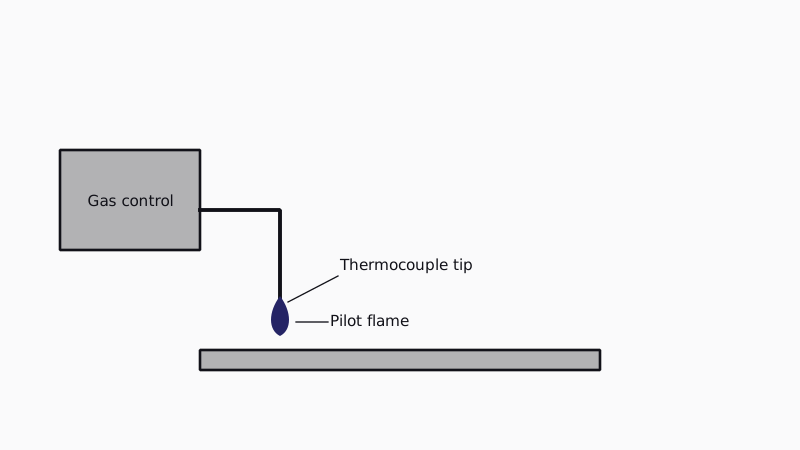
Sitting in the pilot flame, the thermocouple is a short copper probe that tells the gas valve the flame is burning. Once it weakens it cannot hold the valve open, and the pilot goes out the instant the button is let go. Replacing it is a small parts swap on many heaters, though the work sits beside gas fittings. For the wider range of jobs, read the water heater repair page.
How can I tell the thermocouple is at fault?
A pilot that burns while you press the control knob, then dies within roughly a minute of letting go, is the typical symptom. Clean a small, yellow or lazy pilot flame first, since dirt in the pilot imitates a faulty thermocouple. If the flame is strong and blue and still drops out, the thermocouple is the usual cause.
A few checks narrow it down.
- Does the pilot stay lit when you hold the knob? If it will not light at all, the problem may be the gas supply, a clogged pilot orifice or a tripped safety.
- Is the flame touching the tip? The pilot flame must wrap the top inch of the probe. A flame that misses it will not heat it.
- Is the tip black with soot? Soot insulates the probe. A gentle clean with fine sandpaper or an emery cloth sometimes restores it.
- Is the heater a newer model? Many newer tanks use sealed, electronic ignition and have no standing pilot or thermocouple to replace. Look at the label and manual before buying parts.
If the burner never lights, the water is lukewarm or the tank is leaking, the thermocouple is not your problem. Those cases have their own pages, such as no hot water with a lit pilot and pilot light repair. A dark control display is covered in the Honeywell no status light guide.
Can I test the thermocouple before I buy one?
Yes, with a multimeter. A common thermocouple makes roughly 25 to 30 millivolts when the tip is held in a steady pilot flame, and the valve needs a reading well above the low end to stay open. Use the number in your heater's manual, since exact values differ by brand and by whether you test open circuit or under load.
The test needs the thermocouple disconnected from the gas control, a little work and a steady flame, so only try it if you are confident around a gas appliance. Many people skip the meter, because a thermocouple costs little compared with a service call. Buying a replacement that matches the old one's length is the sensible path. Take the worn part along to the store, or copy the length listed in the manual, as these parts come in several lengths.
What does the replacement involve?
With a standing pilot, you shut off the gas control, let everything cool, unscrew the thermocouple nut at the control, release the probe from the pilot bracket, fit the new one the same way and relight per the label. The nut is hand-tight plus a short turn with a wrench, not forced. Then check the pilot stays lit.
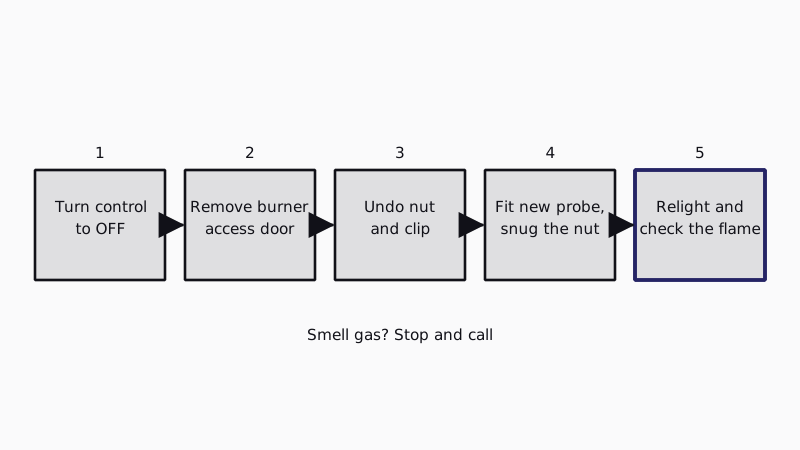
In plainer steps:
- Turn the control to the OFF position and wait several minutes so any gas near the burner clears.
- Take off the burner access door, then find the thin copper line that runs from the gas control to the pilot assembly.
- Undo the nut at the control end and the clip at the pilot end.
- Fit the new thermocouple in the same position, with the tip in the flame zone, and snug the nut. Over-tightening can crush the fitting.
- Relight the pilot using the instructions on the label, hold the button for the time they say, then release.
- Sniff around the joints and the control. If you smell gas, stop.
If anything about the heater looks unfamiliar, such as a different control, a missing label or a burner that does not match the steps, stop and call someone.
What are the gas safety rules I should not skip?
When you smell gas, strike nothing and touch no switches. Leave the building, and only then phone SoCalGas at 1-800-427-2200 from outdoors, adding a 911 call if there is danger. SoCalGas is the utility serving Temecula. Never defeat a safety device, and never bypass the thermocouple with a wire or a clip.
Gas piping counts as regulated work in California. Jobs that need a permit require a contractor license, and gas line changes, a new water heater or a new vent typically do. Replacing a thermocouple is a component repair, not piping, but a gas connection is still involved. Unsure which category your job is in? Ask the building department: Temecula Building and Safety within city limits, or Riverside County for unincorporated parcels like French Valley and Winchester.
Carbon monoxide matters here too. A gas water heater that backdrafts, a flame that turns yellow, soot at the draft hood or a vent that feels cold are all reasons to call a plumber. The gas plumber page explains the line between homeowner and contractor work, and gas pipe questions sit on the gas line page.
When should I bring in a plumber, or buy a new heater?
Call a plumber if the new part changes nothing, the control looks corroded, the thermocouple cannot be located, or gas is smelled at any stage. Consider the heater's age as well. A tank a decade or more old that needs parts may be near the end, and a new part is not a new tank.
Water heaters in Temecula fight hard water. Rancho California Water District's reports put average hardness around 230 to 240 mg/L, so older tanks accumulate sediment and may leak soon after a repair. If your heater leaks as well, the water heater leak page is the next read. When a heater is failing on several fronts, replacing it often costs less than chasing each fault. Have whoever quotes the job show the price of repair next to the price of replacement.
If you want someone else to do the work, use the quote page. Include the brand, model and age of the heater, and describe how the pilot behaves.
Common questions
What is the lifespan of a thermocouple?
No fixed lifespan exists. They can run for many years, then weaken as the tip ages and gets coated in soot. The usual early sign is a pilot that begins dropping out more frequently. Sediment, drafts and a dirty burner area shorten the life, and a quick cleaning sometimes extends it.
The pilot stays on, yet the water is cold. Why?
That means the thermocouple is doing its job. The pilot only provides ignition, so inspect the thermostat dial, the control valve and the burner itself. A thermostat turned down too low, a tripped limit switch, a blocked burner or a failed gas control valve are the likelier causes. A plumber can sort out which.
Should a homeowner replace a thermocouple?
With a standing-pilot heater it is a routine homeowner task, yet a gas fitting is involved. Many people do it if they are at ease with a wrench and a lighter, can follow the manual and will check for a gas smell afterward. If you have doubts, a plumber is the safe choice.
Is a permit part of a thermocouple swap?
An identical replacement at the gas control usually is not permit work, but your building department has the final word, so a quick call before you start is wise. A new heater, vent or gas line is another matter and typically needs both a permit and an inspection.
Do newer water heaters have thermocouples?
Many have been replaced by electronic ignition or flame sensors, and some tanks use a thermopile. Look at the data plate and manual to see what yours has. If yours has no standing pilot, the fix is different, and a service visit is the better route.
This guide is one of many on plumber temecula.
Updated