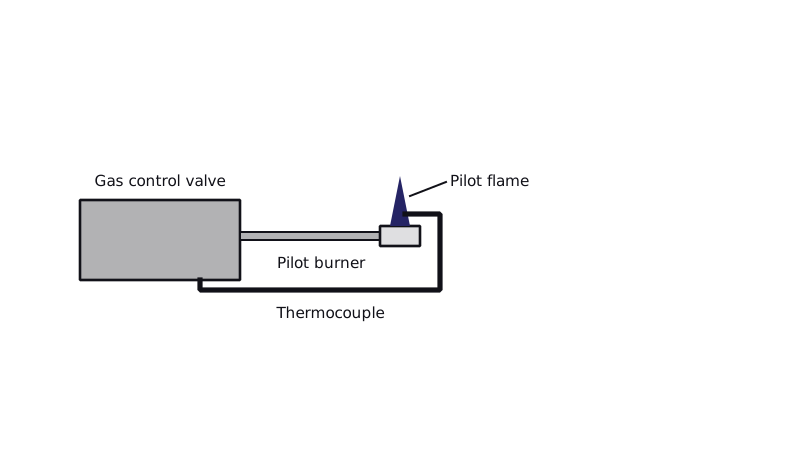
Start by sniffing the air. A gas smell means hands off the heater: leave the building, then call SoCalGas on 1-800-427-2200 from outside. If you smell nothing, lighting steps are printed on the tank label. When the flame refuses to stay lit, the water heater repair service is the next step.
What makes a gas water heater pilot keep going out?
Four causes are common: a worn thermocouple that no longer senses the flame, a pilot tube clogged with dust or soot, a draft that blows the flame out, and a gas control valve on its way out. If the pilot catches but dies as soon as the knob is released, the thermocouple is the usual cause.
A thermocouple is a short copper rod positioned in the pilot flame. It makes a tiny current that holds the gas valve open. When it ages or gets coated in soot, the current drops and the valve shuts, which is a safety feature rather than a fault in the design. Replacing it is a cheap part but a careful job, and the guide on thermocouple replacement covers it.
A dirty pilot orifice makes a weak yellow flame instead of a steady blue one. A draft from a door, vent or exhaust fan can blow out a flame at the burner, particularly in a garage. A blocked flue or a back draft is a safety issue and should be checked.
Sediment in a tank can make the burner run longer and overheat the tank bottom. It rarely puts out a pilot, but it does shorten the heater's life, and hard water speeds it up. Rancho Water's reports put average hardness around 230 to 240 mg/L, roughly 13 to 14 grains per gallon, in the 2020 to 2023 reports.
How do I relight the pilot light safely?
Follow the instructions on the heater's label. Broadly, the order is: set the gas control to off, wait about five minutes for leftover gas to disperse, switch to pilot, press and hold the knob while pushing the igniter or lighting the pilot as shown, keep holding for up to a minute after it catches, then release and turn to on.
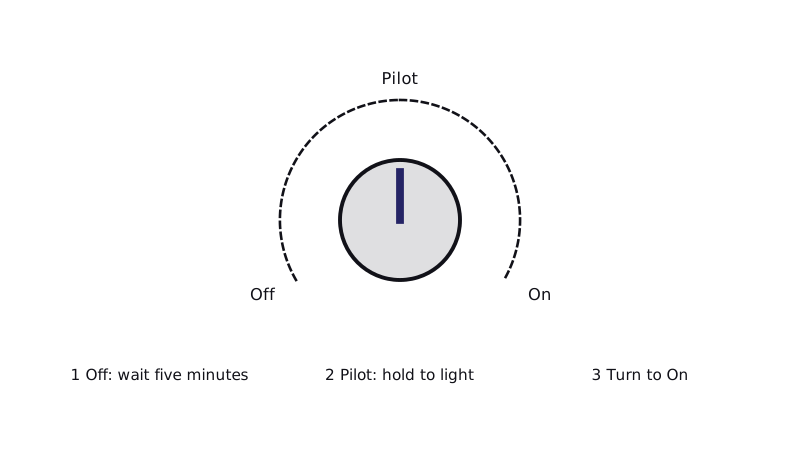
Never skip the wait, and do not hold a lit match near the unit if you smell gas. Use the igniter button where there is one. Should it light and then die when the knob comes up, try again and hold the knob longer. A second failure means stop and call a plumber, since repeated attempts add gas to the area.
Keep your face back and wear no loose sleeves. The access panel at the base sometimes needs to be removed, which you do with the gas off. Put it back before turning the control to on.
Lighting steps differ between makes and between older and newer models, and some newer ones relight through a button and a viewport. The label on your own tank always beats general advice, including this page.
What if the pilot burns but the water stays cold?
A burning pilot with a silent main burner suggests a failed thermostat, gas control valve or thermocouple, or a blocked flue. A weak or dirty pilot can also leave the tank cold. Each needs testing; the full checklist is in the guide on no hot water but the pilot light is on.
Watch the flame through the window. A strong blue pilot that ignites the burner, followed by quiet, shows that the unit itself works, so the tank may just be drained or the thermostat set low. A yellow, floppy or orange flame warns of poor combustion; switch the heater off and phone a plumber.
Electronic ignition models have no standing pilot. If yours has a display or blinking light, the manual's code identifies the fault, for example a flame sensor, a blocked vent or a gas supply issue.
When is a pilot light a safety problem?
It becomes a safety matter when gas can be smelled, soot or scorching shows around the base, the flame is yellow or orange, flames roll out of the burner area, or the vent is loose or blocked. Stop using the heater and contact a plumber. Gas appliance work is regulated.
Carbon monoxide is the hidden risk. A heater with a blocked vent or a bad flame can make it, and you cannot smell it. Working CO alarms outside bedrooms are a basic precaution. If an alarm sounds, go outside and call 911.
A contractor license is required in California for jobs worth $1,000 or more and for any job needing a permit, and many places count water heater replacement as permit work. A rusty base on an old heater is a replacement question rather than a pilot question. Find out from the plumber who obtains the permit, and for a city address, confirm with the City of Temecula Building and Safety counter on 951-694-6439.
Strapping matters too, for earthquake safety. A heater that falls can tear the gas line, so check that the tank has two straps and flexible connectors.
Is it worth repairing or should I replace the heater?
A repair makes sense for a cheap, local fault such as a thermocouple on a heater that is otherwise sound. Replace the unit when the tank leaks, rusts at the base, is far past its expected life or keeps needing parts. A plumber can weigh the two options, and a written quote shows the difference.
Read the manufacture date code printed on the label. Builder-grade tank heaters in homes of the 1990s and 2000s are now aging. Hard water speeds sediment buildup, and an old tank that rumbles and runs out of hot water is a candidate for replacement.
To have a plumber check the heater, ask for a quote. Other work we arrange appears on the home page, and a leak that cannot wait is covered under emergency water heater repair.
Common questions
Can I relight a gas water heater pilot on my own?
Often you can, provided the label has instructions, there is no gas odor, and you observe the stated waiting time. If gas is smelled, or the pilot will not stay on after a second attempt, stop and call. Do not improvise tools or keep the gas valve held open for long.
What is a thermocouple for?
It detects the lit pilot flame and keeps the gas valve open. Once it fails, the gas valve closes and the flame goes out. Replacing it is a frequent pilot repair, yet it touches gas connections, so the plumber should do it unless you have experience.
Why is my pilot light yellow?
A healthy pilot is steady and mostly blue. A yellow or orange flame suggests a dirty orifice, poor air supply or a draft. Turn the heater off, do not keep using it and ask a plumber to clean and test it, since poor combustion can release carbon monoxide into the home.
Can a draft put out the pilot?
Yes. A strong draft from a garage door, vent fan or open window can blow out the flame, especially on older heaters. Check for air movement first. If it keeps happening, the heater's air supply or vent may be faulty, which needs a proper inspection.
How much does a pilot light repair cost?
The price turns on the part and the visit, and no figure is posted here. Relighting and a thermocouple swap are small jobs; a gas valve or vent repair costs more. Request a written quote with parts and labor itemized separately so you can compare offers.
Updated