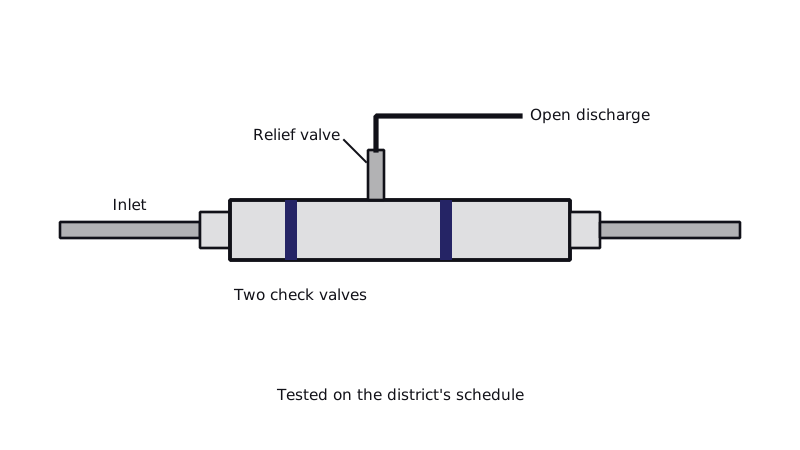
A backflow test confirms that a device in your water line still prevents contaminated water from flowing in reverse toward the public supply. The device, called a backflow preventer, is usually installed beside the meter, or on a fire line or irrigation line, and your water district sets when it gets tested. Send the quote form and we pass your request to a local tester or plumber. The permit side of regulated work is covered on the page about gas plumbers and inspections.
This page keeps to what we could check: Rancho California Water District's own FAQ, the state's regulatory change, and the City of Temecula permit office. Where your address is served by another district, that district's rules apply, so look at your bill first.
What does backflow mean, and what is the reason for testing?
Water flowing the wrong way in a pipe, from a property back into the public system, is backflow. A drop in supply pressure can cause it. A backflow assembly, a set of check valves, blocks the reverse flow, and testing proves the valves still seal. Rancho Water describes the purpose as protecting public health.
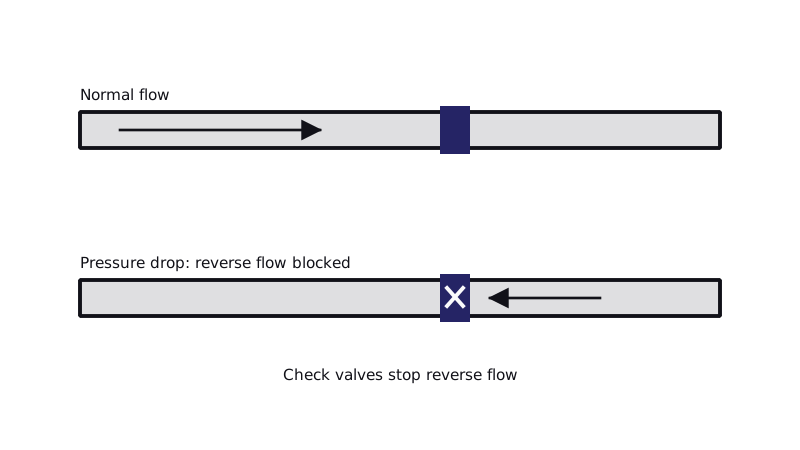
Think of a hose left in a bucket of fertilizer when a main breaks: the pressure change could pull that liquid backward. Hardware at irrigation systems, fire lines, pools, boilers and commercial equipment keeps that from happening. Valves wear, trap grit and stick, so an annual test is how you know the protection still works.
How do I schedule a test, and is next-day service possible?
Pick a tester that your district accepts, tell them what device you have and where it is, and ask that the report be sent to the district. Whether a next-day slot exists depends on the tester's calendar and your deadline, so we cannot promise timing. Book early once the notice lands.
Keep a short checklist at hand: the district's notice, the device make, model and serial number, 24 inches of clear access, any previous test report, and someone able to unlock gates. When the tester comes through the quote form as a plumber, ask what the price includes: the test, filing the report, small repairs and a retest. The home page lists the other services we can arrange.
How does the annual test work?
The tester hooks a gauge kit to the test ports on the assembly, closes the shutoffs in order, measures pressure differences across each check valve and relief valve, and records the result. One device that passes usually takes well under an hour. One that fails is repaired and retested, and the district receives the report.
According to Rancho Water, its approved testers do the testing and repairs and send results to the district, and the device needs 24 inches of clearance so it can be tested each year. Water to the building or irrigation is briefly shut off during the test. The how-to article on backflow testing walks through the sequence in more detail, and backflow prevention testing covers home and small-business cases.
How do residential gas piping codes and camera inspections differ?
The two are unrelated inspections. California adopts plumbing and mechanical codes that govern gas piping, and such work needs a permit as well as a contractor. For the code adopted for your project, ask the City of Temecula Building and Safety division instead of trusting a downloaded PDF that may have gone stale.
When gas is in the air, leave first, then phone SoCalGas at 1-800-427-2200 from outside, or 911 if someone is in danger. A camera inspection examines a sewer or drain line using a compact camera fed along a cable, and it has no connection to backflow assemblies. It is worth considering when you buy a house or keep hitting repeat clogs.
Which Temecula properties need a backflow device?
Rancho California Water District states that commercial, industrial, agricultural and ag-domestic properties require backflow protection, and that it can require a device wherever a hazard warrants. The district decides what type is needed after a site survey, and the device must be on an approved list. Ordinary houses are not always included.
Houses with extensive landscape sprinklers, a pool filler, a well tied into the public supply, or a fire sprinkler line may be told to install and test an assembly. If the district sends a notice, follow what it says. Not sure where you stand? Ring Rancho Water on 951-296-6900, or whichever district sends your bill. Commercial properties have their own page on commercial backflow testing.
Is a plumbing permit or inspection required?
Putting in or replacing a backflow assembly counts as plumbing work, and it normally involves the water district and sometimes a building permit. For addresses within Temecula city limits, begin by phoning the Building and Safety division of the City at 951-694-6439. Parcels outside the city, whether in unincorporated San Diego County or Riverside County, deal with the offices of those counties.
A permit portal belonging to some other county would send you to the wrong office; the rules and forms come from the city, or else from whichever county covers your parcel. Testing a device that is already installed is normally handled through the district's reporting rather than a new building permit, but confirm that with the district. Under owner-builder rules, a homeowner may be able to pull a permit when working on their own home, though conditions apply and the building department decides. Jobs of $1,000 or more require a California contractor license.
What are the state rules now?
The old state rule that required annual testing, Title 17 section 7605, is marked as repealed. The record says it became inoperative on July 1, 2024, when the State Water Board's Cross-Connection Control Policy Handbook took effect. Water suppliers now set testing programs under that handbook.
In practice this changes little for you: your water district sends the notice, names the approved testers and receives the results. Do not rely on an old PDF of the former regulation. If you are unsure which document applies to a device, ask the district. Testers must meet the district's qualification rules, so ask for proof before you book.
Common questions
How often does a backflow device get tested?
Typically once a year, under a district-set program, with more frequent checks if the district decides they are needed. Check your notice for the due date. Rancho Water refers to annual testing and asks for clearance around the device so the test can be done.
Can a homeowner test their own backflow device?
Districts generally require a tester they approve, and results go to the district, so a homeowner test usually does not count. Ask your district before buying a gauge kit. Repairs may be allowed for some parts, but the district decides, so check first.
What follows a failed test?
Whoever tests the device repairs or swaps the part that failed, then runs the test again. A deadline may come from the district, and continued water service can hinge on passing. Request a written report from the tester naming the failed part and the repair made.
Do I need backflow protection for a home irrigation system?
It depends on your district and the system. Rancho Water says it can require a device where a hazard warrants, and many irrigation systems have one. Check your notice or call the district at 951-296-6900. Our guide to backflow prevention testing has more.
Updated