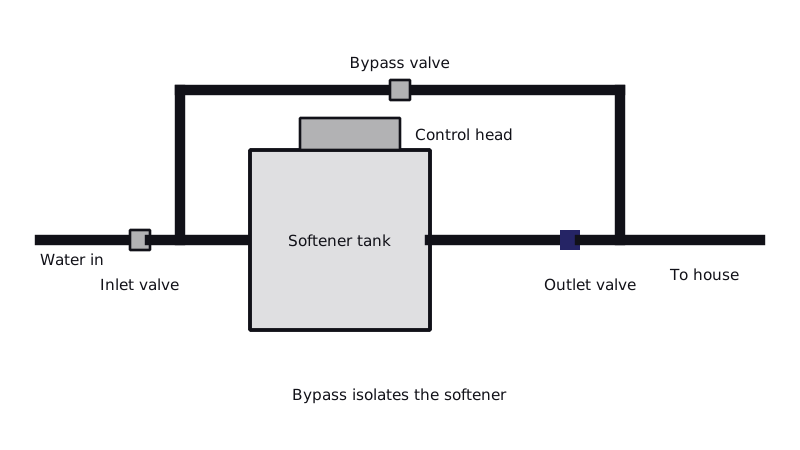
You can install a softener yourself if the main line is reachable, the drain is close and you are comfortable cutting and joining pipe. The job follows a set sequence: close the water, add a bypass, connect in and out the right way round, route a drain through an air gap, then plug in the controller and dial in the hardness. The softener installation page covers having a local plumber do it instead.
Which steps come first when installing a softener myself?
Start nearest the street and move inward: shut the main, drain the pipe, fit a three-valve bypass, hook up the softener's inlet and outlet, run the drain hose over an air gap into a floor drain or the laundry standpipe, run the brine overflow, rinse the resin, then enter the hardness. Test each joint under pressure before leaving.
The same sequence follows, with the traps called out.
- Pick the spot. Put the unit on the main line past the meter and before the water heater. Keep an outdoor hose bib on the hard supply if you want unsoftened water for the garden and for anything outside.
- Water off, line empty. Turn the main valve closed, then open both the lowest and the highest taps so the line empties.
- Cut in the bypass. The bypass valve on the softener head lets you isolate it for service. Many kits have one built into the head, others need a separate three-valve set.
- Connect in and out. The head is marked. Reverse them and the unit softens nothing and may blow resin into the house.
- Run the drain. The discharge hose needs an air gap above the drain so sewer water cannot be pulled back. Keep it short and level where you can.
- Add salt, set hardness, regenerate once. Fill the brine tank and start a manual cycle to rinse the new resin before you drink from it.
What size softener suits Temecula water?
Size it from your water's hardness and how much your house uses. Rancho California Water District's 2020 to 2023 reports show average hardness around 230 to 240 mg/L, about 13 to 14 grains per gallon. Multiply grains per gallon by daily gallons, and the product is the grains the unit has to remove daily.
Here is an illustrative sum. Four people using about 60 gallons each a day is 240 gallons. At 13.5 grains per gallon, the total comes to roughly 3,240 grains daily. A 32,000-grain unit would then run about ten days between regenerations. The 60 gallons is an assumption for the example, so swap in your own use.
Hardness depends on who supplies the water. Eastern Municipal Water District supplies parts of Temecula and the area north of it, while French Valley and Winchester addresses may be on either district. Check your bill, then read the latest Consumer Confidence Report. Wells vary by well and need a test, since groundwater has no single number.
Where does the drain line go, and is there a catch?
The discharge line sends brine and rinse water out of the house, so it has to end somewhere that is legal, high enough and safe. Typically that means the laundry's vertical drain pipe or a floor drain, always with an air gap so that backflow cannot contaminate the unit.
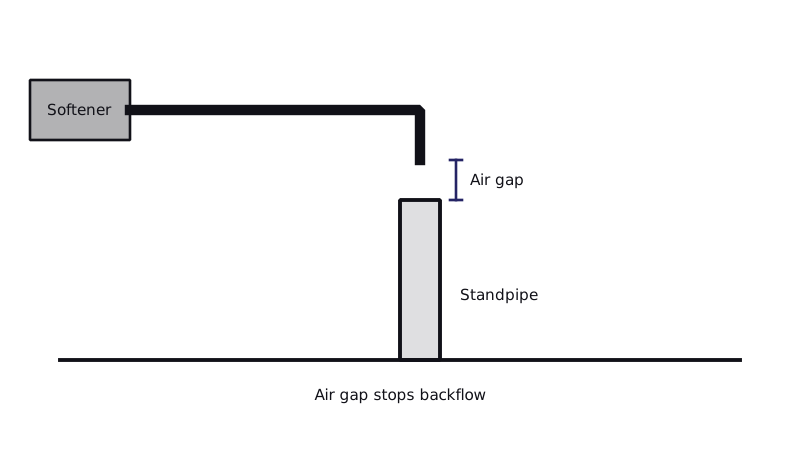
Three catches come up.
- A septic system. Homes in Wine Country, Aguanga and De Luz often sit on septic. Softener discharge adds a lot of water and salt to a tank and field, so ask the installer, or the septic service, what the system can take.
- Distance and height. Drain lines run uphill only so far. A long run from a garage to a distant drain needs planning.
- Local rules. Some places limit brine discharge. Check with your water district or the building department whether anything applies before you drill.
Which steps are best left to a plumber?
Pass the job to a plumber if it means cutting into a slab, an inaccessible attic or a copper main in a tight space, if the main is galvanized and corroded, or if a permit applies. Cutting into the main, soldering and routing a drain are where homeowners get leaks and bad slopes.
A contractor license is required in California for permit work and, generally, for any job above $1,000 in labor plus materials. A softener plus the pipe changes it needs may come close to that figure. When you hire it out, a written quote comes first, and the building department rules on whether a permit applies. Inside Temecula, that department is City of Temecula Building and Safety. Beyond the city limits the office is Riverside County, except that Fallbrook and Rainbow belong to San Diego County.
Where the plumbing is simple but you want it done right, send the details and layout through the quote page.
How can I clear scale that has already formed?
A softener stops new scale but does not dissolve old scale quickly. For fixtures, soak aerators and showerheads for an hour or two in white vinegar, then scrub and rinse. For a water heater, flush the tank, and for a tankless unit use the descaling procedure in the manual.
Pipes with heavy scale inside may stay restricted, and in that case repiping is the real fix. Hard water speeds this in Temecula's older tracts, and the page on preventing hard water scale goes further. Check whether a softener has downsides for you: it adds a little sodium to drinking water, and a separate unfiltered tap is common. If you have a heart or blood pressure condition, ask your doctor.
Does a softener change my water bill or water use?
Slightly. Regeneration consumes water, usually a few dozen gallons per cycle depending on the model, and the unit also uses salt. A water-saving metered unit regenerates only when needed. The question of how a softener affects a bill is on its own page, whether a softener raises your water bill.
Common questions
Can I put the softener before the water heater?
Yes, and that is where it belongs. Soft water protects the heater from scale, and the heater is where hard water does its worst damage. Leave one hard-water line for the garden and outdoor taps, since lawns and planters do not need softened water and it wastes salt.
Does installing a softener need a permit?
That turns on what gets altered and who does it. Cutting into the supply line and adding a drain can trigger a permit in some jurisdictions. Phone the office that issues permits for your address: Temecula Building and Safety inside the city, the county outside it. Do not guess, because unpermitted plumbing can come up at sale.
How long does a softener installation take?
For a plumber with a clear garage and a nearby drain it is usually a half day or less. For a first-timer with a DIY kit, plan on a full day, including the trips for fittings and the hours the resin needs to rinse. Odd plumbing or a lengthy drain run adds time.
Is potassium better than salt?
Potassium chloride works in most softeners, costs more per bag and avoids adding sodium to the water. It can cake or bridge in the brine tank when the air is humid. Check the manual first, because some controllers need a setting changed to use it properly.
What if I rent the home?
Ask the owner before anything. A softener changes the plumbing, so it usually needs the landlord's written yes. Tenants who cannot get one sometimes choose a salt-free scale reducer or a showerhead filter instead, which do less but need no pipe cutting at all.
For the wider picture, start with Temecula plumber.
Updated