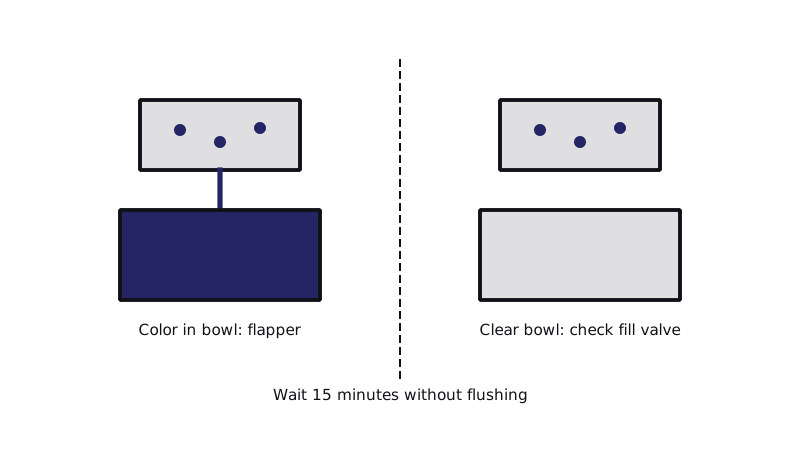
Take the lid off the tank and squeeze in some food coloring. Hold off flushing for 15 minutes, then check the bowl. Color showing up in it means the flapper is leaking. Should the bowl remain clear while the toilet still refills, the float or fill valve is the likelier culprit. One simple test points to the part that needs work. The toilet repair page has more on toilet jobs.
What makes a toilet keep running?
Normally a tank fills up and then quits. It keeps going when water escapes into the bowl and the fill valve must keep replacing it, or when the fill valve never shuts off. Most cases come down to a tired flapper, a short chain, an overly high water level, or a fill valve nearing the end of its life.
The mechanism is simple. The flapper plugs the hole in the bottom of the tank. A float rises with the water and closes the fill valve at a set height. When the flapper fails to seal, tank water seeps into the bowl and the fill valve kicks in again every few minutes. A float adjusted too high lets water run down the overflow tube. In Temecula's very hard water, mineral crust can form on the flapper seat and on the fill valve's seal, so parts that seal fine in softer areas can leak here.
What if the level looks right and the toilet still runs?
Inspect the overflow tube, since a crack or a loose flush valve seal can drain into the bowl. Also test the handle, which can stick and hold the flapper up, and check the tank-to-bowl gasket at the base for leaks. A tank with a hairline crack generally has to be replaced. A slow trickle into the bowl often traces to a worn or pitted flapper seat.
Some toilets have a flush valve built without a flapper, and parts differ by brand. The overflow tube repair page explains that part. If a fresh flapper and fill valve do not end the running, the flush valve seat may need replacing, and a plumber is quicker than a third guess.
How do I repair a leaking flapper?
Close the stop valve at the back of the toilet, flush to empty the tank, then unhook the flapper from its ears and chain. Clean the seat with a cloth or fine pad, since scale and slime prevent a good seal. Install a new flapper of the same type, leave a little slack in the chain, and reopen the water.
If you are unsure which type you have, take the old flapper to a hardware store for matching, or check the brand label on the tank. Dual-flush tanks and some others use a different flush valve design. Details on flapper types and on replacing a flapper chain are on their own pages. A chain that is short holds the flapper open, while a long one can slip underneath it. Leave roughly half an inch of play.
How do I fix the float or fill valve?
Check the water level first. It belongs about one inch under the top of the overflow tube, and many tanks carry a mark for it. To bring it down, turn the float cup or the screw on the fill valve. If the valve still will not close, or hisses and leaks, replace it. Fill valves are a standard part that a wrench removes.
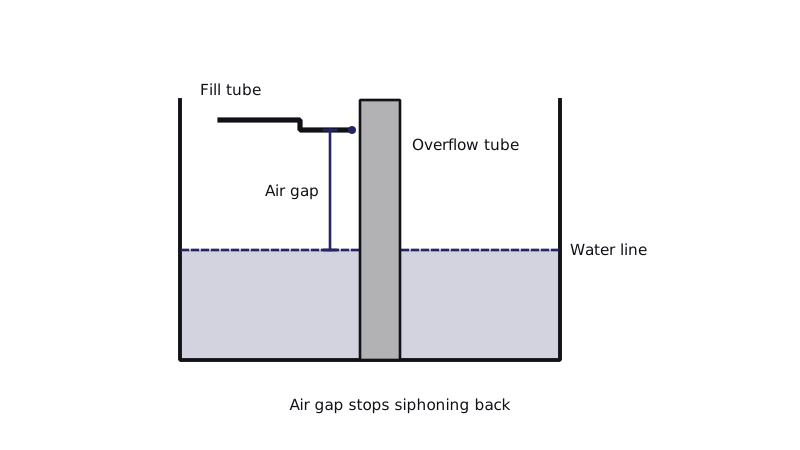
To swap it, turn off the water, drain the tank, loosen the supply nut, remove the old valve and set the new one at the right height. The fill valve page gives the sequence. Afterward, flush several times and confirm the new valve shuts off cleanly. Clip the small fill tube onto the overflow tube above the water line, so an air gap breaks the connection and tank water cannot siphon back into the supply.
How do I do the dye test?
Add around 10 drops of food coloring to the tank, leave the handle alone, and wait 10 to 15 minutes. Dye in the bowl shows that water is getting past the flapper. A clear bowl means the flapper seals, so look at the fill valve or the water level instead. Flush afterward to rinse the dye away.
Do this before you buy parts; it can save a trip. Your ears help too: a hiss from a full tank implicates the fill valve, while a refill every few minutes (a phantom flush) implicates the flapper. For hard numbers, look at the water meter. With all taps closed, a dial that keeps moving signals a leak somewhere, often a toilet. The EPA estimates that leaks cost a household upward of 9,300 gallons yearly, and a running toilet often sits behind that number.
At what point should a plumber be called?
Book a plumber if the dye test reveals nothing, if new parts leave the toilet still running, if the tank is cracked or the base leaks, or if the supply valve will not close. Call as well when the supply valve itself drips, as old stops often fail when turned.
One visit is usually enough for a plumber to fix the toilet and inspect the supply line and shutoff. An aging toilet can be worth replacing instead of repairing again, and the toilet flush repair page covers related faults. Fill in your details on the quote page. The request is forwarded by us to a local plumbing business, and the businesses that take requests pay us a fee. Phones are staffed Monday to Friday, 9am to 5pm. Other jobs we arrange appear on the Temecula Pipe and Repair home page.
Common questions
Is a running toilet expensive?
It can add up. A steady leak sends water through the meter around the clock. The EPA puts household leakage above 9,300 gallons per year, and a running toilet is one of the typical sources. Often the fix is a part that costs little compared with the water it wastes.
Can I fix a running toilet myself?
In most cases, yes. A flapper or fill valve swap takes no special tools, just closing the supply valve and matching the part. When the shutoff valve refuses to close, the supply line leaks or the tank is cracked, stop there and phone a plumber rather than forcing a part.
How do I stop a toilet from running right now?
Raise the tank lid and push the flapper down, or lift the float, and see whether the filling stops. If it carries on, turn the stop valve at the rear of the toilet clockwise to close it. That holds the water back until the part is repaired, and you can still flush by pouring water into the bowl.
Why does the toilet refill every few minutes?
Usually a slow leak at the flapper. Tank water leaks into the bowl until its level falls, and then the fill valve tops it up. The dye test confirms it. Clean the flapper seat, and replace the flapper if it has warped or stiffened.
Can hard-water minerals harm toilet parts?
Yes, they can. Scale crusts the flapper seat and the fill valve and keeps them from sealing, and rubber parts stiffen as they age. Cleaning the seat with a pad and replacing a stiff flapper both help. When scale is heavy, it may be worth looking into treating the water.
Sources used
- US EPA, household leak figure of more than 9,300 gallons a year
- Rancho California Water District, water quality
Updated