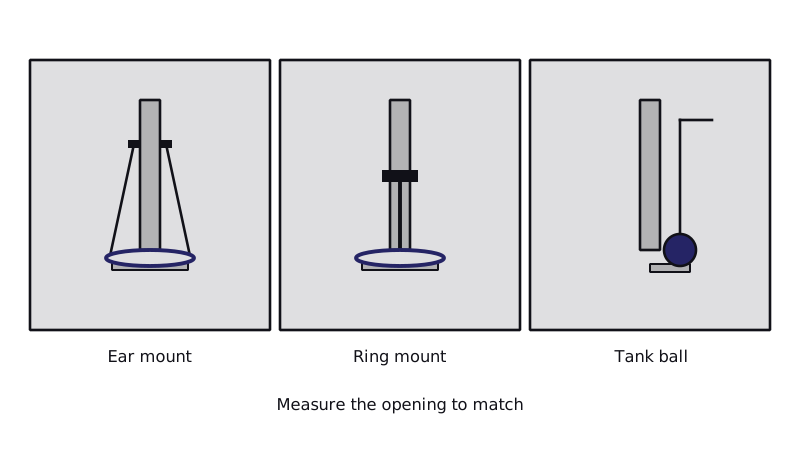
Three things set toilet flappers apart: the size of the drain opening they cover, the way they attach, and their shape. The two common drain sizes are two inches and three inches. Mounting is either by two side ears or by a ring that slips around the overflow tube. Get all three right and the replacement will seal. The main toilet repair page covers what else can go wrong.
How many kinds of flapper are there, and how do I tell mine apart?
Most household toilets use one of four: a standard two-inch rubber flapper, a three-inch flapper for larger flush valves, a ring-mount flapper, or an old tank ball on a lift wire. Lift the lid from the tank and examine the flush valve and flapper: measure the opening it covers, see where it pivots and whether it hangs from a chain or a wire.
A quick identification routine:
- Measure the opening. Hold a ruler across the hole the flapper closes. About two inches across means a two-inch flush valve. About three inches means a three-inch one.
- Look at the pivot. Two small ears that hook over pegs on the overflow tube mean an ear-mount flapper. A rubber collar around the tube means a ring mount.
- Check the lift. A chain from the handle arm means a modern flapper. A wire with a rubber ball on the end means a tank ball, found on older toilets.
- Read the brand. The maker's name is usually molded inside the tank or stamped under the lid. Some brands use their own flapper shapes.
Bring the worn flapper along when you shop, so a clerk can match it by eye and you avoid a repeat trip.
What separates a 2-inch flapper from a 3-inch one?
The size is the diameter of the flush valve opening, and a flapper must cover that opening with margin all the way round. A two-inch flapper on a three-inch valve will not seal, and a three-inch flapper will not sit on a two-inch seat. Water-saving or quick-flush toilets often use the wider valve, since it empties the tank faster.
Older toilets are more likely to have two-inch valves. Newer or high-performance models more often use three-inch. You still need to measure, as makers mix both across lines. A flapper that is too small will leak constantly. One that is too large may not sit flat, and the toilet will run.
Does my toilet use ears or a ring to mount the flapper?
Look at how the flapper attaches to the tank. Ears pivot on small pegs, one on each side of the overflow tube. A ring mount has a round collar that slides over the tube, so the flapper pivots on the tube itself. The two are not interchangeable without checking, though some universal flappers include both options and clip off the unused one.
Ear mounts are the most common, and they sit lower in the tank. Ring mounts let the flapper swing wide, which suits some canister-style designs. Dual-flush toilets have their own flapper and button setup, and a dual-flush model that runs on needs the right part. One example is on our page about a Glacier Bay dual-flush toilet that keeps running.
What if the flapper is not the culprit?
When a new, correctly matched flapper still lets water through, the seat it rests on is probably worn. Mineral scale or pitting on the flush valve seat stops any rubber from sealing. Other causes include a chain with too little slack, a float set too high that feeds water down the overflow tube, or a cracked tank. These need a different fix from a new flapper.
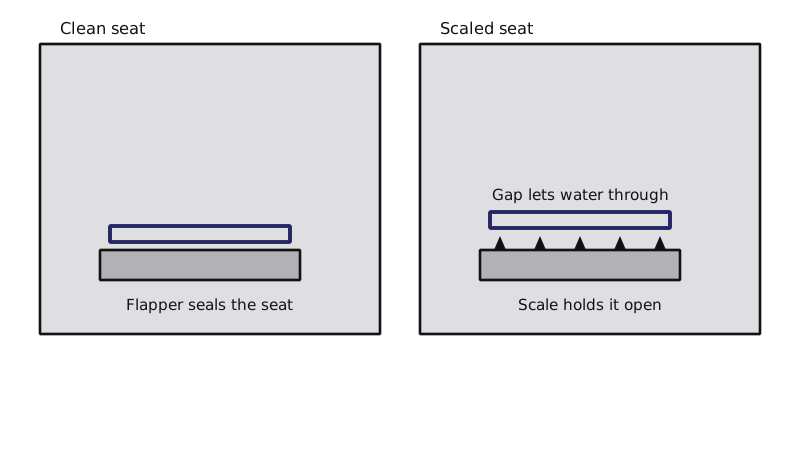
Water chemistry plays into this. Temecula's tap water is hard: Rancho Water's own reports put average hardness around 230 to 240 mg/L in the 2020 to 2023 reports, so scale forms on seats and on the underside of the flapper. A gentle scrub with a soft pad and vinegar often restores a seat. Chemical tank cleaners and bleach tablets are often blamed for rotting rubber flappers, so skip them.
Rubber flappers wear out with age, and the food coloring drip test the EPA describes finds a leak that you cannot hear. For deeper guides, see how to replace a flapper, flapper chain replacement and why a toilet runs after flushing.
Can a plumber fit the right flapper in one visit?
Yes. A plumber who visits for a running toilet will identify the valve, match the flapper and check the seat, chain and fill valve in one go, so you do not make repeated trips to the store. If the flush valve is the real fault, the plumber can replace it. See the toilet flush repair page for that route.
For a visit from a local plumber, send a request via the quote page, and read the home page to see how the service runs. Should the toilet be worn out in several spots, also ask the plumber to price a whole new toilet, as covered in the replacement cost guide.
Common questions
How long does swapping a flapper take?
Typically ten to fifteen minutes once the right part is in hand. Shut the supply, empty the tank, detach the old flapper and chain, and set the replacement in place with slight slack. The longer part of the job is usually working out which type fits, so measure first.
What should I ask about a flapper repair before agreeing?
Find out if the price is for the flapper alone or also includes the chain and fill valve, if the seat will be inspected, and what the plan is should the flush valve prove worn. A flapper is a cheap part, so the quote should mostly be the visit. Get the answers in writing.
Do I have to be present during the appointment?
Yes, someone should, to point out the toilet and agree the price. The visit is brief, with the plumber requiring clear reach to the toilet and its wall valve. If you rent, inform the owner or manager beforehand, since they might have to approve the repair.
Are universal flappers any good?
Many fit a range of toilets, and a universal one is a sensible choice if your brand is unknown. Fit still matters: the right drain size and mount. An adjustable universal flapper can leak if it does not sit flat, so check it after installation with the food coloring test.
Updated