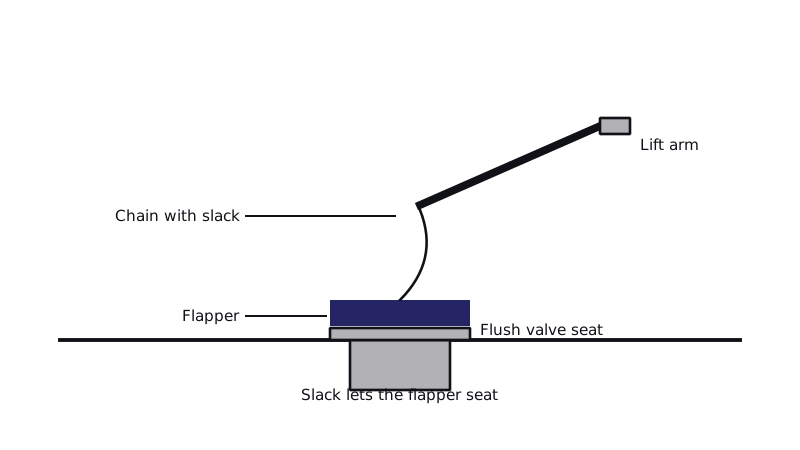
Inside the tank, low down, sits the flapper, a rubber stopper that lifts during a flush, then drops back and closes the opening. Once it warps, stiffens or gets coated in scale, water slides past into the bowl and the tank tops itself up. Swapping it is a small job in most homes. Related faults are grouped under toilet repair.
How can I tell a flapper has worn out?
Check for three things: tinted water in the bowl after dye goes into the tank, rubber that feels slick or brittle, and visible wear along the seat edge. If dye shows up in the bowl without a flush, either the flapper or the seat beneath it is leaking. A soft one several years old is the prime suspect.
Look closely when the tank is empty:
- Residue. Black or gray smear on your fingers means the rubber is breaking down.
- Warp. A flapper that no longer lies flat on the seat leaks at one edge.
- Mineral crust. White or tan scale on the seat or flapper edge stops a clean seal, and Rancho California Water District's 2020 to 2023 reports put average hardness around 230 to 240 mg/L, so this is common here.
- Cleaner damage. Drop-in tank tablets with bleach can chew through rubber. With them in the tank, the flapper needs replacing more often, and many people give the tablets up.
By the EPA's numbers, a typical household loses over 9,300 gallons yearly to leaks, and a quietly leaking flapper adds to that total. The wider diagnosis is on the page about why a toilet keeps running.
Which flapper fits my toilet?
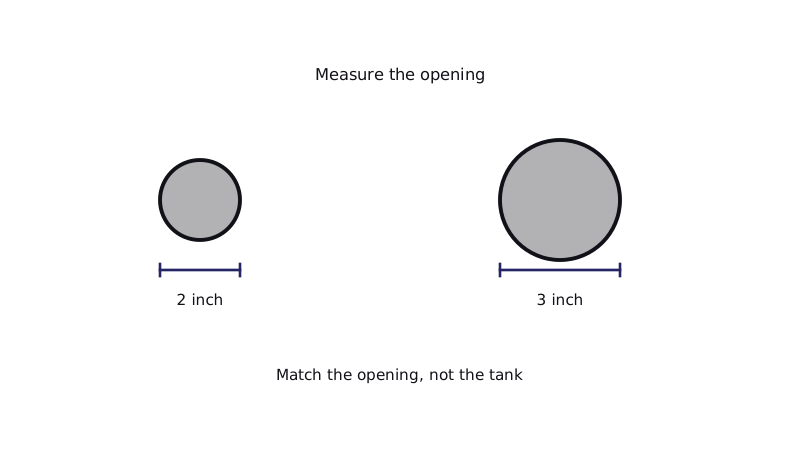
Match the flush valve opening, which is usually a two- or three-inch size, and the style: standard hinge-ear flapper, a flapper that clips onto the overflow tube, or a part made for a dual flush. A flapper that is too small leaks, and one that is too big will not seat. Check the toilet's markings or measure the opening.
Practical ways to get it right:
- Look for markings. Many tanks carry a model number inside or under the lid. The maker's site lists the flapper.
- Measure. If the flush valve opening is about two inches across, you want a two-inch flapper. A larger opening around three inches takes a three-inch flapper. Do not guess, because three-inch toilets are common in newer models.
- Take the old one. Compare shape and ear positions at the store.
- Consider adjustable models. An adjustable flapper changes how long it stays open, which can help with older toilets that flush too weakly or too long. Test it to be sure the bowl clears.
- Dual-flush units. These use a different flapper or a cartridge. Using a standard flapper on a dual-flush valve will not work. The page on flapper valve types shows the shapes.
Universal flappers exist, but they are a compromise. If the toilet leaks after a swap, a model-specific part is the next step.
How do I swap in a new toilet flapper?
Turn off the stop valve at the rear of the toilet, then flush until the tank is empty. Lift the old flapper's ears off the pegs on the overflow tube and detach its chain from the handle arm. Snap the new flapper on and attach the chain with a bit of slack. Reopen the valve, let the tank refill and test.
Details that make it work:
- Clean the seat. Use a non-scratch pad on the ring where the flapper lands. A rough, dirty seat defeats a new flapper.
- Check the chain. Leave roughly 1/2 inch of play. Too tight, and the flapper is held slightly open; too loose, and the chain can snag under it. Trim any extra length with the page on flapper chain replacement as a guide.
- Check the handle arm. Look at the lift arm for rust or looseness.
- Test. Flush, watch the flapper drop, then add dye or color to the tank and wait fifteen minutes without flushing. A clear bowl means the seal is good.
The job needs no special tools. A pair of hands, a sponge and a towel are enough. A cracked flush valve, or a seat with pits you can feel with a fingernail, may mean a new flapper still leaks.
Why does it still leak after I fit a new flapper?
In that case the seat, the overflow tube or the water level is to blame. Any flapper lets water by when the seat of the flush valve is cracked or pitted. An overly high water level pushes water down the overflow tube. And a fill valve stuck open keeps the tank spilling. Test one thing at a time.
Check these in order:
- Water level. The surface should rest roughly 1 inch under the top of the overflow tube. If it rides higher, the fill valve is misadjusted or faulty, and the toilet fill valve repair guide shows the fix.
- Seat damage. A fingernail catch or visible pitting means a flush valve replacement or a repair kit.
- Pressure. Over 80 psi, flappers and fill valves age too quickly. Thread an inexpensive gauge from a hardware store onto an outdoor spigot to see the number.
- Handle and chain. A bent arm may lift the flapper only part of the way, or let it fall crooked.
A step-by-step for the wider fault is in the running toilet fix guide. When an aging toilet is worn in several spots, replacing it may cost less than repairing it again and again.
When should a plumber handle a flapper problem?
Call for help if the flush valve has cracked, the stop valve under the toilet is stuck or dripping, water is on the floor, or the toilet keeps running despite a fresh flapper and fill valve. Each of these is beyond a simple parts swap. Say what you tried and how old the toilet is.
A plumber can also deal with a model that takes an unusual flush valve, or with several toilets sharing the fault, which may point to high pressure in the house. For a quote, go to the quote page. The local plumbing businesses that take requests pay us a fee, and the one that answers yours sets the price and carries out the job.
Common questions
How many years does a toilet flapper last?
No set schedule applies. Plenty last for years, though hard water, bleach tablets and heat cut that short. Replace it when you see residue, warping or a leak, or as a cheap precaution when you clean the seat and notice it has gone soft.
What does a flapper cost compared with a new toilet?
A flapper is among the cheapest toilet parts and sits on the shelf at any hardware store, while a new toilet is a much bigger purchase. Fixing the leak early also saves the water the toilet would otherwise keep wasting, which you pay for on every bill.
Can I adjust a flapper instead of replacing it?
Sometimes. When the chain is tight or loose, correcting the slack may be enough to stop the leak. A flapper that is warped, hard or crusted cannot be tuned and needs replacing. Cleaning the seat is worth doing in either case.
Is a universal flapper as good as the original?
It can work, but a good fit is never certain. A model-specific flapper matches the valve's shape and weight exactly. If a universal flapper will not seat, or closes too fast or too slowly, try the toilet maker's own part next.
Must the water be off while I change a flapper?
Yes, as a rule. Close the stop valve at the back, flush the tank empty and then begin. Your hands stay dry, the floor stays free of spills, and you can look over the fill valve and the seat with the tank empty.
This guide is one of many on plumber in Temecula.
Updated