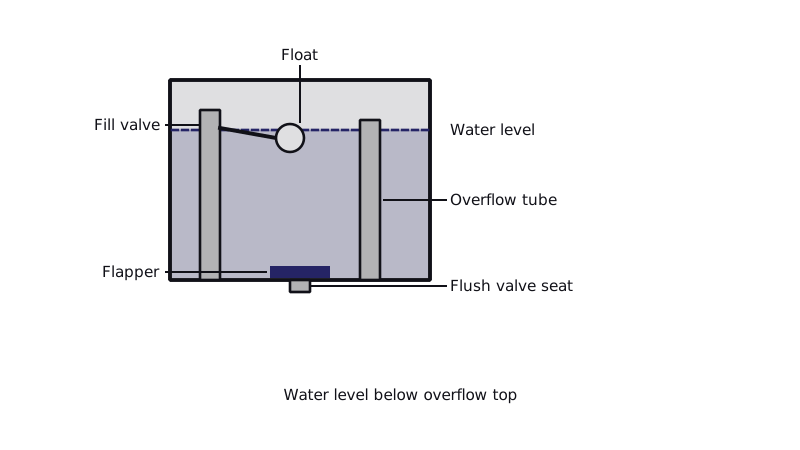
Take the lid off the tank and look inside. Water dribbling into the tall overflow tube means the fill valve or float is either failing or adjusted too high. When the level looks fine yet the tank tops itself up every few minutes, the flapper is passing water into the bowl. A hissing noise typically originates at the fill valve. More toilet repair help sits behind this page.
Which part is causing the running?
Add some food coloring to the tank water, wait 15 minutes without flushing, then look in the bowl. If color shows up in the bowl, the flapper leaks. A clear bowl with water pouring down the overflow tube means the level is too high. A hiss while the tank sits low implicates the fill valve.
Go through this short checklist in sequence.
- Jiggle the handle. When the running stops, the chain is catching, is too short or too slack, or the handle linkage is binding.
- Check the chain. Half an inch of slack or so lets the flapper seat. A tight chain holds it open, and a loose one can tangle under the flapper.
- Press the flapper. Push it down by hand. If the running stops, the rubber is worn or scale has built up on the seat.
- Look at the water level. It belongs roughly an inch under the rim of the overflow tube, or at the fill line marked inside the tank.
- Listen. A hiss with a full tank means the fill valve cannot close. A silent trickle every few minutes means the flapper is seeping.
A toilet that runs on its own is simply wasting water. According to the EPA, leaks can cost a household more than 9,300 gallons yearly, with toilets among the most frequent culprits. The water bill often reveals it before the floor does; see the page on why a water bill can run high.
Is the flapper to blame?
Usually. Once a flapper stops sealing, tank water slips into the bowl and the fill valve has to top the tank up every few minutes. Swap out any flapper that is warped, brittle or slimy, and wipe the flush valve seat where the flapper lands.
Hard water matters here. Rancho California Water District's 2020 to 2023 reports put average hardness around 230 to 240 mg/L. Mineral crust on the seat and slime on the flapper are common in very hard water, so cleaning the seat with a non-scratch pad can fix a leak a new flapper will not. Pick a flapper that fits the flush valve, either two or three inches, and note whether yours is a standard or dual-flush model. Steps are in the flapper repair guide, and the page on stopping a toilet that keeps running offers a wider walk-through.
How do I deal with water that keeps spilling into the overflow tube?
Water entering that tube shows the tank is overfilling. Lower the float so the fill valve shuts off roughly one inch under the tube's top edge. On a cup float, slide the clip down the rod; on a ball float, gently bend the arm or turn the adjusting screw. If the valve keeps running regardless, replace it.
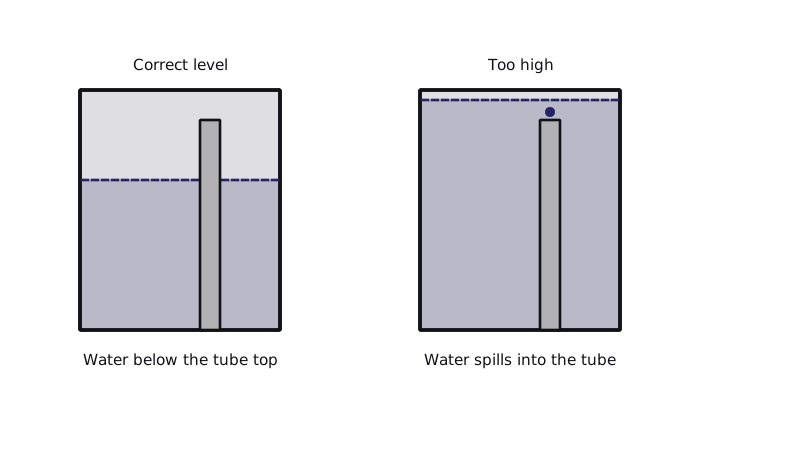
Fill valves wear out. Grit, mineral deposits and an old rubber seal keep them from closing. A replacement valve kit is a basic part, and most homeowners can fit one using a wrench and a bucket: close the supply, flush, sponge out the tank, loosen the supply line and the locknut beneath the tank, seat the new valve at the correct height and reconnect. Test for leaks at the nut and the line.
Pressure plays a part too. Plumbing code sets a limit of 80 psi, and a house running above that can wear out fill valves and flappers early. If you are replacing parts every year, have a plumber read the pressure. The pressure regulator page goes into it.
Why does the toilet cycle on and off?
A tank that refills by itself every few minutes is said to "ghost flush." Slow seepage past the flapper lowers the level until the fill valve opens, the tank refills and the cycle starts over. The silent pause between refills is how long the seepage takes.
This version is easy to miss. You hear the toilet fill when nobody has used it, often at night. The dye test catches it, and the gap between refills tells you how bad the leak is: a few minutes between refills is a fast leak and an hour or more is a slow one. A slow leak can run for weeks without anyone noticing. If you leave it, the water bill will tell you, and the number often surprises owners.
When is it more than a flapper or fill valve?
When new parts have not cured it, inspect the flush valve. A cracked overflow tube, a corroded flush valve seat or a worn fill valve shank can leak even with new rubber. A tank that sweats or leaks at the bolts is a different problem, covered in the leaking toilet tank guide. Old toilets sometimes cost more to repair than to replace.
Consider a plumber if:
- The flush valve seat is cracked or badly pitted.
- The shut-off valve beneath the toilet is stuck or leaking, so the tank cannot be isolated.
- Water appears on the floor, which signals a leak in the supply line, the wax ring or the tank bolts and not just a running toilet.
- The toilet is old and several parts have failed together.
To arrange a visit, begin at the quote page. Say what you tried, the age of the toilet and whether its stop valve works.
Common questions
Does a running toilet count as an emergency?
Seldom, but do not leave it for months. Every day it runs it wastes water and pushes the bill up. When the shut-off valve works, closing it halts the loss until the part is fixed. Water on the floor is different and needs quick action.
How much time does a flapper or fill valve swap take?
Most people need ten to twenty minutes for a flapper and nearer an hour for a fill valve. The time goes on closing the supply, draining the tank and fitting the right part. A plumber carrying the part on the truck will finish sooner. Parts cost little next to a month of leaking.
Why does my toilet run after I flush?
The flapper should drop and seal once the tank empties. If it stays open or lands crooked, the tank keeps draining and the fill valve keeps running. Check the chain length, the flapper's hinge and anything that stops it falling, such as a bent arm or a tangled chain.
Can hard water cause a toilet to run?
Yes, indirectly. Mineral deposits collect on the flapper seat and inside the fill valve, which prevents a clean seal. Temecula's water is very hard by the district's own reports, so cleaning the seat and replacing rubber every few years is sensible.
Can I stop it with the water valve off?
Yes, temporarily. Turn the small oval handle on the wall behind the toilet all the way clockwise. The tank can no longer refill, so flush once to empty it, and tip a bucket of water into the bowl for any further flush. Fix the failed part before you restore the supply.
The rest of our guides start from the plumber guide for Temecula.
Updated