A bill climbs for one of three reasons: a leak somewhere, more outdoor watering than you realize, or a household that truly used more. Leaks hide best. Sort them out first with the meter test below, and see what a plumber can do for you on the home page.
Could a leak explain my higher bill?
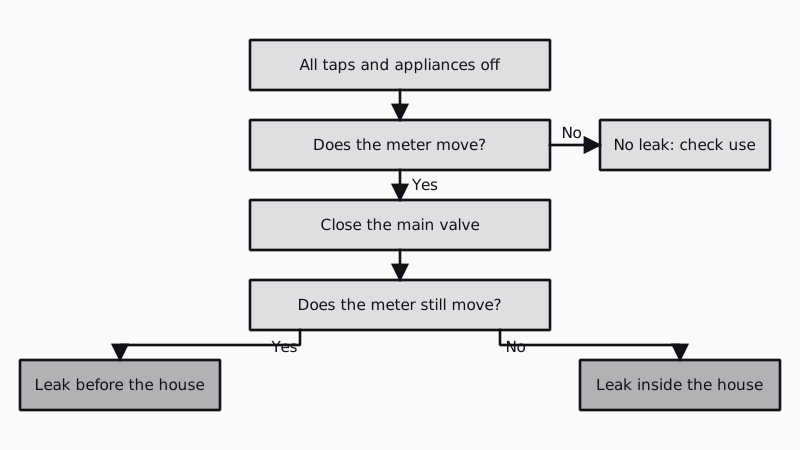
The fastest test is free. Close every tap, the dishwasher, the washer and the ice maker, then look at the meter. A turning small dial or triangle means water is leaving your pipes. Write down the reading, wait twenty minutes with everything still off, and read it again. Any change signals a leak.
According to the EPA, a typical home wastes over 9,300 gallons a year through leaks, so a bad one costs more. A meter that holds still while you wait may still hide an intermittent leak, such as a toilet that refills now and then. If the dial is turning, close the main valve where it enters the house and read the meter again. A dial that stops tells you the leak is inside the house. A dial that carries on points to the pipe between meter and house, which in many setups is the homeowner's responsibility, so confirm with your water district.
Might the sprinklers be responsible?
Yes, and in Temecula they are a strong suspect. Watering the yard is frequently the biggest use of water at a single-family house, and summer heat drives it up. A timer changed for a hot week and never reset can add a lot. A broken sprinkler head or a stuck valve can also pour water into the ground unnoticed.
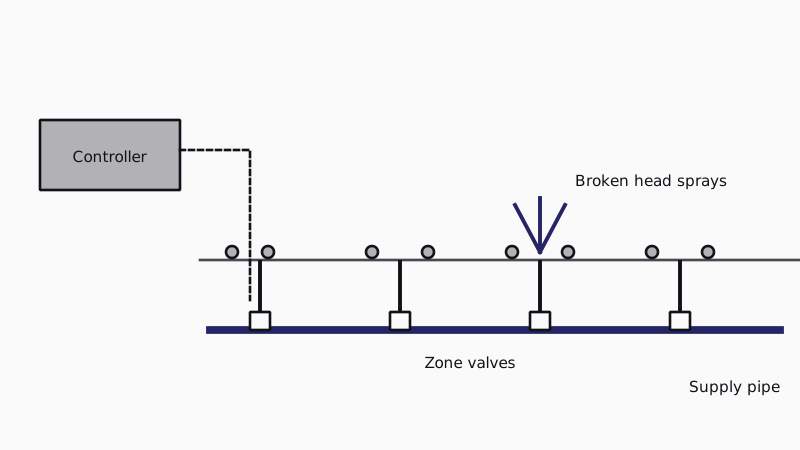
Review the controller schedule, switch on each zone for about a minute, and stroll the yard looking for soggy ground, geysers and sprinklers that never shut off. If the water usage drops when you set the irrigation to off, the cause is found. Hose bibs left slightly open or a hose with a worn washer also drip into a flower bed, and nobody sees it. Rural lots in Wine Country or Fallbrook may have long irrigation lines where a break goes unnoticed for weeks.
Do air conditioners or storage tanks use water?
Central air conditioning does not draw on household water in the ordinary way, but an evaporative cooler does, and a leaking line to either unit wastes water. A condensate drain overflow can wet a ceiling without moving the bill much. Water heater tanks, softeners and pools are bigger candidates.
Heater tanks leak at the relief valve discharge pipe when pressure or temperature runs high, and that trickle drains outside. Pools and spas lose water through evaporation and refills, which can look like a leak on the meter. Whole-house softeners that regenerate too often send gallons down the drain. Before buying a softener or treatment unit, ask how much water each cycle uses. A water hammer bang in the pipes does not itself raise your bill, but it can point to pressure problems, so see water hammer sound if you hear it.
Which non-leak causes can raise a bill?
Billing errors and rate changes do happen, though less often than leaks. A meter can be misread, an estimated reading can catch up later, and a billing period can stretch. Make sure the meter number on the bill matches the one on the meter at your property, and compare the bill's reading with the dial.
Other non-leak causes include a new fixture or appliance, visiting family, a new pool, a lawn re-seeding, or a change in the fixed charge. If the numbers look wrong, call your water provider and ask for a meter check or its leak adjustment policy, since some utilities offer relief for a repaired leak. Policy depends on the district, so ask.
What would push a winter bill up?
Winter does not stop leaks, and the things that climb in summer fall back only if you change the settings. An irrigation timer on its summer schedule keeps watering cold, wet ground. A water heater works harder when the cold supply is colder. Guests, a new baby or a full house also add up, and a stuck toilet or hidden leak runs all year.
Where possible, compare the bill with the corresponding month a year ago, and look at the daily average if one is printed. A high, flat baseline day after day hints at a continuous leak, whereas spikes point to events like filling a pool or a long irrigation run. Many utilities print usage history, and the bill names your supplier, which is Eastern Municipal Water District or Rancho California Water District, so check or ask. If you were away and the bill rose, a leak is nearly certain.
When is it time to call a plumber?
Call if the meter still moves with everything off and you cannot locate the source, when a wall or floor is damp, when the water heater or a pipe near it is wet, or when a repair did not stop the meter. A plumber can use acoustic and pressure methods to find a hidden leak.
Give your details on the quote page. We pass the request to a local plumbing business, which pays us a fee for the referral and which gives you the price for the job. The process for slab leaks and wall leaks is laid out under leaks and burst pipes.
Which fixtures waste the most water?
Toilets rank first, then irrigation, then faucets and water heaters. A flapper that has stopped sealing lets water seep silently from tank to bowl around the clock. Add a little food coloring to the tank, do not flush for ten minutes, and see whether the bowl turns the same color.
Here is a short list of places where bill-raising leaks tend to hide:
- Toilet flappers and fill valves, covered at the toilet running every few minutes.
- A dripping kitchen or bathroom faucet.
- The relief valve or tank of the water heater, especially if the unit sits in a garage you seldom open.
- A water softener regenerating too frequently, or one that rinses nonstop.
- Under-slab or in-wall lines, which show up as warm floor spots, damp walls or running-water sounds.
A running toilet matters more than people expect. It is the commonest silent culprit, and a new flapper is cheap. On faucets, read how a dripping faucet adds to the bill.
Common questions
Why do plumbers charge so much?
The trade needs a trained hand, tools, insurance and a vehicle, and a good plumber is solving a problem that is already costing you money. Under California rules, a contractor license is generally required where a job needs a permit, or where labor and materials cost $1,000 or more. Rates also cover travel, estimating and follow-up time.
Is my neighbor's high bill the same issue as mine?
Not necessarily. Irrigation, a pool, a leak or household size can make two houses on one street differ widely. If neighbors report spikes in the same month, suspect a billing issue, a rate change or a hot spell. Check your own meter first, then contact your water district if the numbers do not add up.
Is my toilet responsible for the high bill?
Add a few drops of dye to the tank and leave the toilet unflushed for a quarter of an hour. Color in the bowl means the flapper is leaking. A toilet that runs unprompted or hisses every few minutes is another clue. A new flapper is a small, cheap repair most homeowners can handle.
Does the water district cover a leak I never knew about?
It varies by district. Some have adjustment policies for repaired leaks, others do not. Ask your provider, and keep the repair invoice and photos handy. Eastern Municipal Water District and Rancho California Water District each set their own rules, so verify with whichever appears on your bill.
Is a slightly higher bill cause for concern?
A small rise is often seasonal. A rise that persists month after month, or one out of line with your household, deserves a meter check. A leak costs more in water and damage the longer it runs, so testing promptly is better than facing a bigger repair down the road.
Sources used
- Rancho California Water District
- Eastern Municipal Water District, drinking water service
- EPA household leak figure (more than 9,300 gallons a year)
- California Contractors State License Board
Updated