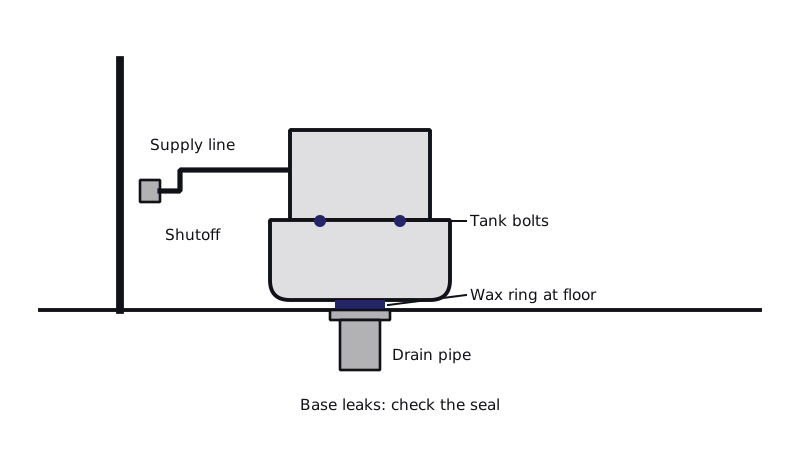
Water on the bathroom floor around a toilet comes from the supply line, the tank, the tank-to-bowl joint or the seal at the base. A wrench fixes a few of those, while the base seal needs the toilet lifted. If the floor is soft or the water returns, hire a plumber, and the page on toilet repair in Temecula shows how we arrange one.
Before you start, towel everything dry, wipe the supply line, tank and base, and then watch where the first bead forms. That drop shows the real source, and it saves you replacing the wrong part.
Where can a toilet leak from?
Five spots account for nearly every case: the flexible supply line and its shutoff valve, the tank bolts or gasket where tank meets bowl, a cracked tank or bowl, the fill valve and its nut under the tank, and the wax ring or flange seal at the floor. Water pooling only after a flush often points to the base seal.
Use dry toilet paper to touch each joint and see which one picks up water. If the puddle appears at the base only when someone sits or flushes, the seal has failed or the toilet is loose. If the puddle grows when nobody uses the toilet, check the supply line and the shutoff. Sweating is a different thing: cold water in the tank can condense moisture on the outside in humid weather, which looks like a leak but dries when the tank warms.
Which leaks can you fix yourself?
Owners can reasonably handle a loose supply nut (snug it by hand and a quarter-turn), a braided supply line swap, and new tank bolts or a gasket. First turn off the shutoff valve, then flush until the tank is empty and mop up what is left. Do not overtighten, since porcelain cracks under force.
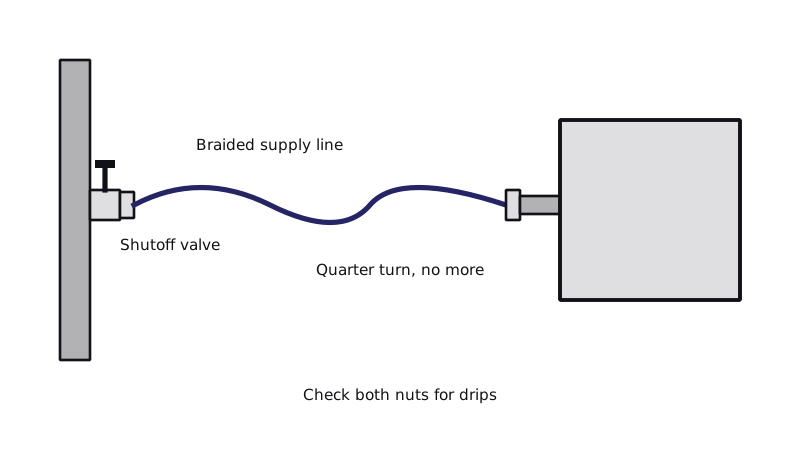
A cracked tank or bowl cannot be repaired for good; replace the part, or the entire toilet. If the shutoff valve itself drips around the stem, a plumber can replace it. The detailed steps for tank issues are in leaky toilet tank repair, and for the bowl see leaking toilet bowl repair. For a fill valve that hisses or leaks, see the toilet fill valve repair guide.
Is a plumber needed when the base leaks?
Nearly always. The wax ring sits between the toilet outlet and the floor flange, and replacing it means shutting off water, draining and lifting the toilet, cleaning the flange and setting everything back with new hardware. A damaged flange, rotted subfloor or rocking toilet makes it a bigger job.
Leaks here are the ones that do the hidden damage. Water seeps under vinyl, into subfloor and sometimes into the room below, and sewer gas can escape from a failed seal. If the floor feels spongy, the flange is cracked or the leak returns after a new ring, ask for a plumber through the quote page. In slab-on-grade homes, common across Temecula tract neighborhoods, a base leak has less to rot but can still stain flooring and grout.
How do I tell a small leak from a running toilet?
A small leak is water that appears outside the toilet. A running toilet is water slipping inside, from tank to bowl, with no puddle. The repairs differ, and the second case is far more common. The EPA's dye test finds it: drop food coloring into the tank, give it ten minutes, and check the bowl for color.
The EPA reports that the average household wastes more than 9,300 gallons of water yearly through leaks, and notes that replacing old, inefficient toilets with WaterSense labeled models can save a family about 13,000 gallons a year. A silent flapper leak is a big part of that waste. If you hear water at odd hours, turn to the guides on a toilet that keeps running and the flapper chain.
What does the plumber do on the visit?
The plumber locates the leak, closes the supply, replaces the failing part and checks nearby for damage. With a base leak, that means pulling the toilet, fitting a new wax ring or alternative seal, setting it back level and snug on fresh bolts, and testing with several flushes before leaving.
A toilet can also be replaced during the visit if the old one is cracked, constantly clogging or leaking from multiple spots. Pricing is on the page about replacing a toilet. Water-saving models are common now, and in many places a replacement does not typically need a building permit, though the rule depends on the jurisdiction; confirmation is available from the City of Temecula Building and Safety division, 951-694-6439.
What should you check afterward?
A day after the repair, press a dry tissue around the base, supply line and bolts. Flush several times and look for any bead. Rock the toilet gently; it should not move. Caulking around the base is optional, and it is no stand-in for a sound seal.
Leaks that return within a week usually mean a flange that sits too low, a wobbling toilet or a damaged seat for the ring. Report that quickly to the plumber. Loose seats are a separate nuisance, handled in repairing a loose toilet seat.
Common questions
Why is there water on the floor next to my toilet?
Either the wax ring has failed, the toilet has loosened, or a tank or supply leak is running down the outside. Dry everything and watch to find the first drop. Condensation on a cold tank can also drip to the floor in humid weather. A plumber can identify which it is.
Is a leaking toilet an emergency?
Seldom, unless water flows steadily. Closing the shutoff valve behind the toilet, by turning it clockwise, stops the leak. A base seal leak should still be fixed quickly, because water under flooring does hidden damage. Do not keep using a toilet that leaks from the base.
Can I just caulk around the toilet to stop a leak?
Caulk does not repair a failed wax ring, and sealing the base can trap water and hide a growing leak. A bead of caulk around the base can reduce movement and keep mop water out, but only after the seal is sound. Fix the cause and caulk after.
What does fixing a toilet leak cost?
The price follows the cause: a supply line swap is minor, a wax ring takes longer, and a flange or floor repair costs more. One cost guide lists a typical plumbing job at $150 to $500. The plumber price guide has more, and the home page shows the services we arrange.
Updated