Empty the cabinet, towel each pipe dry, then watch for the first droplet to show up. Drips that form with the tap off come from the supply side; drips that appear only when water drains come from the drain side. Leaks tied to a disposal or dishwasher are covered with the disposal repair service.
Is the leak from the supply lines or the drain?
Dry everything, then wrap each joint in a dry strip of toilet paper. Run the faucet with the drain plugged, then release the plug. Paper that gets wet while the faucet runs implicates a supply line or the faucet itself. Paper that wets when the sink empties points to the drain or trap.
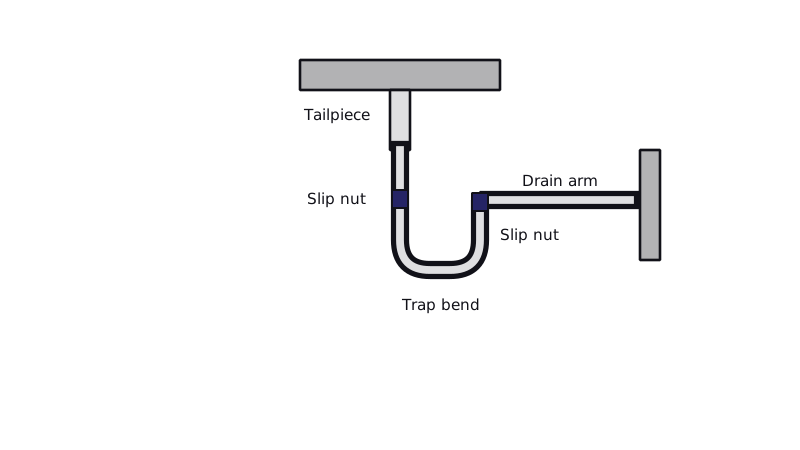
This test beats guessing. Supply lines are the thin braided hoses or rigid tubes running from the wall valves up to the faucet; they are under constant pressure, so they drip all the time. Drain parts, including the curved trap, the tailpiece and the nut under the strainer, only leak while water passes through.
Check the faucet base, the sprayer hose and the disposal flange too. Water that runs down a hose and drips at the lowest point can look like a pipe leak while the real source is above. Shine a flashlight upward and trace the moisture up to the highest damp point.
Hard water leaves crust at a slow leak. Rancho Water's reports put average hardness around 230 to 240 mg/L, roughly 13 to 14 grains per gallon, in the 2020 to 2023 reports. A white or green crusty ring around a joint tells you the joint has been weeping for some time.
How do I stop a leak under the sink right now?
Close the angle stop valves on both supply lines by turning them clockwise. Should a valve be stuck or keep dripping, shut the house's main water valve instead. After that, set a bucket under the leak and clear out the cabinet to protect the wood.
Do not hope it stops by itself. Cabinet bases swell and mold sets in quickly, and according to the EPA a typical home loses upward of 9,300 gallons a year to leaks. A slow drip adds up, so turning off the water comes first.
If a shutoff valve is stuck or crusted, do not force it. A corroded valve can snap and turn a drip into a flood. Use the main shutoff and arrange a visit. Older homes in Old Town Temecula or the Rancho California tracts may have shutoffs that have not moved in decades.
How do I repair a leaking drain pipe or P-trap?
Put a bucket beneath the trap, then loosen the slip nuts by hand. Examine the washers and threads, then put it back together with the washer bevel pointing the right direction, snug by hand plus another quarter turn. Replace cracked or warped washers, and replace the trap if the plastic is cracked.
Many drain leaks are as simple as a nut that has worked loose after the cabinet was used for storage. Tighten by hand first, then run water to test. Use a dry paper towel under the joint to catch the smallest drop.
If the trap is corroded metal or the pieces do not line up, replace the whole assembly with a kit. Kits come with the nuts and washers and are inexpensive at any hardware store. Cut new pieces to length with a hacksaw or tubing cutter and dry-fit them before tightening.
Do not use plumber's putty on slip joints, and do not glue over a leak. Glue needs a clean dry fit, and a weeping joint takes a new part, not more adhesive. Where a slow leak soaks the cabinet floor, dry it fully before closing it up.
How do I deal with a dripping supply line or shutoff valve?
Close the shutoff, open the faucet to bleed pressure, put a bucket underneath and unscrew the supply line. Replace it with a braided stainless hose of the right length and thread, hand-tighten, add a small wrench turn, then ease the valve open and look for drips.
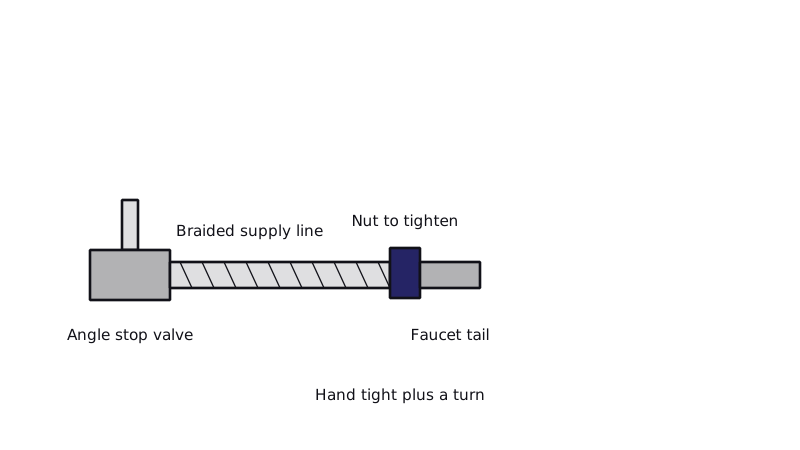
Supply hoses are cheap and age fast. If yours are several years old, the rubber has gone brittle or the braid is rusty, replace both. Do not reuse a hose that has kinked. A hose bent too tightly fails early.
Sometimes a weeping valve stem can be stopped with a slight tightening of the packing nut. If the valve body drips or crusts, replace it. Valves soldered to copper pipe call for a torch or a push-fit replacement, and many people stop there and hand the job to a plumber.
Temporary fixes have limits. Epoxy putty may seal a pinhole for a short while, and a repair clamp can cover a small split. Treat them as time buyers, not repairs. Pinholes appearing in several spots on a copper pipe signal wider corrosion, and that points to a bigger conversation about the pipes.
What if the pipe under the sink keeps leaking after my repair?
Look again for the source. A second leak, a cracked fitting or a faulty faucet body can mimic the first. If the joint stays wet after you have replaced the washer and tightened it, the part may be damaged or the pipe out of alignment, and a plumber should examine it.
Call a plumber if a shutoff refuses to close, a pipe is soldered or corroded, the water source is concealed behind the wall or cabinet back, water has reached the flooring, or the cabinet base feels soft. A plumber can also check whether the faucet cartridge or shower valve is the real cause.
The same method applies to a bathroom vanity. If water is stained on the ceiling below, stop and treat it as a larger leak, since the water has traveled. Our guide to repairing a bathroom faucet that drips covers the part of the problem that lives above the sink.
Use the quote form to have a local plumber look at it. Other jobs we handle are on the home page.
Common questions
Why is there water under my sink but no visible leak?
The source may be above the cabinet: a faucet base, a sprayer hose or a disposal flange can drip down and pool. Dry everything, run the water in stages and watch with a flashlight. Condensation on cold supply lines in humid weather can also drip, though it is usually minor.
Is plumber's tape or sealant fine for a leaking joint?
Thread tape belongs on threaded metal joints, not on slip-nut drain joints or compression fittings. A wet joint will not hold sealant. The right fix is a new washer or a new part. Adhesive over a leak usually fails and hides the problem.
How long do braided supply lines last?
No set life span exists, but many plumbers suggest replacing them every several years, sooner if the braid rusts, bulges or the fittings corrode. If your lines are old and you are fixing something nearby, replacing them costs little compared with the damage a burst line can do.
Is a leak under the sink an emergency?
It is urgent but not a full emergency if closing the angle stops ends the leak. Either way, dry out the cabinet afterwards. If water keeps coming, or reaches electrical outlets or flooring, shut the main valve and phone a plumber right away.
Could the leak be from the dishwasher or disposal?
Yes. Dishwasher hoses and disposal flanges leak into the same cabinet. Run each appliance separately and watch the joint. A disposal that leaks from the body is usually replaced rather than repaired, and a dishwasher drain hose that is loose may only need a new clamp.
Updated