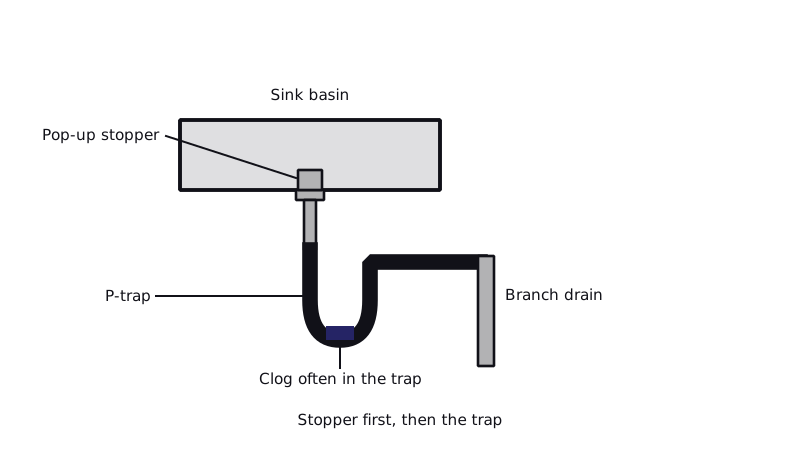
Begin at the top. Take out the pop-up stopper and clean off the hair and slime wrapped round it, because that causes most slow bathroom sinks. If water still crawls down, remove the P-trap from under the basin and wash it out. A longer snake or a plumber is worth considering only after that. More drain topics are on the clogs and drains page.
What is making my bathroom sink drain so slowly?
A slow drain is a partial clog. Hair, toothpaste, soap scum and skin oils combine into a sticky mass on the stopper and the upper section of pipe. Hard water adds scale that gives the buildup something to grip. The clog is nearly always near the opening, not deep in the line.
Where the sink is slow tells you something. If only that sink is slow, the clog is local. If the shower and the toilet also gurgle or back up, the problem is further along the branch or in the main line, and you need a different approach. A clogged shower drain in the same bathroom often shares a line with the sink, so check both.
Is a chemical drain cleaner better than baking soda and vinegar?
A baking soda and vinegar mix can loosen a light film, though it is too weak to shift a genuine clog, and its effect is modest. Chemical drain cleaners are a last resort: they can harm pipes and finishes, give off fumes and are dangerous if they splash. They also make a later plumber's job riskier, because the water may still contain chemicals.
If you do use one, follow the label, ventilate and never mix products. A safer routine is mechanical: stopper, trap and a hand snake. Where a chemical cleaner has been used and the drain is still blocked, tell the plumber, who then wears protection. Hot water alone does little against a hair clog, and water at a full boil may warp or weaken certain PVC drain parts.
How should I clean the stopper and drain opening?
A lot of bathroom sinks use a pop-up stopper that a rod behind the faucet operates. Release the pivot nut beneath the basin or just lift the stopper out, wipe off the slime, and drag hair out of the stopper and the drain throat with a bent wire or plastic drain tool. Reinstall it and run hot water to see how it flows.
Do this over a towel. Wear gloves, because the buildup is unpleasant. Plastic barbed strips (a cheap drain tool) pull hair out well and do not scratch the sink. If your stopper is a push type without a rod, twist it counterclockwise to lift it out. Put the pivot rod back through the stopper in the same position, or the stopper will not seal. If the sink drains well afterwards, you are done.
How do I clear the P-trap under the sink?
Set a bucket beneath the trap. Using your hands or pliers, loosen both slip nuts and lower the U-shaped trap away. Empty it into the bucket, remove hair and gunk, rinse it, and look into both pipe stubs. Put it back with the washers seated, hand-tighten the nuts, and run water while checking for drips.
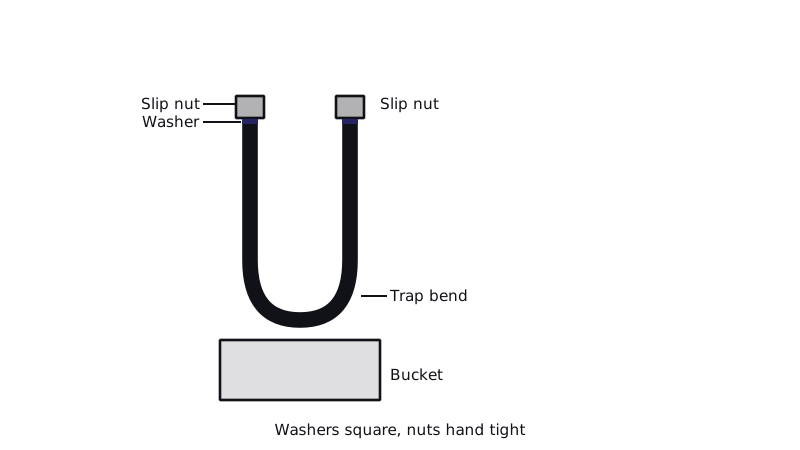
A trap often holds a plug of debris, and sometimes a lost ring or earring. Check the washer faces are seated square, and do not overtighten plastic nuts. Run the tap for a minute while you watch the joints. If a joint weeps, snug it a little more or replace the washer. When the trap is clear and the sink is still slow, the clog lies further in, and the next step is a small hand snake through the wall pipe.
How do I stop it happening again?
Fit a hair catcher over the drain, wipe the stopper every few weeks, and flush the sink with hot water after heavy use. Avoid pouring oils, wax or coffee grounds down any drain. A monthly pass with a plastic drain tool keeps buildup from forming. In hard water areas, a vinegar soak on the stopper helps with scale.
Drain care is cheaper than clearing. If you are not sure whether a slow sink is a one-off, track how often it recurs. A sink that clogs monthly suggests a fault in the line itself, such as a rough joint, a sagging pipe or a vent that is partly blocked. A plumber can also confirm whether the sink vent is clear, since a blocked one makes a drain gurgle and run slow.
At what stage do I need a plumber?
Call one if the sink is still slow after the stopper and trap are clean, when several drains are affected, when water backs up somewhere else, or when the trap or pipes are corroded and leak at a touch. Drain work within the wall is for a plumber, as is any repair requiring a permit.
Describe the problem on the quote page. Local plumbing businesses pay us a fee for the requests we pass them, and the phone line is staffed Monday through Friday, 9am to 5pm. The Temecula Pipe and Repair home page shows the other jobs we arrange. If a toilet is the problem, plumber to unclog a toilet cost may help too.
When is the problem past the sink?
Suspect the branch drain or main line when several fixtures drain slowly, when toilets gurgle, or when water backs up in the lowest drain such as the shower or a floor drain. Slow drains in more than one room are a sign of a bigger blockage, and plunging or snaking the sink will not fix it.
For that, a plumber uses a motorized cable machine, and can run a camera to see the pipe. In older homes, tree roots and aging pipe can narrow the line further along. If wastewater is rising in a shower or tub, stop using water and call. Avoid running the dishwasher or washing machine, since that adds more water to a blocked line.
Common questions
How long does it take to unblock a sluggish bathroom sink?
Cleaning the stopper and the trap takes most people under an hour. A plumber clearing a drain with a hand snake often finishes in one visit. If the clog sits deeper in the line or a camera inspection is needed, expect the visit to run longer.
What should I ask a plumber before a drain job?
Find out if a camera inspection is part of the quote, which method is planned (hand snake or machine), and whether a return visit is covered should it block again. Also ask how the price changes if the clog proves to be in the main line, and get every answer written into the quote.
Does someone have to be home during drain work?
Yes. An adult should be there so the plumber can reach the sink cabinet and other bathrooms, and so you can confirm the drain runs freely. Clear out the space below the sink first, and mention any chemicals you have used to the plumber.
Why does my bathroom sink gurgle when it drains?
Gurgling is often a sign of a partly blocked drain or vent, with air pulling through the trap. If it happens along with a slow drain, the clog may be past the sink. If only the sink gurgles, clear the stopper and trap first, then call if it persists.
Can a slow drain damage my pipes?
A slow drain by itself does not, but standing water and strong chemical cleaners can. Left alone, the buildup keeps growing, and a total clog can overflow the sink. Clearing it early is cheaper and safer, and keeps the trap and seals from being stressed.
Sources used
Updated