Begin at the stopper. In most bathroom sinks the clog is a wad of hair and soap residue clinging to the pop-up stopper or sitting just below it, and a bent wire or a plastic drain strip pulls it out in two minutes. If that fails, plunge, then open the trap. For the toilet and drain side of the house, see clogged toilets and drains.
What should you try first when a bathroom sink is slow or blocked?
Deal with the stopper and the visible part of the drain first, because most clogs start there. Lift or unscrew the stopper, pull out whatever clings to it, and fish out hair a few inches down with a straightened coat hanger or a plastic strip that has barbs. Run hot tap water for about a minute to check whether the sink clears.
How the pop-up stopper comes out depends on the sink:
- Some lift straight out once you turn them a quarter turn.
- Others sit on a pivot rod behind the tailpipe, under the sink. A nut unscrews, the rod slides out, and the stopper lifts free.
- A drain with no stopper, or a plain grid, can be reached directly with the strip or a snake.
Wear a glove. The gunk is not pleasant but it is the cause, and removing it clears the drain for good, unlike pouring something down it. Rinse the stopper in a bucket and not the sink, then put it back before you test.
How should a bathroom sink be plunged?
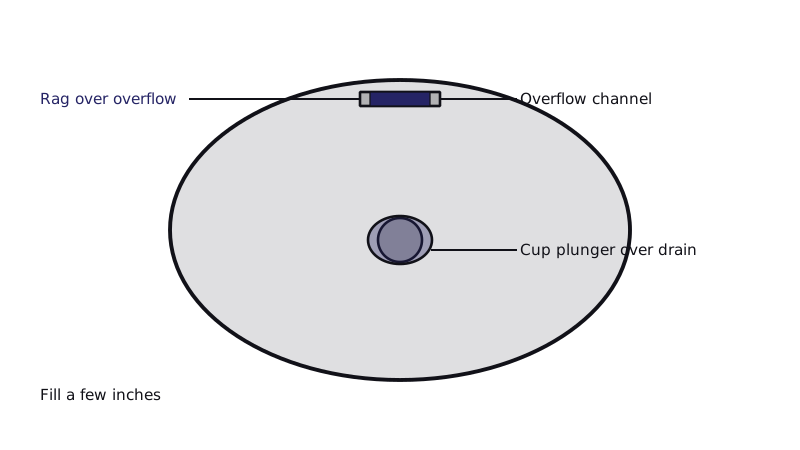
Pick a small cup plunger rather than the flanged toilet kind, and seal the overflow hole. Push a damp rag into the overflow slot just under the rim of the basin, pour in a few inches of water, place the plunger cup on the drain and pump hard for around twenty seconds. Then see how it flows.
Sealing the overflow is the step people skip. A bathroom sink has an overflow channel that connects to the drain, so pressure from the plunger escapes through it unless it is sealed. If the sink is double, plug the other drain as well. If water comes back black and foul, the clog may be larger than a hair plug, but keep going for a few rounds before you move on. Never plunge once a chemical cleaner has been poured in, because splashing is hazardous.
How is the P-trap cleaned out?
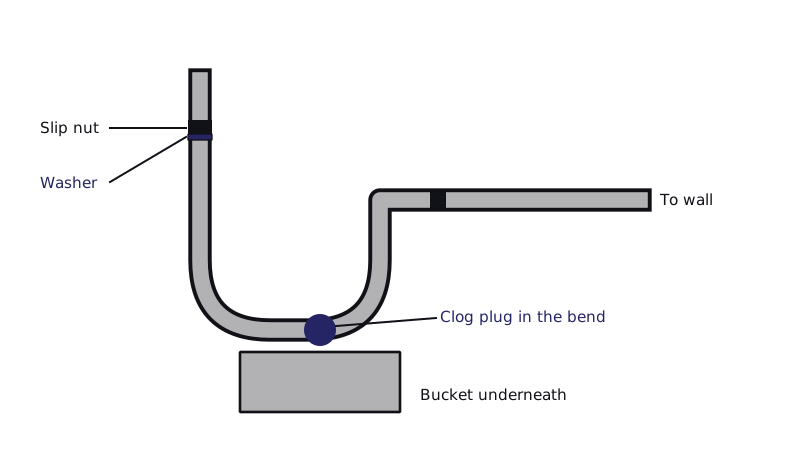
Place a bucket under the curved pipe below the sink, back off both slip nuts with your fingers or pliers, drop the trap down and tip it out. Rinse it, run a brush through the pipe on each side, and reassemble with the washers sitting properly. Then run water and check each nut for drips.
Notes on the job:
- Clear out the cupboard first and lay a towel under the work.
- Wipe off old hair and sludge, which is often a dense plug where the trap bends.
- Check the washer on each slip nut for flattening or cracks, and replace if bad.
- Tighten with fingers plus a quarter turn. Overtightening cracks plastic.
- If a ring was dropped, find it before you run water.
A lost trap ring or a stripped nut is the signal to stop and book a plumber. A trap that has lost its seal can leak slowly inside the cabinet. For slow drains that do not fully block, fixing a slow bathroom sink drain goes through the same ground with more detail on prevention.
Do baking soda and vinegar work?
Not much. Baking soda with vinegar fizzes and may loosen light film near the drain opening, but it does not dissolve a hair clog. Following it with hot, not boiling, water can help move soap residue. It is safe, so it is fine to try, but do not expect it to replace mechanical removal with a strip or a snake.
Boiling water risks softening PVC joints and cracking porcelain, so stick to water straight from the hot tap. Hard water leaves mineral scale inside drains, so residue may collect faster in this area. Rancho California Water District's own reports put average hardness around 230 to 240 mg/L, roughly 13 to 14 grains per gallon, in the 2020 to 2023 reports. That is very hard water. Some addresses get Eastern Municipal Water District instead, so check your bill before judging your own supply.
Is a chemical drain opener a good idea?
Skip it. Chemical openers can burn skin and eyes, may damage some pipes and fixtures, and when they fail to clear the drain they leave a hazardous standing pool for the next person. With a septic system, as many rural properties in the Temecula Valley have, harsh cleaners can disturb the system as well.
If you have already used one, say so to anyone who works on the drain, and wear eye protection and gloves yourself. A plumber needs to know, because opening a trap full of caustic liquid is a splash risk. Physical removal, whether with the hook strip, a compact hand auger or a trap cleaning, is safer, cheaper and generally better on hair. For clogs further along the line, drain cleaning with a larger machine is a plumber's job. See the guide to clearing a clogged sink drain.
At what stage is a plumber needed for a sink clog?
Bring one in if the stopper, plunger and trap achieve nothing, several fixtures run slow, water gurgles or surfaces in the tub or shower, or the drain smells of sewage. These point to a clog deeper in the branch line or the main, beyond a hand tool's reach.
A basin that drains with a gurgle can mean a venting problem. A clog in several drains at once suggests the main line. Tree roots in older lines and some pipe damage need a camera and a drain cleaning machine. If a sewage smell or backup comes with it, stop using the fixtures that feed that line.
Use the quote page to ask for help. We send the request to a local plumbing business, one that pays us a fee for each customer we refer, and that business arranges the visit and gives the price. Say which fixtures are affected and what you tried.
Common questions
Why does my bathroom sink keep clogging?
Hair, toothpaste, soap and skin oils build up on the stopper and the first bend, and hard water adds mineral scale that catches more. Wiping the stopper clean every month or two, and flushing with hot tap water after shaving or washing hair, slows the build-up. A strainer over the drain hole catches most of what would stick.
Will a drain snake work in a bathroom sink?
Yes, and a compact hand auger or barbed plastic strip is cheap. Push it down until it meets resistance, twist to catch the clog, then withdraw it and wipe it clean. Do not force it, because the pipe curves tightly under a sink and a stiff tool can scratch or crack plastic.
Is it a problem if the sink drains but slowly?
It is a clog in progress, and it usually gets worse. A slow drain is the easiest to fix, because the plug is partial. Clear the stopper and trap soon. If the sink empties after a flush with hot water but returns to slow, the clog is further in the line.
Do I need to take the P-trap off every time?
No. Try the stopper and a plunger first, which fix most blocks. The trap comes off when those fail, or when a ring or valuable item has gone down the drain. If you are uncomfortable with pipes, leave the trap to a plumber and use only the stopper and the hook strip.
Why is water rising in the neighboring sink or tub?
That indicates a blockage in the common drain line, past the trap. Stop using the linked fixtures, as the water cannot escape and may overflow. A hand tool cannot reach it, so now is the time to book a plumber for drain cleaning.
The rest of our guides start from Temecula Pipe and Repair.
Sources used
Updated