A water heater that leaks needs attention the same day, since a small drip can become a whole tank on the floor. Cut the power, or set the gas control to pilot, and close the cold-water valve above the heater. Then fill in the quote page form and we will pass your request on to a local plumber. For the broader picture, read the overview on water heater repair in Temecula.
Not every leak means a dead heater. A fitting, a relief valve or a drain valve can often be repaired for a fraction of the cost of replacement. A leak through the tank itself cannot. This guide helps you work out which you have.
What is the source of the water?
Observe before you touch. Wipe the area dry and wait to see where the first droplet appears. Wetness at the top suggests the pipe connections or the relief valve. Water on the side, around the lower third, may come from the drain valve or from element gaskets on an electric model. Seepage along the bottom edge or the jacket seam usually means the tank is failing.
A flashlight and a paper towel make tracing easy. Look for wet insulation under the jacket, rust streaks down the side, and a puddle that returns after you wipe it; all of these matter. Condensation can fool you: a gas heater firing against cold water in the tank briefly makes the outside damp, and a leaking sink supply above the heater can drip onto it. Tape a dry paper towel to each suspect spot overnight if you cannot tell.
Can I carry on using a heater that leaks?
Only when the leak is a slow, clearly external drip at a fitting and you are keeping watch. Switch off and drain a leaking tank, since tank leaks can worsen without warning and wet the electrical parts. Never run an electric heater that is dripping onto its own controls.
The EPA estimates that leaks waste upwards of 9,300 gallons yearly in the average household, and a heater leak adds property damage to the waste. Floors, drywall and stored boxes in a garage take the hit. Where the heater sits in an attic or above living space, ask a plumber about a drain pan piped to the outside. A small leak you ignore for a month is the kind insurers often treat as gradual damage, so deal with it promptly.
How should you spend the time before the plumber arrives?
Keep the water to the heater shut and the power or gas off. Put a bucket beneath any drip, and take photos of the leak, the heater label and any damage for your records. Write down the model number and age from the label, since they let the plumber quote parts and replacements more accurately.
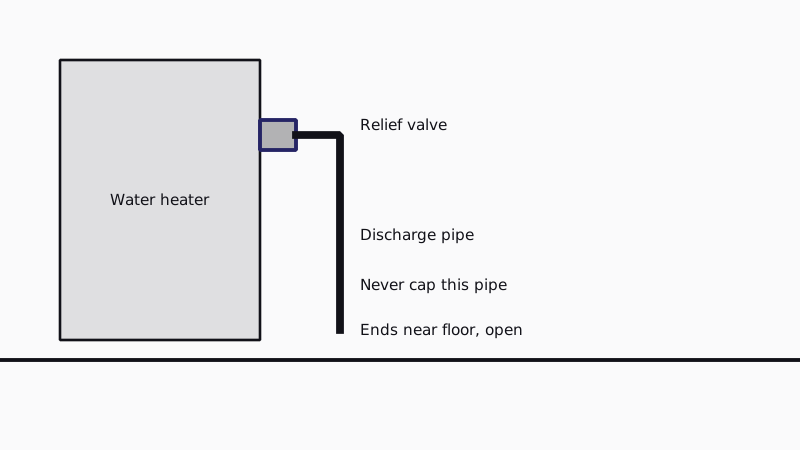
A towel on the floor is fine, but never obstruct the relief valve pipe. If you rent, tell the landlord. Plan for a day or so without hot water, and use the time to ask a plumber about options. Our guide on replacing a hot water heater tank covers the same ground in more depth, and the page on labor cost to replace a gas water heater explains how the labor side is billed.
Can a leaking relief valve or its pipe be repaired?
Yes. A relief valve of this type is a replaceable part, and the plumber can swap it. A valve that drips steadily may be failing, or it may be reacting to real overpressure in the system, so the cause needs checking, not just the part. Never cap or plug the discharge pipe.
Any of three things can make the valve open: thermal expansion in a closed system, a failing pressure regulator or an overheated tank. Those conditions often call for an expansion tank, though one is not automatically required. The pages on replacing a release valve and repairing a pressure relief valve explain the part. Water from that valve can be scalding, so keep clear when testing it.
Which leaks can be fixed, and which mean replacing the heater?
Repairs are possible for loose or worn connections, a drain valve that weeps, a faulty relief valve (the temperature and pressure kind), and leaking element gaskets. A leak through the steel tank wall cannot, because the inner lining has corroded through and a new heater is the only fix. The plumber confirms this by inspecting the source.
Storage heaters mostly last about eight to twelve years, a commonly quoted range that varies with water hardness and upkeep. Where water is as hard as Temecula's, with Rancho Water's reports showing averages around 230 to 240 mg/L in the 2020 to 2023 reports, mineral scale piles up on the tank bottom. Sediment insulates the burner or element, makes noise and speeds corrosion. A heater past ten years with a leaking tank is usually best replaced. The cost of replacing a water heater page lays out the price factors.
Is a permit needed for the replacement, and what does the plumber do?
A water heater swap in California typically requires a permit and an inspection, plus items such as earthquake strapping and a correct discharge pipe. For addresses inside the Temecula limits the permit comes from the Building and Safety division, at 951-694-6439; rural parcels instead fall under San Diego County or Riverside County. The plumber normally takes care of the paperwork.
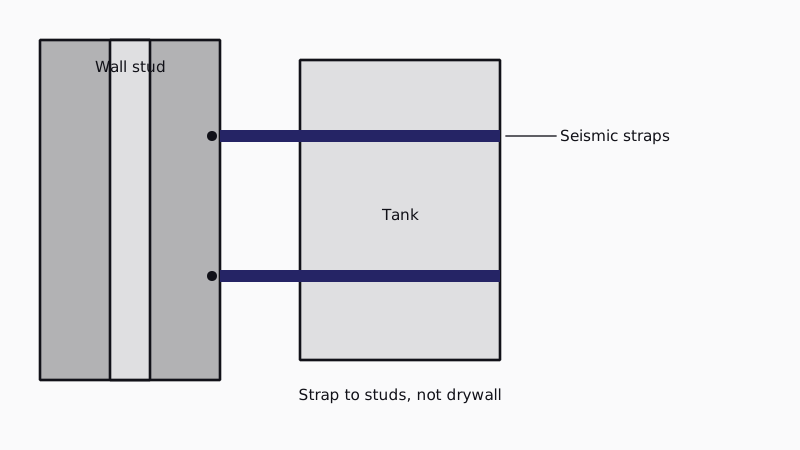
A replacement visit typically includes draining the old unit, removing and hauling it, setting the new one, connecting water, gas or power, venting for gas units, strapping, and testing. Ask about tank size, fuel type and whether a tankless unit is practical; the tank versus tankless guide compares them for Temecula homes. When the heater is old, the plumber may suggest swapping the anode rod if it is still sound; see anode rod replacement.
Which steps come first when a heater leaks?
Remove the heat first: flip the breaker for an electric unit, or turn the gas control knob to off or to pilot on a gas unit. Then close the cold-water shutoff on the supply pipe. Open a hot tap elsewhere in the house to relieve pressure, and mop standing water before it creeps toward walls or flooring.
If water sprays or the floor floods, shut the whole-house main water valve. Never handle electrical parts with wet hands or while standing in water. Should you smell gas, leave the building, phone SoCalGas at 1-800-427-2200 from outside, and dial 911 if there is danger. When a leak cannot wait until business hours, see the page on emergency water heater repair.
Common questions
Will a water heater leak stop by itself?
A tiny weep at a threaded fitting can sometimes slow as mineral deposits seal it, but that is not a repair. It usually returns. Water escaping through the tank body never stops. Treat any wet heater as a problem, and have a plumber confirm the source.
Does a leaking water heater count as an emergency?
Yes when water runs steadily, sits near electrical parts, or spreads into finished space; shut off water and power right away. A slow fitting drip may wait for the next available appointment, as long as the cold supply is shut and you keep an eye on it. See also the step-by-step repair page.
Does a tankless water heater leak too?
Yes, though the causes differ: fittings, the heat exchanger, condensate drain on condensing models, or a failed valve. Tankless heaters hold little water, so leaks tend to be smaller but still need prompt repair. The plumber can check connections and scale, which is a common issue with hard water.
How old is a water heater when it begins to leak?
Tank units generally last eight to twelve years, and some go further with regular flushing and anode rod care. Hard water and heavy use cut that short. Once a heater older than ten starts leaking, replacement is worth considering; the home page lists what else we can arrange.
Updated