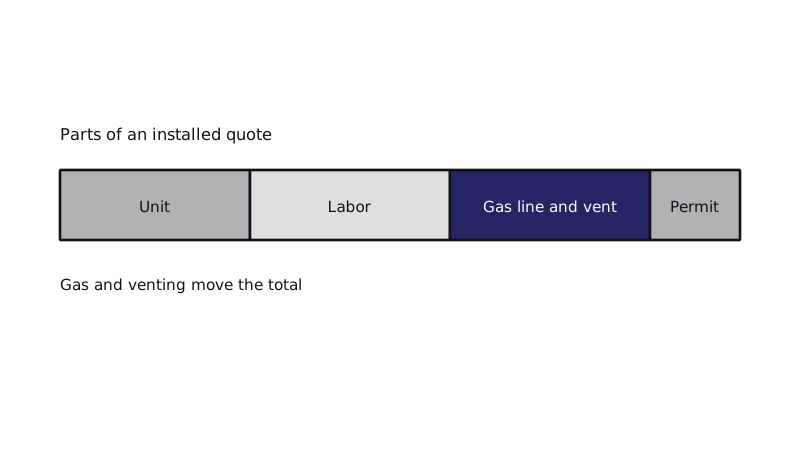
One published guide says a tankless water heater installation usually runs about $2,200 to $5,500 all in, and more when you are converting from a tank. Labor alone is often $1,500 to $3,000. The venting and gas supply drive your quote, so it pays to begin with water heater service in Temecula and what the plumber discovers on site.
What should a new water heater installation cost?
The guide we read places a tankless unit at roughly $2,200 to $5,500 installed, and $1,500 to $3,000 of that is labor. Tank-style heaters run cheaper, with labor of $600 to $1,200 for a standard swap. Fuel type, venting, gas line size and the gap between the old unit and the new location decide the end result.
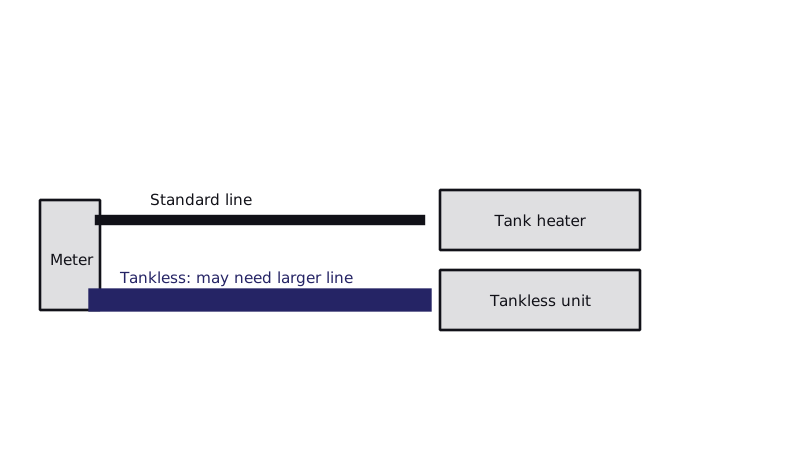
Tankless starts higher because the work is bigger. A unit that heats water on the fly pulls a lot of gas or electric power in one go. A Temecula home with an ordinary tank typically has a gas line sized for that tank, so a new unit may call for a larger line. The vent often changes as well, because many tankless models need special vent material and a termination through a wall or roof instead of the old flue.
Expect an itemized quote that lists the unit, gas line work, vent, permit, hauling off the old heater, and any wall or roof patching. Ask about whatever is missing. Our water heater price page covers tank swaps in the same detail.
What is the plumber's bill for replacing a water heater?
An installed standard tank heater typically costs $1,100 to $2,600, with labor around $600 to $1,200 for about two to four hours of work. Pricing may be hourly, with a published average near $90, or a flat quote. Tankless conversions come in well above this.
For numbers by size, the same guide puts a 40 gallon gas heater at about $1,300 to $2,300 and a 40 gallon electric at $1,200 to $2,200. A 50 gallon electric runs $1,300 to $2,400. These installed figures cover labor but not the permit, a separate $75 to $200 in the guide that plumbers often fold into their quotes.
Access shapes the labor. A heater in a ground-floor garage is simple. One in a closet, an attic or a tight alcove costs more, and carrying a full tank down stairs adds time. The guide lists difficult access at about $150 to $350 extra, and relocating the unit at $300 to $600.
A change of fuel is the costliest switch. Moving from gas to electric, or back, adds about $500 to $1,200 because lines, vents or circuits must be added. In rural pockets that use propane, a propane unit can cost $50 to $100 more than one on natural gas.
What do anodes, valves and elements add to the cost?
Small parts cost far less than a whole heater, but we found no sourced price for an anode rod, a gas control valve, a relief valve or a heating element, so we give none. Have the plumber list every part and its labor on the quote. When one part alone would cost more than half of a new heater and the unit is old, replacement generally makes more sense.
Hard water makes it more likely that one of these parts is at fault. Rancho California Water District's own reports put average hardness around 230 to 240 mg/L, roughly 13 to 14 grains per gallon, in the 2020 to 2023 reports. That is very hard water. Scale coats elements and builds in a tank, and the heat exchanger in a tankless unit can scale up too. Many makers call for periodic flushing, so ask the installer about the schedule for the model you pick. The current Consumer Confidence Report at ranchowater.com gives the figure for your address.
An anode rod is the sacrificial metal part that slows corrosion inside a tank. A tankless unit has none. It is one small point in the tank-versus-tankless choice, which our guide on tank and tankless heaters discusses further.
Does repair cost less than replacement, and is an estimate ever free?
On a younger unit, fixing a thermostat, element, igniter or valve beats replacing the heater, and a free estimate is a common way to find out. Some plumbers waive the service call fee, usually $50 to $100, and others do not, so ask before booking. A tank leaking through its body cannot be repaired and must be replaced.
When comparing, request an itemized quote from each plumber, and ask if the fee gets credited should you hire them. Our emergency water heater page covers what to do when the unit fails at a bad moment, and no hot water walks through checks to run before calling.
Requests sent through this site go from us to local plumbing businesses, and those that accept them pay us a fee. Whether an estimate is free is each business's own call. We cannot promise it, so ask when you talk to them.
Does tankless justify the installation cost?
That depends on your hot water habits and how much work your house needs. A tankless heater can cost thousands more than a tank swap, and the saving comes from no longer heating a stored tank, so a small household with low use sees a slower payback. A big family with steady use and a house already set for a larger gas line sees a quicker one.
Weigh three matters. One is the gas line: check its size and whether it can feed a unit that fires hard. Another is the vent: see where it can run. The third is the permit: tankless installation counts as permitted work, so the inspection comes from City of Temecula Building and Safety, or from the county office covering your address. City permit questions go to 951-694-6476, while addresses beyond the city limits fall under Riverside County. San Diego County issues permits in Fallbrook, Rainbow and part of De Luz.
California additionally demands that water heaters be braced or strapped against earthquakes, which concerns tank units. Tankless units are usually hung on a wall, so ask the installer how the unit will be anchored.
Leave gas line work to a contractor, since a gas leak is dangerous, and California requires a contractor license for anything needing a permit as well as jobs of $1,000 or more in labor and materials. If you catch the smell of gas, leave the building, phone SoCalGas on 1-800-427-2200 from outdoors, and call 911 when anyone is in danger.
Common questions
Will a tankless heater need a bigger gas line?
Frequently. On-demand heating means the burner fires hard, so a line sized for a tank heater can fall short. The plumber checks the line length and fittings and may upgrade a section. That is a leading reason tankless costs more, and the job needs both a permit and an inspection.
How many hours does a tankless installation need?
The guide we read says a matching tank swap takes about two to four hours. A tankless job tends to run longer, often most of a day, because a new vent and a larger gas line may be needed. Get the time on site written into the quote, so you can plan around the water being off.
Can I install a tankless heater myself?
For most of the work, no. A gas tankless install means gas piping and a vent, and it needs a permit. Permit work in California calls for a contractor license. Electric units are simpler but still need a dedicated high-amperage circuit. A permit and inspection also protect you when you sell the house.
Which questions should I ask a tankless installer first?
Learn what the price covers, the model and size it applies to, whether the gas line and vent are included, who obtains the permit, and whether the old heater gets hauled away. Ask also about the upkeep the maker calls for in hard water, and whether the installer or you registers any parts warranty.
The rest of our guides start from plumber across Temecula.
Updated