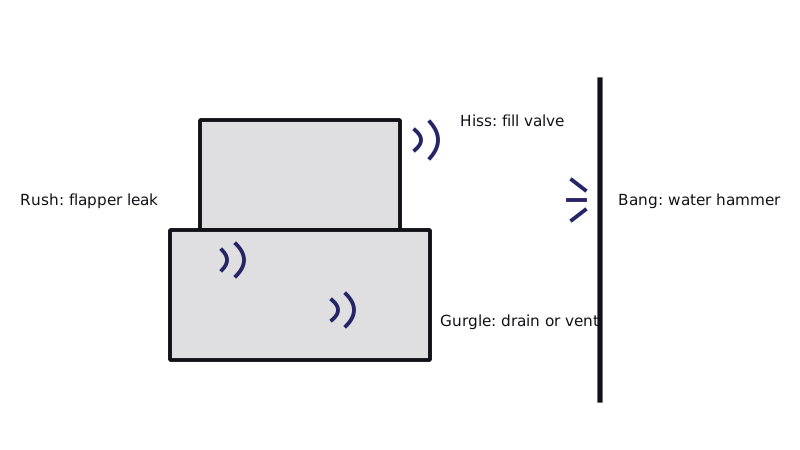
Lean in close to the tank once the house goes quiet. A steady hiss is almost always the fill valve. A faint trickle is water leaking past the flapper. A gurgle in the bowl points to the drain or vent, and a whistle or squeal is a worn valve under pressure. Compare the sound with the list below before you open the tank. More repairs of this kind sit under toilet repair.
Which noise is your toilet making?
Match the noise to the cause. Hissing means the fill valve is letting water through its seal. A trickle or soft rush that comes and goes indicates a leaking flapper, with the tank topping itself up. A gurgle in the bowl means air is moving through water in the drain. A high whistle is a fill valve vibrating, and a thump in the wall is water hammer.
| Sound | Likely source | First thing to check |
|---|---|---|
| Constant hiss | Fill valve not sealing | Cap and seal, float height |
| Short rush every few minutes | Flapper leaking | Dye test in the tank |
| Trickling from the bowl | Water passing the flush valve | Flapper and seat |
| Gurgling in the bowl or after other fixtures run | Partial clog or vent trouble | Other drains, the vent |
| Whistle or squeal on refill | Tired fill valve, or supply pressure too high | Valve, pressure gauge |
| Bang when the valve shuts | Water hammer | Supply line and valve |
If you are unsure which row fits, record the sound on a phone. It helps you compare, and a plumber can listen to it too.
When does a noisy toilet call for a plumber?
Phone one if the sound continues even with a new flapper and fill valve, if the bowl gurgles when other fixtures run, if water appears on the floor, or if you hear a bang in the walls you cannot trace. The toilet itself may be fine, with the fault in the line.
Send a request through the quote page. We pass it to a local plumbing business that pays us for each introduction, and it will visit and quote the work. Describe the sound, how often it occurs and what you tried, and attach a short recording if you can.
Does a noisy toilet waste water?
Frequently, yes. Water is passing through the toilet without a flush whenever you hear a hiss or a regular rush, and the EPA estimates that leaks cost the typical household over 9,300 gallons per year. A toilet noise that never goes away is worth a fix soon. A gurgle wastes nothing, but it can mean a drain problem.
Your water bill is the check. If usage has climbed with no change in the household, read the meter with everything off, as the page on a high water bill explains. Whichever supplies you, Rancho California Water District or Eastern Municipal Water District, it may have a policy for repaired leaks, so ask.
Why does it make a rush of water every few minutes?
That is the flapper leaking, then the fill valve topping up the tank, sometimes called a ghost flush. The noise is short, regular and louder than a hiss. A dye test settles it: put a few drops of food coloring in the tank, wait, and watch for color reaching the bowl without a flush.
Once color appears, swap the flapper and wipe the seat clean. A fuller walk-through is in toilet is running every few minutes, and the toilet flapper valve types covers the tank hardware. If the new flapper leaves the noise unchanged, examine the flush valve seat for chips and the overflow tube for cracks.
Why does the toilet hiss when nobody has flushed?
The fill valve is leaking by, so a thin stream keeps entering the tank. Over time the rubber seal in the valve hardens or gathers grit, and pressure from the supply pushes water past it. Often the water goes straight down the overflow tube, so you hear it without seeing a level change.
Take the lid off and look over the fill valve. When water hisses out of its top or dribbles into the overflow tube, clean it first. Close the shut-off valve, twist the cap off following the maker's directions, hold a cup over the valve and open the shut-off briefly to wash grit out. A hiss that persists means fitting a new valve; replacing a toilet fill valve describes the swap. Mineral deposits are a common cause in the valley. Rancho California Water District's own reports put average hardness around 230 to 240 mg/L, roughly 13 to 14 grains per gallon, in the 2020 to 2023 reports, so scale can clog small ports.
Why does the bowl gurgle?
A gurgle in the toilet comes from air being pulled through the trap water, which usually means a partly blocked drain or a vent problem. If the gurgle follows a flush, a shower draining or a washing machine cycle, the drain line is struggling to carry water, and the toilet is where the air escapes.
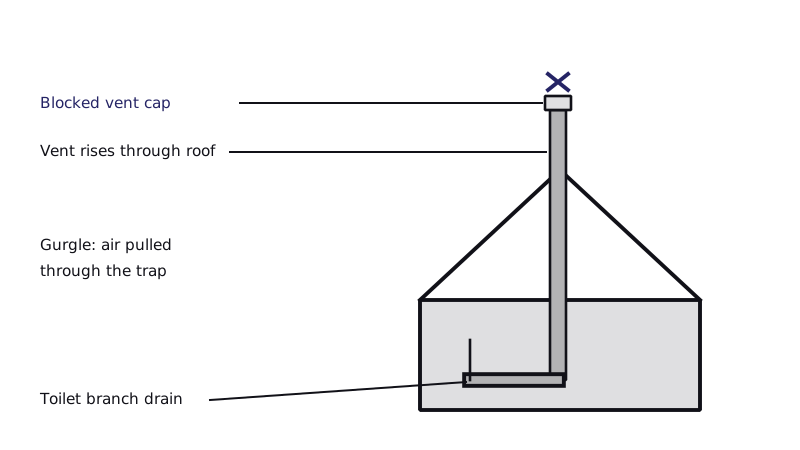
Start with a plunger for a clog close to the toilet. When other fixtures gurgle or drain slowly too, the blockage is further down the line and needs a plumber with a drain machine. A blocked roof vent can cause it as well, because air cannot get into the pipe to balance the flow. Never pour chemical cleaner into a gurgling toilet; it can pool in the bowl and splash whoever works on it next. Clogged toilets and drains explains the options, and a sewage smell with a backup means stop using the fixtures on that line.
In rural parts of the valley with septic tanks, repeated gurgling can mean a full tank or a problem in the leach field, so mention the septic when you call.
What about whistling, squealing or banging?
A whistle on refill means the fill valve is vibrating, often from worn parts or high pressure. A bang when the valve shuts is water hammer: the flow stops fast and the pipe jolts. Both can be fixed, but start by reading the house pressure, screwing a gauge onto an outdoor hose bib.
Under the California plumbing code the ceiling is 80 psi, and a higher reading implicates a pressure regulator. Lower the pressure and many noises disappear. New fill valves, particularly quieter anti-siphon types, can also reduce whistling. If air is trapped in the line after work on the plumbing, the toilet may sputter for a few fills and then settle, so flush a few times before you worry. For banging pipes in general, see the water hammer sound guide.
Common questions
Why is my toilet louder at night?
At night the house is quiet, so a hiss or a periodic refill is easier to hear. It usually is a flapper or fill valve fault, not a new problem. The toilet probably did this by day too. Do the dye test and check the fill valve to find which.
Is a gurgling toilet dangerous?
A gurgle alone is harmless, yet it signals a drain or vent issue that may lead to a backup. Sewer gas can be a nuisance and, in higher amounts, a hazard, so ventilate if you smell it. If water rises or the smell lingers, stop using the fixture and call a plumber.
Can I fix a toilet that whistles myself?
Often yes. Replace the fill valve with a modern one, which is a half-hour job with basic tools. If the whistle continues, test the water pressure, since an overpressured supply can make any valve whistle. A pressure regulator is a plumber's job if it needs replacing.
Why does the toilet run a little after I flush?
A short extra run is normal while the tank refills, which can take up to a minute or two depending on the valve. If it keeps going for longer, or restarts after stopping, check the flapper and the float. A slow refill can also point to a clogged inlet screen.
How long will the water keep running if I do nothing?
Until the cause is fixed. A leaking flapper or a worn fill valve keeps wasting water at the same rate every day, and unlike a blocked drain it does not pass by itself. Shutting the valve behind the toilet stops the loss in the meantime, and you open it again once the part is fitted.
For the wider picture, start with Temecula Pipe and Repair.
Sources used
- EPA household leak figure (more than 9,300 gallons a year)
Updated