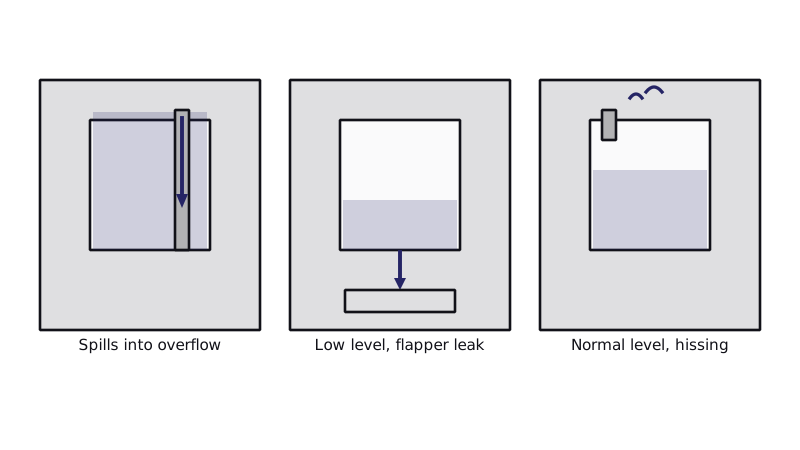
A toilet that never stops running is either filling nonstop because the fill valve cannot shut off, or draining nonstop through a leak past the flapper. Lift the tank lid and observe. Water pouring into the overflow tube means the tank level sits too high, whereas a fill valve that hisses is wearing out. For the wider picture, go to toilet repair.
Where does the water go when the toilet keeps running?
Open the tank and watch it. If water flows into the overflow tube, then the fill valve cannot close or the float needs lowering. If the tank stays low while the fill valve runs without a break, the flapper is letting water escape. When the level is steady and quiet but the noise persists, look in the bowl for a trickle.
Here is a quick map of the three cases:
- Water reaching the top of the overflow tube and spilling in: a fault on the fill side.
- Level low, fill valve hissing and never finishing a cycle: either the flapper or the flush valve is leaking.
- Level normal but a faint hiss from the supply: worn fill valve seal or a partly open shut-off.
Work this out before reaching for parts. A toilet part costs little, but the wrong one wastes the afternoon. If the symptom is a refill every few minutes and not a constant run, the page on a toilet running every few minutes is the better fit.
What is a running toilet costing you?
Mostly water, because a nonstop run uses a lot, and the EPA reckons leaks cost an average household more than 9,300 gallons a year. A toilet that never stops probably falls in that group. It also shortens the life of the fill valve and can strain the supply line.
If you doubt the toilet is to blame, the other suspects are listed in reasons a water bill climbs, and toilets that keep running gives the broader picture. Work out whether Eastern Municipal Water District or Rancho California Water District bills you, and ask if bills are adjusted after a leak is repaired.
What if the flapper is to blame?
The flapper works like a rubber door at the tank's base. When it warps, or the chain is too tight, water leaks into the bowl and the fill valve never reaches its set level. Press the flapper down with your hand; if the running ceases, the flapper or its seat is the culprit. Install a new flapper, wipe the seat and leave slack in the chain.
Toilet flapper repair gives the full procedure, and flapper chain replacement covers the chain. A kit sold as a fill valve and flapper set is often a good buy in an older toilet, since both parts age together.
What can I do about a toilet tank that overfills?
Drop the float so that the fill valve closes earlier. A cup float slides down its rod or responds to the adjustment screw. A ball float needs its arm bent gently down. A modern tower fill valve has a height screw or clip to turn. Aim for a final level roughly an inch below the opening of the overflow tube.
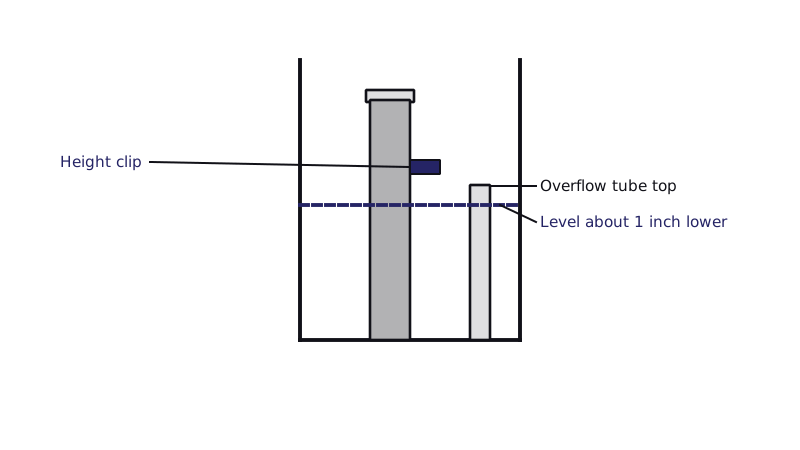
When the level is right yet the valve still hisses, the valve is worn. A fill valve is a low-cost part that goes in within minutes:
- Close the valve behind the toilet, then flush to drain the tank.
- Sponge out any water that remains.
- Disconnect the supply line beneath the tank.
- Unscrew the old fill valve nut, lift the valve out and fit the new one to the same height.
- Reconnect the supply, set the float, open the valve and check for drips.
Grit and mineral flakes can lodge in the valve, so before you swap it, close the shut-off briefly, remove the cap and flush the valve to clear debris. Local water is very hard, which makes this more likely: Rancho California Water District's own reports put average hardness around 230 to 240 mg/L, roughly 13 to 14 grains per gallon, in the 2020 to 2023 reports. For the swap itself, see replacing a toilet fill valve.
Is the overflow tube ever the culprit?
Yes, though less often. With a correct water level and water still trickling into the tube, the tube may be cracked or the flush valve seal may have failed. A hairline crack in the plastic tube is hard to see. If the tank is fine at rest and water drains from a small hole in the tube, replace the flush valve assembly.
A tank that loses water slowly at the base is another sign. Dry the tank's exterior and look for dampness at the bolts and around the flush valve. Water at the base means a seal has failed, and that repair is larger. Repairing the overflow tube goes through the options. Where the tank itself is cracked, replacing the toilet is more sensible than any repair.
At what point is hiring a plumber smarter?
Pick that route if new parts do not cure it, if water pools around the base, if the supply line or shut-off valve is corroded or will not close, or if the toilet is cracked. A toilet decades old with several worn parts is often a candidate for replacement, which a plumber can quote.
Never force a shut-off valve behind the toilet that will not turn. If the tank must stop filling, shut the main valve for the whole house and arrange the repair afterward. Send a request through the quote page. We pass it to a local plumbing business that pays us a fee, and that business prices the job and does the work. Describe what the water does in the tank, and the plumber will know which part to bring. If air in the line makes the valve sputter after the water was off, flush twice to clear it before assuming the part has failed.
Common questions
Why does my toilet keep running until I jiggle the handle?
The flapper or chain is snagging. An overly long chain may wedge beneath the flapper, or the flapper may stick on a mineral deposit. Shorten the chain to leave a little slack and wipe the flapper and seat. If it keeps happening, replace the flapper, because a worn one will not close reliably.
Can I leave a running toilet on overnight?
Usually, yes, since the water goes down the drain, but it wastes water and can raise the bill. That does not hold if the toilet is spilling onto the floor or the fill valve is spraying. If you cannot fix it right away, turn off the supply valve at the back of the toilet before bed.
Which is failing, the fill valve or the flapper?
Observe the tank. Water climbing as high as the overflow tube implicates the fill valve or float. A low level with the valve refilling nonstop implicates the flapper. Food coloring left in the tank for ten minutes will show a flapper leak when color reaches the bowl.
Does high water pressure make a toilet run?
Sometimes. Very high supply pressure can push a fill valve past its seat and cause hissing or slow creep. California's plumbing code caps pressure at 80 psi, so measure it by screwing a gauge to a hose bib. A plumber can check and adjust the regulator for the whole house.
How long does the repair usually take?
A float adjustment takes a minute. Changing a flapper takes about ten minutes, and a first-timer needs roughly half an hour for a fill valve. Finding the right part is the slow bit. Bring the old one along or photograph it, and note the brand on the toilet.
This guide is one of many on plumber temecula.
Updated